KPMG Economics
A source for unbiased economic intelligence to help improve strategic decision-making.
What’s impacting labor market participation? Why are some sectors faring better than others? How do you separate the signal from the noise? KPMG Economics answers these questions and more, providing timely insight and analysis into the economic indicators. We monitor trends and identify potential opportunities that could impact your strategic objectives. Our perspectives look at both the short-term and long-term economic factors that are critical to guiding strategic decisions.
Our latest thinking






Subscribe to insights from KPMG Economics
KPMG Economics distributes a wide selection of insight and analysis to help businesses make informed decisions.
Economic Coordinates
Explore analysis of key data indicators, such as job creation and the labor market, consumer spending, inflation, investment, housing and monetary policy. These combined data points are indicators of the overall health of the economy.
No results found.

Consumers continue to spend in April
Financial cushion wears thin.

Consumers dial back borrowing
Younger borrowers reduce debt while older ones take on more.

Inflation burns through wage gains
Inflation is rising faster than data indicate.
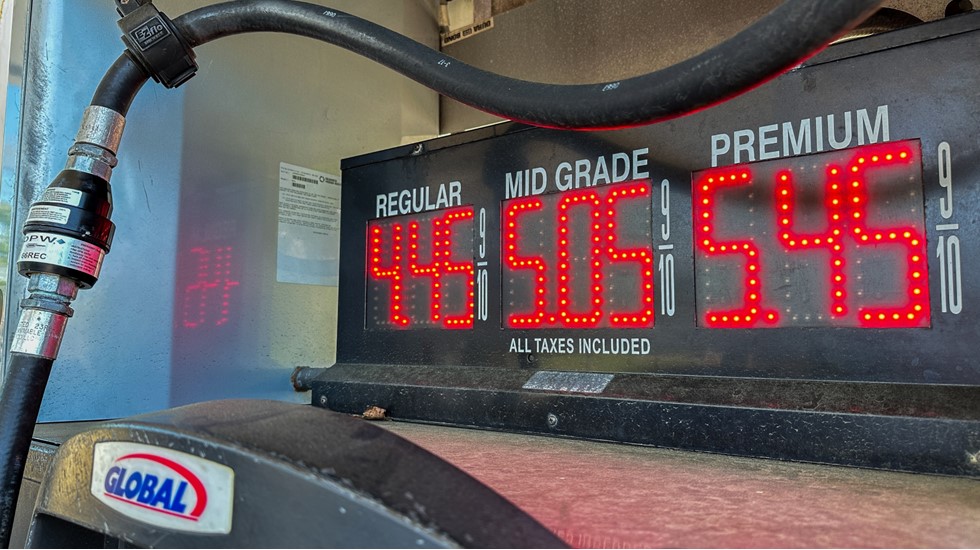
Consumer debt rises along with prices
Tax refunds should support spending.

No results found.
Jobs report sends conflicting signals
Fed grows concerned about inflation.

Steady labor market
Pay growth for job changers rose to 6.6%.

Unemployment poised to fall
A rate hike cannot be ruled out.

Pre-war rebound in jobs not likely to last
Ranks of long-term unemployed remain elevated.

No results found.
Fed firmly on hold for April
Prices are too high for too many.
Dovish pause, hawkish undertones
Decisions remain on a “meeting by meeting basis”
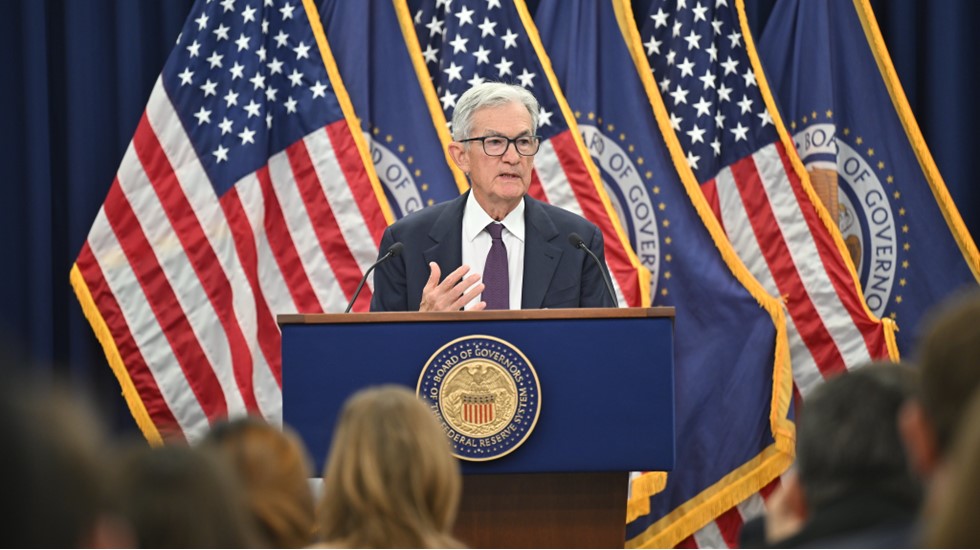
Fed splinters even further in March
Support for rate cuts and hikes.
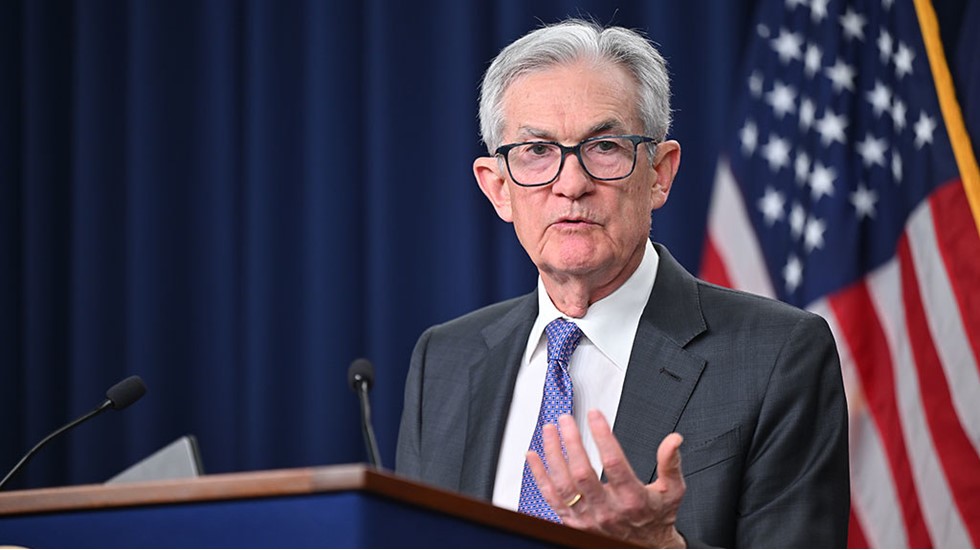
Fed not declaring victory over inflation prematurely
Inflation still a worry.
No results found.
Housing struggles to gain ground
Only the largest builders can afford to offer discounts.

New home sales rebound
Persistent margin compression is weighing on the industry.

Strong starts, weakening outlook
March housing activity proved resilient, but higher rates, geopolitical turmoil, and weakening builder sentiment are quickly clouding the outlook.

New home sales plunge
Inventories remain high.

No results found.
Producers forge ahead despite uncertainty
Key semiconductor input stuck in Hormuz.
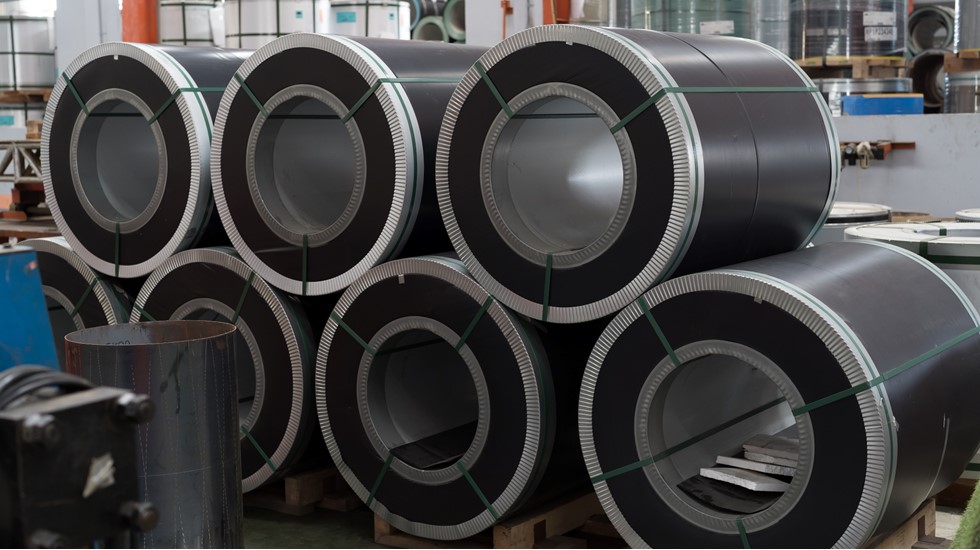
Construction spending weaker than headlines appear
Margin compression is hitting builders.

Front running drives trade deficit
Tariff change fueled imports.

Front-loaded strength, rising risks
March durable goods orders surged on AI, defense and pre‑emptive business spending, though the strength looks increasingly front‑loaded amid rising geopolitical and energy risks.

No results found.
Smaller companies and some consumers lose access to credit
Banks eased credit to firms that benefit from AI.

Uncertain economic outlook sways bankers
Lending standards are becoming tighter.

Access to business loans tightens
A less favorable economic outlook




Global Economic and Geopolitical Outlook webcast
Now available on demand: KPMG’s Global Economic and Geopolitical Outlook webcast breaks down how the Middle East conflict could evolve—and what it means for energy markets, supply chains, inflation and interest rates globally. Watch the replay for signals to monitor, timelines for energy disruption and guidance on how business leaders can plan and act amid sustained volatility.
KPMG Economics in the news:
- Inflation could get in the way of Warsh's desire to cut interest rates, CNBC survey finds
Efforts by Fed chair nominee Kevin Warsh to satisfy President Trump’s demands for lower rates look likely to be stymied by high oil prices and inflation, according to the latest CNBC Fed Survey. High oil prices are seen pushing up inflation while pushing down growth. And 81% believe crude prices are likely to drive up core inflation as well, compounding the difficulty of cutting rates. But Diane Swonk, chief economist at KPMG, thinks the Fed should formally change its policy stance. “The Fed needs to signal optionality on its next move in rates — it could be up instead of down,” she said.
April 28, 2026 | CNBC
- U.S. Fed set to hold rates steady again on cost hikes from Mideast war
The U.S. central bank is widely expected to keep interest rates unchanged at its policy meeting next week, as energy prices stay high and supply chains snarled due to war in the Middle East. "We still have a very high level of uncertainty on what's happening in the Middle East," KPMG senior economist Kenneth Kim told AFP. Oil and gasoline prices remain elevated even if they have peaked, meaning "there's certainly an energy shock that's still impacting both consumers and businesses." Kim said solid hiring recently "gives the Fed some cushion" to temporarily focus more on prices.
April 26, 2026 | Agence France-Presse
- Consumers Are Miserable, but Resilient
KPMG chief economist Diane Swonk emphasizes that within the Federal Reserve’s dual mandate, inflation poses the greater systemic risk because it can erode the foundation of the economy. Swonk warns that any sustained rise in prices would most severely harm those with the least ability to absorb higher costs. She characterizes inflation as a disease that can spread and become chronic if not effectively contained, underscoring the importance of vigilant monetary policy in the current environment of fragile consumer sentiment and resilient spending.
April 23, 2026 | Jill On Money
- Electric Silverado, Sierra, and Hummer Remain Core to GM’s EV Lineup — No Core Range Dropped
General Motors is suspending development of next-generation electric Silverado, Sierra, and Hummer trucks to reallocate about $1.2 billion in capex toward more profitable hybrids and internal combustion engines after Q1 2026 EV sales fell 22% and EV margins remained negative. The shift reflects weaker consumer demand for high-priced EVs, persistent battery constraints, and macro headwinds such as high interest rates and lower consumer confidence, while hybrids deliver positive margins and rising revenue. As economist Diane Swonk of KPMG noted: “Consumers aren’t rejecting EVs — they’re rejecting unaffordable EVs. Hybrids offer a bridge that delivers fuel savings without the sticker shock or range anxiety.”
April 22, 2026 | ABC TV News
- What a Time to be a Central Bank
The Fed has to weigh inflation, a stalled job market, and war in the Middle East when it meets at the end of the month. This week, fed officials have been giving speeches left and right and center, sharing their thoughts. Diane Swonk, chief economist at KPMG, has been watching and joins us to discuss.
April 16, 2026 | NPR
- Workplaces are pushing out working mothers—and paying the cost
KPMG senior economist Matthew Nestler highlights that rising childcare and preschool costs, which have increased at roughly twice the rate of overall inflation, are pushing more workers out of the labor force, about 90% of whom are women aged 25 to 44. Nestler notes that companies that fail to support and train mothers lose institutional knowledge, productivity, and profitability, and face tangible financial losses because replacing mid-level employees can cost up to double their annual salary. Nestler also underscores that organizations that prioritize women’s representation outperform peers by 18%, while those that force mothers out incur steep turnover, retraining, and missed innovation costs.
April 13, 2026 | Fast Company
- Top Economist Mark Zandi Says a Key Recession Indicator Has Already Flashed Red
Economist Mark Zandi argues that a long‑standing recession indicator suggests the U.S. may already be in a downturn, despite recent headline job gains. KPMG Chief Economist Diane Swonk said the March unemployment rate fell “for the wrong reasons,” pointing to declining labor force participation rather than robust job creation. She highlighted that this trend aligns with the Vicious Cycle Index, signaling rising labor market slack and an elevated risk that the economy has already entered recession.
April 7, 2026 | Fortune
- Stagflation is food manufacturing’s worst‑of‑both‑worlds scenario
Food manufacturers face rising stagflation risk as Middle East tensions drive up energy and fertilizer costs while consumer demand weakens, according to Diane Swonk, chief economist at KPMG. She says higher oil and gas prices are squeezing margins across food categories as companies lose pricing power and turn to promotions, smaller pack sizes and sourcing changes amid ongoing policy uncertainty.
April 7, 2026 | Food Navigator
Subscribe to insights from KPMG Economics
KPMG Economics distributes a wide selection of insight and analysis to help businesses make informed decisions.
About our team