Unemployment poised to fall
A rate hike cannot be ruled out.

May 4, 2026
Payroll employment is expected to rise by 70,000 in April, after jumping at the fastest pace in more than a year in March. Gains are expected to remain concentrated in the private sector over the public sector again.
Aging demographics are buoying gains in healthcare and social assistance, but the pace at which the sector is adding to the total is slowing. A lapse in subsidies for the Affordable Care Act, curbs on Medicaid in many states, tariffs and a jump in the cost of H-1B visas for immigrant doctors and nurses are headwinds.
Rural and poor urban hospitals rely most on H-1B doctors and nurses to fill open positions. They cannot afford the new $100,000 fee for visas. Many rural hospitals have already closed.
Manufacturing activity is expected to get a lift from tax refunds and the bump in vehicle sales that they triggered. Vehicle dealers have likely hired up a bit as well.
Defense orders are rising in response to the war with Iran and related drawdown in munitions and weaponry. The aerospace sector is stabilizing after two years of setbacks due to a major strike and safety issues.
It is still a bit soon to see the full effects of the war in terms of the labor market. Many firms were hoping for a quick resolution. Brace for more weakness in the months to come, given higher costs and the disruptions to supply chains. The latter echo the problems we had as the economy emerged from the pandemic. Suppliers across Asia have been among the hardest hit.
The data is slow to capture shifts in small business hiring. That is often where the largest downward revisions come from. Restaurants have had a particularly hard time making ends meet and are among the first discretionary spending to be cut when prices at the gas pump soar.
Average hourly earnings are expected to rise 0.2% in April, the same as March. That translated to a 3.7% gain from a year ago, up slightly from the cooler 3.5% pace of March.
The challenge is weekly earnings, which have been falling. The largest losses over the last two years were in-home healthcare, or eldercare. Soaring costs have meant that workers across all sectors are now providing unpaid care for elderly family members. That is a stressor that often goes unnoticed by employers – the responsibilities are close to evenly shared between men and women.
Separately, the Chicago nowcast suggests that the unemployment rate will edge down to 4.2% in April. We need almost no gains in payrolls to hold the unemployment rate steady, while participation in the labor market has been falling along with the number of foreign-born workers.
Implications for the Fed
A solid labor market print would harden the resolve of hawks on the Federal Reserve, who wanted to signal that the next move in rates could be up or down. Rates are higher than they were when we emerged from the pandemic but close to what the Fed considers neutral. A rate hike cannot be ruled out. Much depends upon how much the economy softens once expansions to tax cuts via larger refunds have been spent. We expect the second half of the year to be weaker than the first.
We expect the second half of the year to be weaker than the first.
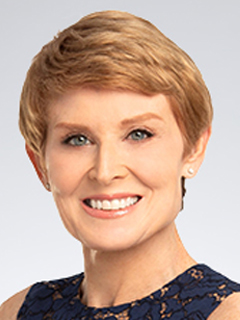
Diane Swonk
KPMG Chief Economist
Explore more




Subscribe to insights from KPMG Economics
KPMG Economics distributes a wide selection of insight and analysis to help businesses make informed decisions.
Meet our team