Smaller companies and some consumers lose access to credit
Banks eased credit to firms that benefit from AI.

February 3, 2026
The Federal Reserve’s Senior Loan Officer Opinion Survey (SLOOS) reveals that banks tightened their lending standards for businesses of all sizes during the fourth quarter of 2025. Stronger demand for business loans and commercial real estate loans appeared during that period. For households, lending standards did not change in most categories including mortgages, credit cards and other consumer loans. Auto loans turned out to be the exception as standards eased.
For commercial and industrial (C&I) loans to large businesses, 5% of banks tightened their lending standards for large and middle market firms (e.g., businesses with annual revenue of $50 million or more). That compares with a 7% reading in the third quarter, suggesting a modest easing of credit conditions. For C&I loans to small businesses (annual sales of under $50 million), 9% of banks tightened standards.
Business loan demand from large firms picked up for the second straight quarter. Banks reported strong demand for loans from large and middle market firms: 16% reported rising demand, the largest percentage in the last three years. Customers cited the need for mergers and acquisitions. At small firms, loan demand did not change from the previous quarter.
As for loans to households, banks reported weaker demand for residential real estate (RRE) loans due to ongoing affordability concerns. Demand weakened for auto and other consumer loans but credit card loans were flat.
The January SLOOS included two sets of special questions. One inquired about banks’ likelihood of approving loans to firms with various levels of exposure to artificial intelligence (AI) when compared to the start of 2025. Banks were more likely to approve loans to firms benefiting from high AI exposure and less likely to approve loans to those adversely affected by high AI exposure. For those firms with little AI exposure, loan approval levels did not change.
The survey shows a beneficial effect from AI on firms in digital infrastructure and hardware manufacturing (78% of banks reported beneficial effects), transportation, logistics and commerce (64%), knowledge-intensive businesses and professional services (58%), energy and utility sectors (58%), personal and community service sectors (41%)and traditional manufacturing and construction (35%).
The other survey inquired about banks' expectations for changes in the lending environment for 2026. Banks expected little change. They anticipate loan quality will remain around current levels for C&I loans to large and middle market firms but deteriorate for small firms. Demand for CRE loans is as seen improving; RRE and most consumer loan categories are expected to lose ground.
The bifurcated economy is likely to continue even after the Fed is finished with its rate cutting cycle.
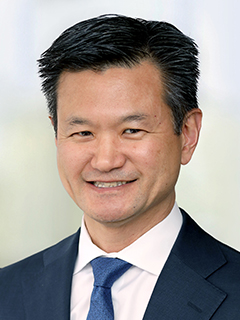
Ken Kim
KPMG Senior Economist
Bottom Line
The latest SLOOS paints a nuanced view of the economy, in which certain sectors of the economy appear poised to perform better while others face a more challenging environment. Lending conditions for large firms are expected to improve even as small firms face higher hurdles to obtaining capital.
For households, affluent consumers have more avenues to borrow while subprime borrowers have less choice. We expect the Federal Reserve to resume rate cuts but not until midyear. The bifurcated economy is likely to continue even after the Fed is finished with its rate cutting cycle. Elevated uncertainty will continue to afflict smaller firms while consumers are likely to lose access to borrowing.
Explore more



Meet our team

Subscribe to insights from KPMG Economics
KPMG Economics distributes a wide selection of insight and analysis to help businesses make informed decisions.