AI at Scale: How 2025 Set the Stage for Agent-Driven Enterprise Reinvention in 2026

NEW YORK, NY – Jan. 15, 2026 – Insights from the KPMG Q4 AI Pulse Survey reveal business leader priorities that will drive agents into the enterprise in 2026, led by continued investment in the technology and critical foundations, from the workforce to cybersecurity.
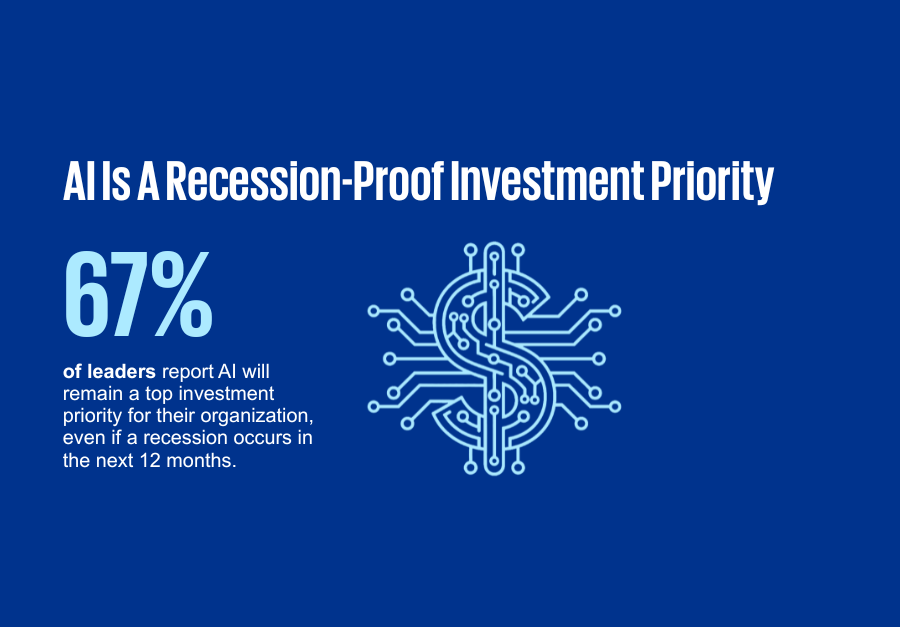
As AI cements itself as a recession-proof investment, business leaders are demonstrating unwavering commitment: 67% say they will maintain spending even if a recession occurs in the next 12 months, with a projected $124 million to be deployed over the coming year. Expectations on ROI continue to hover at similar figures quarter-over-quarter, with 59% expecting to see measurable ROI within that same timeframe.
“AI isn’t just an investment, it’s becoming the backbone of enterprise strategy,” said Steve Chase, Vice Chair of AI and Digital Innovation at KPMG LLP. “What the numbers don’t show is the growing divide: while some organizations stall after early deployments, the leaders are scaling fast and pulling ahead. For those treating AI as a true disruptor, this isn’t about catching the next wave; it’s about agents fundamentally changing how value is created and sustained across the enterprise.”
2026: The Year Agents Move to Professionalized, Orchestrated Systems
While the survey found a reported decline in agent deployment at 26% (down from 42% in Q3), that number is more than double the 11% reported in Q1 and does not reflect the reality KPMG is observing among leading enterprises. In our client work and at KPMG, we see the opposite trend: leaders have moved beyond initial deployments and are professionalizing and preparing to scale agent systems – readying data, investing in infrastructure, and building governance and observability to run multi-agent systems reliably.
“The topline adoption number undersells what’s actually happening among leaders,” Chase continued. “They’re not pulling back, they’re professionalizing their agents and agent systems. We’ve also seen leaders adopt more sophisticated definitions of what constitutes a true agent with higher aspirations of what’s possible as the technology rapidly advances and they see material value from the agents they’ve already deployed.”
Investment and engineering capacity are focused on production-grade, orchestrated agents - systems that can be governed, monitored, secured, and integrated at scale. Leaders are converging on platform standards that consistently manage identity and permissions, data access, tool catalogs, policy enforcement, and observability, so each new agent strengthens the system rather than adding fragility.
That portfolio of work is a recognized challenge, with nearly two-thirds of leaders (65%) citing agentic system complexity as the top barrier for two consecutive quarters.
“Much of this work is happening behind the scenes today but it sets the stage for a very different 2026 because value doesn’t come from launching isolated agents,” said Swami Chandrasekaran, Global Head of KPMG AI and Data Labs. “2026 will be the year we begin to see orchestrated super-agent ecosystems, governed end-to-end by robust control systems that drive measurable outcomes and continuous improvement.”
The Great Skills Reset: Designing the Workforce for Human-Agent Collaboration
As enterprises professionalize and prepare to scale agents, the top-of-mind question for every leader is the size, shape, and skills of their workforce of the future. The differentiator is no longer basic adoption, it’s effective human-agent teaming, grounded in ethical practices and measurable outcomes.
- Entry-level hiring is being reimagined: 64% of organizations have already altered their approach due to AI agents’ influence, up from 18% last quarter, reflecting the need for new competencies in data, automation, and responsible AI.
- Agents as project leads: 44% of leaders expect AI agents to take lead roles in managing specific projects alongside human teams over the next 2 to 3 years.
- Talent premiums are real: 76% of leaders are willing to offer up to 10% higher compensation for candidates with strong AI skills.
- Boards are upskilling rapidly: 40% of leaders say their board members now have substantial AI expertise, a five-fold increase from two quarters ago (8%).
- New roles are emerging: AI prompt engineer, AI performance analyst, and AI trainer/data curator are among the most anticipated roles.
Against this backdrop, we also saw a rise in employee resistance to AI. Leaders will need to communicate transparently and invest in upskilling to prepare teams.
Security Is a First-Order Constraint and the Catalyst for Enterprise Hardening
Cybersecurity is the single greatest barrier to achieving AI strategy goals – 80% of leaders say so, up from 68% in Q1. It is also projected to be the top investment category; half of executives plan to allocate $10-50 million in the coming year to secure agentic architectures, improve data lineage, and harden model governance. Data privacy (77%, up from 53% in Q1) and data quality (65%, up from 37% in Q1) have risen sharply as agent-to-agent workflows and tool integrations expand risk.
Enterprises are responding pragmatically by hardening platforms, controls, and integration:
- 72% plan to deploy agents from trusted technology providers.
- 60% restrict agent access to sensitive data without human oversight; nearly half also employ human-in-the-loop controls across high-risk workflows.
- Beyond speed, leaders are prioritizing security, compliance and auditability (75%) as the most critical requirements for agent deployment.
Leading teams are embedding privacy by design and segmenting sensitive data to trace and remediate issues early and ensuring auditability across agent actions and tool calls. These safeguards are becoming foundational to scaling agents responsibly in 2026.
The Bottom Line
Capital is flowing, ROI confidence is rising, and agents are moving from pilots to professionalized platforms with focus and investment in safeguards.
The KPMG Quarterly Pulse Survey captures perspectives from 130 U.S.-based C-suite and business leaders representing organizations with annual revenue of $1 billion or more. The report was prepared by the KPMG US AI & Digital Innovation group led by Stephen Chase.
AI Quarterly Pulse Survey: Q4 2025
Download below for deeper insights!
Click hereQ&A
| Question | Answer |
| How likely are leaders to maintain AI investment during an economic downturn? | AI is seen as a recession-proof investment. 67% of leaders will maintain their AI spending even if a recession occurs in the next 12 months. |
| What is the expected return on investment (ROI) on AI investments? | 59% of business leaders expect to see a measurable ROI on their AI investments within the next 12 months. |
| What does the data show about the rate of AI agent deployment? | Reported deployment declined to 26% in Q4 from 42% in Q3. However, the article clarifies that leaders are professionalizing and scaling systems, and Q4's rate is still more than double the 11% from Q1. |
| What is the primary barrier to implementing and scaling AI agents? | For two consecutive quarters, nearly two-thirds of leaders (65%) have cited the complexity of agentic systems as the top barrier. |
| How is AI influencing hiring for entry-level positions? | 64% of organizations have already altered their approach to entry-level hiring due to AI agents, a significant increase from 18% in the previous quarter. |
| Are companies willing to pay a premium for candidates with AI skills? | Yes, 76% of leaders are willing to offer up to 10% higher compensation for candidates who possess strong AI skills. |
| How has AI expertise at the board level evolved? | It has increased five-fold. 40% of leaders report that their board members now have substantial AI expertise, compared to just 8% two quarters ago. |
| What new jobs are emerging because of AI? | The most anticipated new roles include AI prompt engineer, AI performance analyst, and AI trainer/data curator. |
| What is considered the greatest barrier to achieving AI strategy goals? | Cybersecurity is the top barrier, cited by 80% of leaders, which is an increase from 68% in Q1. |
| What are the most critical requirements for deploying AI agents? | Beyond speed, 75% of leaders are prioritizing security, compliance, and auditability as the most critical requirements. |
| How are companies managing the security risks associated with AI agents? | 72% plan to use agents from trusted providers, and 60% are restricting agent access to sensitive data without human oversight. |
Data Tables
How do you expect AI agents will impact your workforce?
| Answer | % | Count |
| AI agents will prompt the integration of AI collaboration skills into existing workflows and therefore role requirements | 60% | 184 |
| AI agents will prompt our organization to upskill employees currently in roles that will be displaced by AI agents | 44% | 147 |
| AI agents will encourage our organization to evolve performance metrics to emphasize human capabilities like judgment and creativity over tasks now handled by AI | 44% | 134 |
| AI agents will encourage our organization to build "AI collaboration" competencies into performance reviews and development plans | 32% | 99 |
| AI agents will prompt our organization to redefine promotion criteria to prioritize AI literacy and effective agent delegation | 30% | 93 |
| AI agents will prompt the creation of new roles with specialization in AI | 23% | 71 |
| AI agents will prompt our organization to establish formal certification programs for AI collaboration proficiency levels | 22% | 68 |
| AI agents will encourage our organization to create mentorship programs pairing AI-proficient employees with those developing these skills | 21% | 65 |
| AI agents will replace certain roles | 14% | 43 |
| We do not expect AI agents to have an impact on our workforce | 0% | 0 |
| Other (please specify) | 0% | 0 |
| Total | 100% | 305 |
How confident are you in your organization's current ability to measure ROI (return on investment) across the following metrics relative to AI integration?
| Answer | Not at all confident | Somewhat confident | Neutral | Confident | Very confident |
| Improved profitability | 0% | 1% | 14% | 46% | 39% |
| Improved productivity | 0% | 0% | 16% | 35% | 48% |
| Improved performance or higher quality of work delivered by employees | 0% | 0% | 19% | 33% | 47% |
| Improved analytics used by C-suite in business decision-making | 0% | 0% | 21% | 33% | 46% |
| Revenue generated | 0% | 0% | 24% | 61% | 14% |
| Employee adoption | 0% | 1% | 25% | 59% | 15% |
| Identifying use cases to scale0% | 0% | 1% | 26% | 58% | 16% |
| Employee AI learning and development | 0% | 1% | 27% | 60% | 12% |
Which of the following best describes your expectations for AI agent-human collaboration in the workplace over the next 2 to 3 years?
| Answer | % | Count |
| Humans will primarily manage and direct AI agents | 27% | 82 |
| AI agents will take lead roles in managing specific projects with human team members | 46% | 141 |
| Collaboration will be more peer-to-peer, with neither consistently managing the other | 4% | 12 |
| No significant change in current human-AI collaboration practices | 21% | 64 |
| Unsure or no opinion | 2% | 6 |
| Total | 100% | 305 |
About KPMG LLP
KPMG LLP is the US member firm of the KPMG global organization of independent member firms providing Audit, Tax and Advisory services. The KPMG global organization operates in 138 countries and territories and has more than 276,000 people working in member firms around the world. Each KPMG firm is a legally distinct and separate entity and describes itself as such. KPMG International Limited is a private English company limited by guarantee. KPMG International Limited and its related entities do not provide services to clients.
KPMG is widely recognized for being a great place to work and build a career. Our people share a sense of purpose in the work we do, and a strong commitment to increasing access to education and opportunity, advancing mental health, and supporting community vitality. Learn more at www.kpmg.com/us.
Media Contact
For media inquiries, contact Olivia Weiss (oweiss@kpmg.com), Melanie Batley (mbatley@kpmg.com), Alyssa Mora (alyssamora@kpmg.com) or Shuvi Mitra (shuvimitra@kpmg.com).