
The SEC’s investor-focused agenda

December 2025

SEC leadership outlines a new agenda designed to 'get back to basics'.

On Day 1 of the Conference1, SEC Chairman Paul Atkins opened remarks for the SEC by explaining his desire to get back to basics and the SEC’s original mandate, focusing on investor needs.

Share

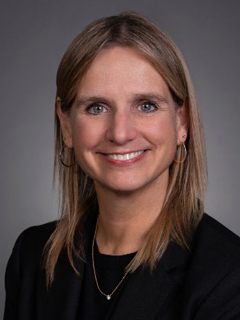
The goal of disclosure is to inform, not overwhelm. Returning to the basic principle of making disclosures decision-useful for a reasonable investor, which requires separating material risks from boilerplate language, is important. This focus on clarity is essential to upholding the SEC's mission of maintaining fair and efficient markets.

Angie Storm

KPMG Chief Accountant

SEC's future focus: An ambitious list

Atkins and Chief Accountant Kurt Hohl outlined several priorities aimed at revitalizing the public markets. Their shared goal is to right-size regulations and make the vast amount of information currently provided to investors more readable, understandable and relevant.

The SEC is driving toward this goal through its current agenda, which includes simplifying regulations within its jurisdiction. Key initiatives highlighted – many of which may be expected in the coming months and will continue through a long-term strategy – included the following:

  • Rationalizing disclosure: A key element of Atkins’ back-to-basics agenda is to reduce the cost and volume of disclosures. An example of a disclosure area he believes has gotten out of hand is the disclosure of risk factors. He noted that current risk factor disclosures have far outgrown what was originally intended when the requirement was adopted. He mentioned the executive compensation disclosure as another area of interest. As far as timing, Atkins indicated that the large disclosure project will be broken up into smaller projects expected to be proposed in 2026.
  • Streamlining corporate governance: The SEC intends to depoliticize shareholder meetings and reform the litigation landscape to eliminate frivolous securities lawsuits while preserving avenues for meritorious claims.  
  • Clarity on crypto: The SEC is continuing to move from regulation-by-enforcement regarding crypto to providing clearer rules for the market. Its work in this area is complemented by the FASB taking on crypto accounting (read our FASB reporting). Hohl mentioned that OCA staff have been sharing with the FASB staff crypto issues that arise in consultations.

Accounting for crypto assets is rapidly evolving in terms of both standard-setting and the practical application of those standards. To keep up with the latest developments, visit our webpage, Cryptocurrencies and other digital assets.

Modernizing accounting and auditing standards

A central theme of Hohl’s remarks was the need for standard-setting to be streamlined and cost-effective. In this regard, he sees a need for the FASB and PCAOB to focus on the following four areas:

  • Convergence, leverage, learning: Hohl called for both the PCAOB and FASB to better collaborate with their international counterparts. He highlighted the benefits as reducing investor confusion, speeding up standard-setting, lowering compliance costs, and ultimately promoting more efficient capital markets.
  • Agile standard-setting: Hohl is working with the FASB and PCAOB on being responsive to changes in the business environment that ultimately affect financial reporting and auditing. He is seeking to encourage greater preparer engagement at the proposal stage in both the FASB and PCAOB standard-setting process. He further emphasized the importance of robust cost-benefit analyses.
  • Effective audit oversight: Hohl suggested that the PCAOB inspection process adapts to the changes in the quality control environment, focusing on evaluating the effectiveness of a firm’s holistic quality management systems, and not just inspecting individual engagements. He said this should be paired with changes to the inspection reports, including considering adding severities of deficiencies, all with the view of improving their usefulness to stakeholders.
  • Consultation: In Hohl’s view, the PCAOB needs to be responsive to firms, perhaps through a consultation process similar to OCA’s process that is available to issuers. He highlighted that firms receiving interpretive guidance from the PCAOB before executing their audits will improve audit quality. Additionally, OCA staff reminded auditors that there is a process to contest findings in a PCAOB inspection report through OCA. They also reminded auditors and issuers that to the extent accounting matters are raised and disagreed upon during a PCAOB inspection, these may be raised by the issuer to OCA through its consultation process.

Evolving audit risk landscape

Hohl and his OCA staff noted areas they are monitoring for new and emerging risks for auditors.

AI was presented as a major emerging area of focus with both significant potential and inherent risks for the auditing profession. Auditors will need to apply current standards and guidance to evolving technologies used by issuer management and by auditors themselves, with governance and risk assessment highlighted as key areas of focus.

Read more about KPMG’s approach to AI and technology in Audit and our coverage of additional discussions on AI at the conference here.

Atkins, Hohl and OCA staff all underscored that independence, integrity and professional skepticism remain the bedrock of investor protection – even as firm structures evolve. Alternative practice models and private‑equity involvement in accounting firms can bring capital and innovation, but they also heighten independence and governance risks. The clear message: firms must design and fund structures and controls that prioritize audit quality and the public interest. 

    Auditor independence is the foundation of public trust in financial reporting. As our profession evolves, our commitment to independence remains absolute – guarding against any self-interest that could undermine our crucial role in the capital markets ecosystem.

    Maureen Evers-Willox

    KPMG National Partner-in-Charge, Independence

    Footnote:

    1. 2025 AICPA Conference on Current SEC and PCAOB Developments

    Accounting Research Online

    Access our accounting research website for additional resources for your financial reporting needs.

    Thank you!

    Thank you for contacting KPMG. We will respond to you as soon as possible.

    Contact KPMG

    Use this form to submit general inquiries to KPMG. We will respond to you as soon as possible.
    All fields with an asterisk (*) are required.

    Job seekers

    Visit our careers section or search our jobs database.

    Submit RFP

    Use the RFP submission form to detail the services KPMG can help assist you with.

    Office locations

    International hotline

    You can confidentially report concerns to the KPMG International hotline

    Press contacts

    Do you need to speak with our Press Office? Here's how to get in touch.

    Headline