
Financing capital transactions

December 2025

Data centers take center stage as the latest issue requiring complex analysis to reach the right accounting.

Share

The Accounting Hot Topics panel at this year’s Conference1 focused on an ever-changing business and regulatory environment, with a focus on capital transactions. From our perspective, the below topics are some of the most newsworthy of the myriad of topics covered in an engaging panel.

Capital is rapidly flowing into data center development, with deals increasingly focused on securing long-term power through complex Power Purchase Agreements. Investors often use special purpose entities to manage assets, leases, finance and energy contracts. Companies entering into these transactions must grasp the accounting impacts from the outset to ensure investment success.

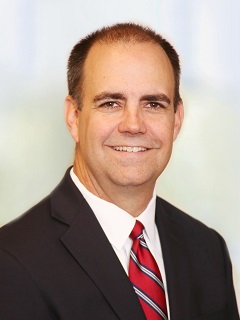
Landon Westerlund

KPMG Deputy Chief Accountant

Brave new ledgers: Navigating data center deals

Panelists dove into a subject that’s attracting considerable market attention and capital: the intricate world of data center transactions. The demand for data is insatiable, and the need for data centers is exploding with the proliferation of AI.

These aren't your typical real estate deals; they often involve complex structures, energy contracts and unique financing arrangements. So understandably, several accounting issues arise when a company gets involved with a data center.

Key takeaways for financial reporting

For a company considering such an arrangement, here are the key accounting considerations:

  • Consolidation: Is it your SPE? The first task is determining whether the SPE qualifies as a variable interest entity (VIE). The company must consolidate the SPE if it’s a VIE and the company is the primary beneficiary. A key focus is on the most significant activities of the SPE and who controls those activities. Incorrectly analyzing this issue has significant downstream impacts.
  • The lease: It's more than just rent. The company must consider the total arrangement to identify if there is a lease in the arrangement and then consider the impact of lease accounting. This involves classifying the lease as either a finance or operating lease. Given the highly specialized nature, longer expected lease term of these facilities, and significant lead time to build the data center these lease arrangements can be complex, requiring careful analysis.
  • Financing: Unpacking complexity.  Data center projects are capital-intensive; it is common to see complex financing arrangements that can include instruments, such as convertible debt, warrants and other derivatives. These instruments fall under guidance like Topics 470 (debt) and 815 (derivatives and hedging) and require careful valuation and accounting.

To be or not to be: Derivatives version

Panelists shared that they have seen an uptick in the volume of capital transactions, including deSPAC transactions, which brings a topic of conferences past into the present: accounting for equity-linked instruments like warrants. Separately, the panelists also had a round robin on FASB updates and touched on ASU 2025-07 (derivatives scope refinements).

Is it a derivative?

Equity-linked instruments: The current indexation guidance for equity-linked instruments hasn’t been meaningfully updated since 2007, even though warrant agreements seem to get new contingency clauses every few months. Even beyond the SPAC warrants, these clauses have led to countless restatements where instruments that were accounted for as equity by preparers are forced into liability classification even though the contingency clauses are rarely, if ever, triggered.

Liability accounting can create significant earnings volatility and many financial statement users believe it doesn’t provide them with decision-useful information. Seeing the volume of feedback on this topic in the Agenda Consultation – Invitation to Comment responses, chatter about the standard from the SEC staff throughout the year and recent FASB comments in other forums, it seems as if a project could be on the horizon.

The derivatives scope refinement ASU: Under this ASU, contracts with underlyings tied to the operations or activities of either counterparty to the contract are not derivatives. This is a broad principle designed to cover current and future transactions. However, the FASB didn’t prescribe how these excluded instruments should be accounted for.  When entering into transactions that meet the new scope exception, both investors and investees will have to analyze each transaction and apply the most appropriate guidance.

A project that simplifies the indexation guidance would be a great win, saving companies immense time and cost while still reflecting the economic substance of the instrument. We're all watching this space very closely.

Mahesh Narayanasami

KPMG Partner, Department of Professional Practice

The pervasiveness of tariffs

The panelists dove into the ripple effects of tariffs on accounting and financial reporting, unpacking issues like impairment, revenue recognition, disclosure requirements and the broader business challenges tariffs can trigger. Curious about the full story? Check out our in-depth reporting on tariffs.

Footnote:

  1. 2025 AICPA Conference on Current SEC and PCAOB Developments

Accounting Research Online

Access our accounting research website for additional resources for your financial reporting needs.

Thank you!

Thank you for contacting KPMG. We will respond to you as soon as possible.

Contact KPMG

Use this form to submit general inquiries to KPMG. We will respond to you as soon as possible.
All fields with an asterisk (*) are required.

Job seekers

Visit our careers section or search our jobs database.

Submit RFP

Use the RFP submission form to detail the services KPMG can help assist you with.

Office locations

International hotline

You can confidentially report concerns to the KPMG International hotline

Press contacts

Do you need to speak with our Press Office? Here's how to get in touch.

Headline