KPMG 2026 Healthcare & Life Sciences Investment Outlook
Our annual in-depth examination of the healthcare and life sciences deal market explores 2025 and the year ahead.

KPMG 2026 Healthcare & Life Sciences Investment Outlook
Complete the form to receive your copy of the KPMG 2026 Healthcare & Life Sciences Investment Outlook
This report’s insights are based on extensive global research into the deal and market environments, as well as our annual survey of corporate and private equity (PE) dealmakers across eight subsectors. Crucial to creating this report is the extensive knowledge and experience of our healthcare and life sciences (HCLS) leaders, who work with our clients on their most pressing deals, strategy, and transformations worldwide.
Uncertainty on many fronts challenged HCLS deal markets in 2025, holding back some potential transactions while spurring others. Interest rate cuts by the US Federal Reserve that began in 2024 were paused through much of 2025 before being restarted late in the year. Company leaders had to make sense of wide-ranging government policy alterations, including a shifting array of new tariffs, passage of a major tax bill, and changes in leadership and direction at federal agencies. Pressure to reduce drug prices and bring research and manufacturing back to the US reverberated through life sciences subsectors while changes in demand, financial pressures, and reimbursement uncertainties were among the factors complicating operational and dealmaking equations for healthcare.
Highlights from the eight subsectors:
- Biopharma: Bolstered by almost $1.4 trillion in cash and debt capacity, biopharma companies in 2025 continued their quest for a new generation of blockbuster medications. Although no megamergers took place, there were several acquisitions in the $10 billion to $15 billion range, as companies bought specialists in central nervous system (CNS) therapies, oncology, and other high-impact areas and sought footholds in the surging market for GLP-1 weight loss and diabetes treatments. Noting a decline in venture capital support for biotech startups, venture arms of some major pharma companies provided dozens of rounds of funding. Companies also increasingly looked to Chinese biotechs, signing licensing deals for a raft of new drug candidates even as possible tariffs and import restrictions loomed. Biopharma companies had to factor in broad pressures on drug prices and revenues, ranging from negotiated discounts under the Inflation Reduction Act to the threat of most-favored nation pricing, and several companies struck deals with the Trump administration that included promises to reduce prices, reshore manufacturing, and establish direct-to-consumer sales.
- Life sciences tools and diagnostics: Although overall deal volume lagged in 2025, companies in this subsector made several strategic transactions to position themselves for a technology-driven future that extends beyond traditional lab testing. Specialized capabilities in genetic testing for a broad range of diseases, FDA-approved blood tests for colorectal cancer and Alzheimer’s disease, digital pathology, and AI-enabled clinical decision support systems (CDSS) designed to help clinicians make sense of data about individual patients and possible treatments all have been in demand. Advances in proteomics, multiomics, single-cell analysis, and spatial biology also continue to fuel deal activity. There was also revived interest by PE, with financial investors leading two of the signature transactions in the subsector.
- Medical devices: Several significant acquisitions and divestitures by industry leaders characterized dealmaking in 2025 as device companies sought to build portfolios concentrated in high-growth, high-margin areas such as cardiovascular procedures, ophthalmology, and oncology. With more than 100 new FDA-approved applications for AI-enabled radiology, that market attracted broad interest, and in the subsector’s highest-value deal, PE investors Blackstone and TPG took mammography specialist Hologic private in a deal worth more than $18.3 billion. The market for robotic surgery has become more competitive, with several companies making moves to broaden applications and bolster their portfolios.
- Biopharma services: After rising in 2024, M&A in biopharma services dropped sharply in 2025. Yet both strategic and financial buyers were active across several areas as pharma companies’ broad outsourcing of clinical trials, drug development, manufacturing, and commercialization to biopharma services companies continued. In research, the focus has been on specialized CROs, site management, and advanced technology, and several companies have built end-to-end technology platforms for clinical trials. CDMO transactions largely centered on high-value specialized manufacturing capabilities, geographic expansion, and the push to bring pharmaceutical production to the US. Cold-chain logistics capabilities, data-driven commercialization services, and real-world data platforms were also key areas.
- Hospitals and health systems: Hospitals and health systems faced mounting economic, structural, and policy pressures in 2025. Those dynamics made M&A increasingly essential to the growth of larger systems and the survival of smaller and rural institutions. Deal activity declined sharply, with few megadeals, as hospitals pursued bolt-on acquisitions and partnerships to stabilize finances, expand service lines, and strengthen value-based care capabilities. Regulatory uncertainty, reimbursement risks, and labor shortages drove defensive consolidations, while larger systems sought outpatient and ambulatory assets to optimize cost structures. Digital transformation is increasingly critical as providers look to improve efficiency. In 2026, we expect strategic deals to focus on scale, service rationalization, and technology integration as providers navigate persistent margin and compliance challenges.
- Healthcare services: While deal volume was down slightly from last year in healthcare services, the subsector saw the most deals in the healthcare space. Activity was driven by larger acquisitions across physician organizations, post-acute care, and ancillary settings such as ambulatory surgery and urgent care centers as patients, payers, and the government sought to move services toward lower-cost sites of care. Investors favored scalable platforms with strong clinical integration, technology, and regional density, while behavioral health, fertility practices, and infusion providers attracted increased PE interest. Demographic trends, cost pressures, and patient preferences for outpatient care accelerated portfolio rationalization and specialty expansion. Despite reimbursement and regulatory risks, demand for lower-cost, tech-enabled models positions healthcare services for continued consolidation in 2026.
- Healthcare payers: Deal activity in this subsector remained steady as payers pursued strategic recalibration amid rising medical costs, utilization spikes, and reimbursement uncertainty. Regulatory scrutiny and margin pressures drove portfolio optimization, divestitures, and selective acquisitions aiming to improve analytics, value-based care enablement, and provider integration. Megadeals were scarce; alliances and partnerships dominated as payers sought cost control and risk management capabilities. AI adoption accelerated in back-office operations but sparked regulatory and legal challenges around claim denials. Looking ahead, we expect success to hinge on disciplined cost management, targeted investments in digital and clinical capabilities, and strategic partnerships to build more integrated, scalable platforms.
- Healthcare IT: Dealmaking in this subsector rose in 2025, reaching four-year highs in volume and value as providers, payers, and investors sought digital tools to manage costs, improve efficiency, and help hard-to-find staff work smarter. AI and GenAI adoption accelerated, driving innovations in clinical documentation, diagnostics, revenue cycle management, and patient engagement. Private equity investors favored high-growth platforms in behavioral health, home-based care, and revenue cycle management. Strategic buyers pursued consolidation and partnerships amid high valuations and regulatory complexity. We expect demand for HCIT to remain strong as healthcare organizations across the spectrum prioritize interoperability, automation, and value-based care capabilities to navigate demographic shifts and margin pressures.
Our research for this report examined key trends, opportunities, and risks for investors across HCLS. Sixty-seven percent of respondents to our annual survey said they anticipate increased dealmaking in 2026. As the new year begins, we know that companies in every HCLS subsector will focus squarely on the future as they make and execute plans to position themselves for success this year and beyond.
Dive into our thinking:



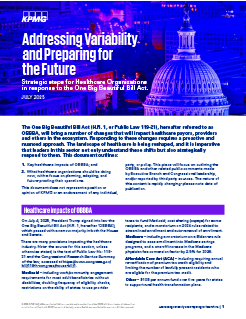

Download PDF
KPMG 2026 Healthcare & Life Sciences Investment Outlook
Complete the form to receive your copy of the KPMG 2026 Healthcare & Life Sciences Investment Outlook
Download PDFMeet our team













Subscribe to KPMG Healthcare and Life Sciences Insights
Industry insights and trends, one click away.