Q&A with Kurt Hohl, SEC chief accountant
A Q&A with SEC Chief Accountant Kurt Hohl from the March Women Corporate Directors Audit Committee Peer Exchange.

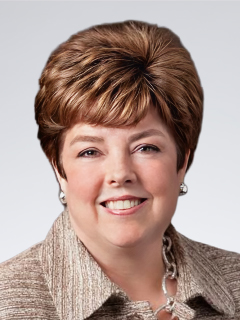
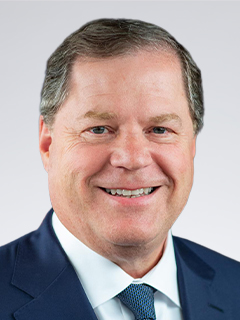
Kurt Hohl, SEC chief accountant, spoke with Candy Duncan, audit committee chair at Teleflex and retired partner from KPMG LLP, for the Women Corporate Directors Audit Committee Peer Exchange series in late March. Hohl shared his views on the state of accounting and auditing standard setting, current areas requiring audit committee vigilance, and how technological innovation impacts financial reporting, boards, and regulators. The following discussion has been edited for length and clarity.
Hohl’s comments below are provided in his official capacity as the Chief Accountant of the US Securities and Exchange Commission (SEC) but do not necessarily reflect the views of the Commission, the Commissioners, or other members of the staff.
Candy Duncan: Kurt, thank you for joining us today. Let’s start with what compelled you to come out of retirement to rejoin the SEC?
Kurt Hohl: This is a critical time for the capital markets. I've known Chairman Atkins for over 35 years. We worked together during my first tour of duty at the SEC back in the late '80s and early '90s. And when he asked me to take on this role, I thought that this was a great opportunity to make my second contribution to public service.
We have an ambitious agenda that we’re looking to accomplish over the next few years, including substantial changes at the Public Company Accounting Oversight Board (PCAOB) as well as engagement in international standard-setting reform. The latter is an area of interest because those accounting and auditing standards are used in the US capital markets fairly extensively.
Here, we’ll continue to engage with the Financial Accounting Standards Board (FASB), the International Accounting Standards Board, the International Audit and Assurance Standards Board (IAASB) and the International Ethics Standards Board for Accountants (IESBA) on developing standards that take into account cost-benefit analyses and are focused on emerging issues.
Of course, artificial intelligence (AI) is a significant area of interest for us. We ask issuers that come to speak with us questions about how they're using AI for financial reporting. We ask auditors about how they're using AI, what are they seeing at their clients, how they are using AI to improve their engagement level audit quality, and how they use AI to monitor their system of quality control. And then we're engaging with regulators, both domestically and internationally, in terms of what use cases they're seeing with AI and how they're overseeing it.
We’re also focused on auditor independence. We need to make sure that our independence rules and interpretations continue to be fit for purpose. It's particularly relevant when AI is integrated into the audit service delivery.
CD: What advice do you have for audit committees as we think about current and future financial reporting? And how are you aligning with other divisions at the SEC, including Corporation Finance and Enforcement?
KH: Engagement is my primary message. When cyberthreats emerged, audit committees were focused on trying to determine their appropriate oversight regarding such threat’s actual or potential impact on the quality of the issuer’s financial reporting. That is where audit committees are today with respect to AI. They are asking how are companies using AI in their financial reporting function? Does the audit committee know how the company is using AI? How does it affect financial statement preparation? How are the auditors using AI? What are the auditor independence implications associated with its use? That's a lot to think about for audit committees.
There are also some interesting and novel accounting issues associated with AI in terms of data center leases and power purchase agreements that add complexity and don't fit neatly into current accounting guidance. We continue to elevate those issues to the attention of auditors, preparers, audit committees, the two accounting standard-setters and other regulators.
Digital assets is also a focus area. Expect to see more coordination between the SEC, Commodity Futures Trading Commission, and the federal legislature to add clarity to the marketplace.
On the enforcement side, Chairman Atkins said recently that we're looking for quality of enforcement actions, not quantity. We're focused on rooting out bad actors in the marketplace and holding them accountable. I think you'll see a higher level of coordination between the SEC and the PCAOB on auditor enforcement cases. We have overlapping mandates in this area.
CD: What are your views regarding oversight and reform of the PCAOB and their inspections, in particular?
KH: The inspection process really hasn't changed in the 22 years since the PCAOB was established, even though the environment has changed significantly. The standards that apply to auditors today are a lot different than they were when the inspection program was first designed. One of the things that I emphasize is a shift in inspections towards focusing on a firm's system of quality management or quality control.
There was a new standard issued internationally, which is now followed by all the firms in the United States: ISQM1 Quality Control Standard. That has been in place for three years. The PCAOB issued their own quality control standard (QC 1000), which was deferred last year. I expect the PCAOB to act on that soon. Post adoption of these standards, I expect a change in inspection approach to be focused on how the audit firm's leadership supports individual engagement teams in the field and holding leadership more accountable for quality. I think that QC 1000 and ISQM 1 will bring more leadership attention and changes to help ensure that high-quality audits are being performed.
Coinciding with that is probably a change in the future PCAOB inspection reports. I don't know how many people have ever picked up a PCAOB inspection report and were able to understand it or understand its significance. We're working with the new board to take a look at whether now might be the time, in conjunction with a change in the inspection focus, to change the inspection report to be more suitable to other stakeholders besides the accounting firms that receive it. This is where audit committees can be vocal and help the PCAOB with input on how to make meaningful changes. What kind of information would you like to see? What are some of the challenges you see in terms of how the PCAOB works with audit committees during the inspection process?
CD: Let's move to international standard setting. What are you seeing there?
KH: When the SEC first allowed the use of International Financial Reporting Standards (IFRS), there was good governance at the IFRS Foundation and there was stability in funding. The IFRS Foundation has been under pressure of late, particularly in the last couple of years when the IFRS Foundation added the International Sustainability Standards Board to its scope.
There is also a challenge in international standard setting for auditing. We have a very complex structure whereby the profession and the Public Interest Oversight Board (PIOB) work together to oversee the development of auditing standards. The PIOB is facing significant financial challenges: it has experienced a decline in the number of sources and their respective contributions. The public accounting profession currently funds over 90 percent of the operations of the international standard-setting bodies (IAASB and IESBA), which raises concerns about independence and objectivity.
We are working with our global counterparts to evaluate how we can solve some of the governance and funding issues to provide investors with confidence in how standard-setting bodies develop high-quality standards that can continue to be used in capital markets.
CD: What about in the U.S?
KH: We meet very frequently with the Financial Accounting Standards Board (FASB) to share accounting issues that we see developing in the marketplace. We are encouraged by the standard-setting projects they've undertaken.
One of the things that we also are focused on with the FASB and other standard setters is the concept of materiality of disclosures, and the cost-benefit associated with developing new standards requiring new disclosures. Investors and analysts always want to see more information in the financial statements. But the question is, what is the information that's material? How does it meet the reasonable investor standard?
We’re working to better understand what information financial statement users want. How critical it is to their investment decisions. Similarly, another area where we can work with audit committees and companies is how to evaluate the cost to prepare that information. The costs of preparing disclosures are ultimately borne by investors. A robust cost-benefit analysis is something that we want to see in the standard-setting world. An associated challenge is that many of the participants in our financial reporting ecosystem, who are key to achieving accurate and balanced cost-benefit analyses—companies and audit committees—don't necessarily participate at a sufficiently high degree in the standard-setting input process.
The lease accounting standard is an example where preparers weren’t sufficiently engaged on implementation cost until after the standard was final. And then they said, “It's going to require system changes. It's going to require more ... ”
CD: How is the Office of the Chief Accountant staying up to date on the use of AI in analyzing and preparing financial reports? Do you have any insights for us as audit committee members?
KH: Don't be afraid. AI can do some wonderful things. I ask every single stakeholder that I speak with about their use of AI because of the opportunities that are available. Some companies are initially telling me, “We’re not really using it” … but when I probe, I discover they are … from expense reimbursements to three-way matches to reconciliations. And some may be using tools that are using AI and they don't even know it.
I encourage you to work with the management of the companies that you oversee to understand the processes that they go through to identify AI they use, how they're using it, and whether they're over-relying on it. If you don't engage now, you're going to fall behind.
Engage with your auditors too. They have an opportunity to use AI built into their tools to improve their audit quality. It's now possible to load audit files into a tool, and the AI within the tool is able to detect some challenges or anomalies.
We’re also looking at whether we need to provide guidance on AI related to issuer disclosure controls and procedures and issuer internal controls over financial reporting.
CD: One last question on the challenges or emerging risks that you believe will most test the current financial reporting systems over the next five years?
KH: Geopolitical risk is one thing that should be on everybody's mind. But there's not too much that we on the SEC staff can do to control that. Also, the commission has some robust and ambitious plans on changing public company reporting, I think for the better, whether it be permitting semiannual reporting or disclosure simplification.
The best advice that I can give is to stay engaged. We always welcome stakeholders engaging with us. If there's any uncertainty that you have, my job as a regulator is to listen and help you before it becomes an issue.
Views expressed are those of the participants and do not necessarily reflect the views of KPMG.
Meet the contributors