Securing the Foundation: Sustaining AI-Enabled HR Transformation
Building the capabilities needed for long-term transformation

Many organizations have already modernized HR platforms, learning technologies, and payroll systems. The next challenge is sustaining transformation while responding to increasing expectations for workforce agility, employee experience, AI adoption, workforce planning, and operational effectiveness. As AI capabilities become embedded in enterprise platforms, leaders are looking for clearer ways to evaluate technology, understand workforce impacts, and support ongoing transformation.
KPMG's perspective is that sustaining transformation requires more than implementing new tools. Organizations need visibility into work, an understanding of workforce impacts, and a framework for making informed decisions about AI-enabled capabilities.
WATCH: Perpetuate
What you'll learn
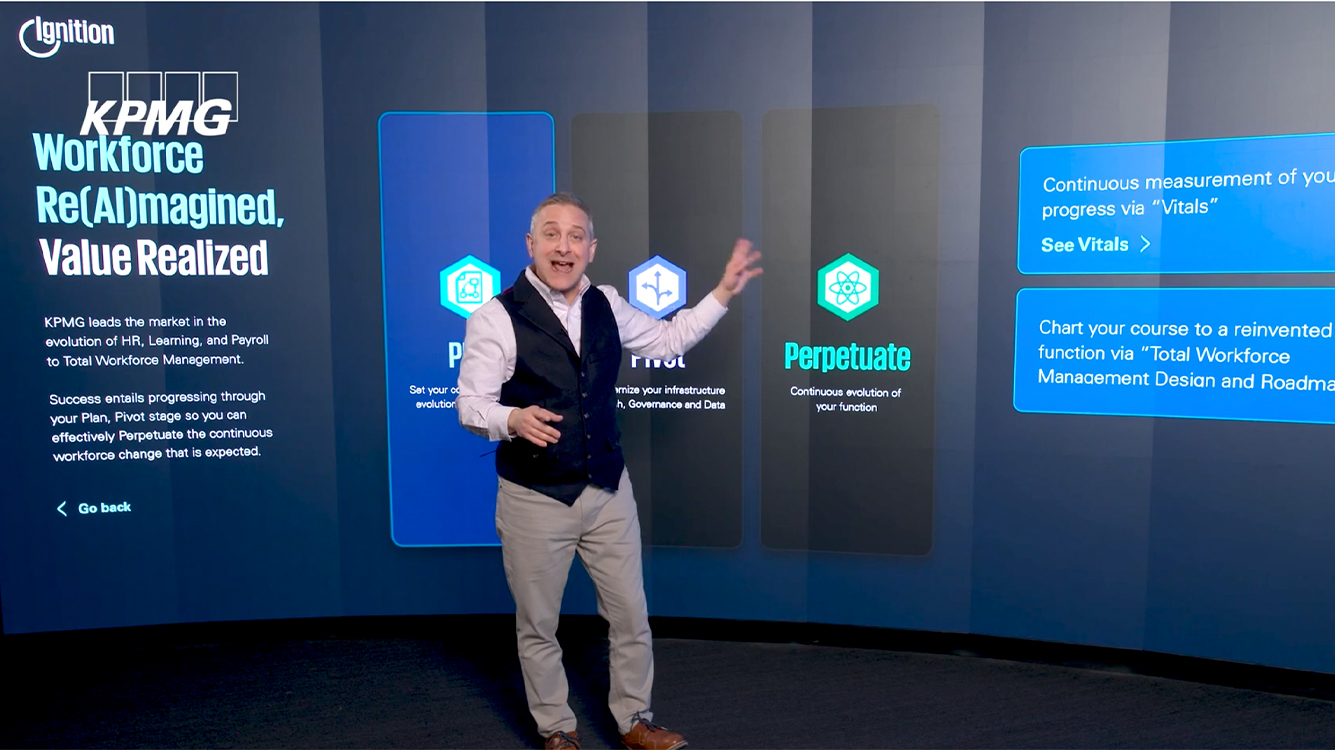
In this video, Evan Metter discusses explores five questions organizations are asking about AI-enabled technologies, workforce change, operating model evolution, and value realization.
Five questions leaders are asking
1
2
3
4
5
Key takeaways
- Successful transformation requires attention to governance, adoption, workforce impacts, and economics.
- Workforce planning becomes increasingly important as AI capabilities influence roles and responsibilities.
- Organizations need visibility into how work changes as new technologies are introduced.
Why Workforce Visibility Matters
Understanding how work is performed, what activities make up a role, and where technology may support specific tasks can help organizations make more informed workforce decisions. As roles evolve, leaders need greater visibility into workforce impacts, workforce planning scenarios, and future-state operating models.
WATCH: Mystro Demonstration
What you'll learn
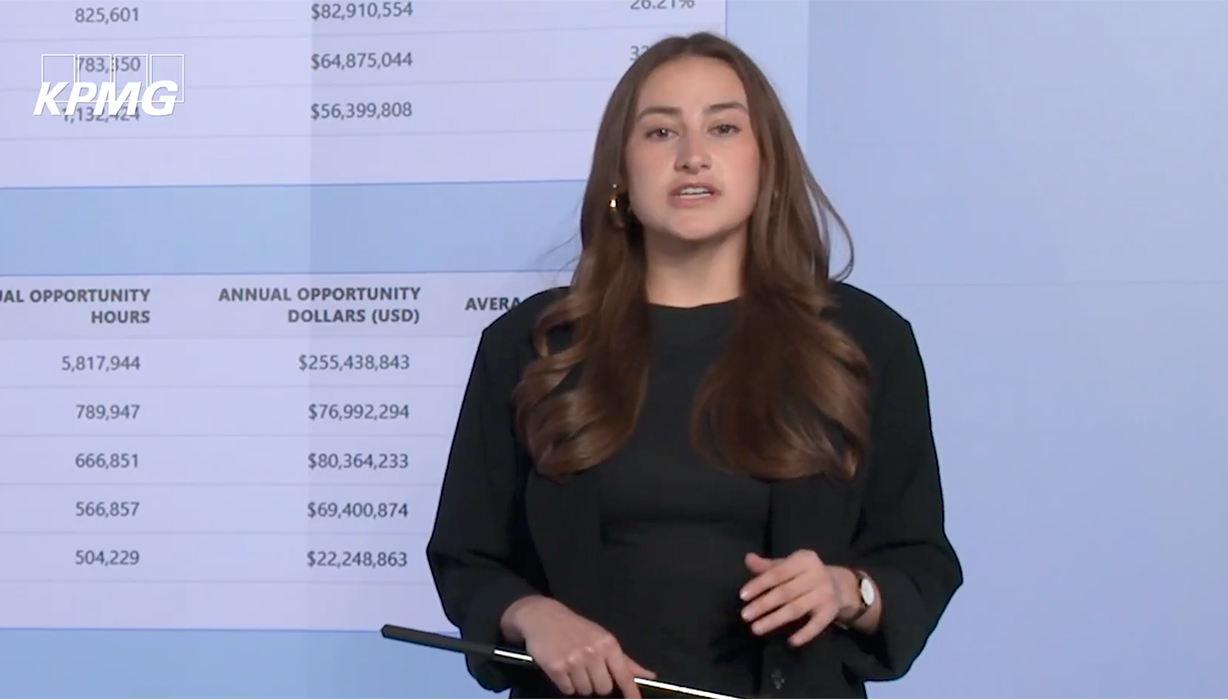
This demonstration shows how KPMG Mystro analyzes workforce data, identifies AI opportunities, and provides visibility into roles, tasks, activities, workforce characteristics, and potential future-state workforce models. It also illustrates how human roles and digital teammates can be viewed together as part of a broader workforce strategy.
Key takeaways
- Workforce visibility begins with understanding work at the role, task, and activity level.
- Leaders can explore opportunities across departments, job families, locations, and workforce segments.
- Workforce modeling can help organizations understand how roles may evolve over time.
- Human roles and digital teammates can be evaluated together as part of future-state workforce planning.
Explore more



Meet our team