Prediction Markets: Paths to Entry

Finding the right path for your strategy, resources, and risk appetite 

U.S. prediction markets have undergone a dramatic transformation. Combined trading volume across Kalshi and Polymarket exceeded $40 billion in 2025, up from roughly $9 billion in 20241, representing over 400% year-over-year growth. Kalshi alone generated $263.5 million in fee revenue on $22.9 billion of volume2, while Polymarket surpassed $3 billion in monthly volume by October 20253.

On the regulatory front, the Commodity Futures Trading Commission (CFTC) has shifted toward accommodation while awaiting the outcome of numerous court cases. In January 2026, Chairman Selig withdrew a proposed rule that would have prohibited political- and sports-based event contracts, and directed staff to draft new rulemaking establishing clear standards for prediction markets. Seventeen new DCM applications have been filed since early 2025, with seven approved (including Polymarket’s US re-entry and Gemini’s first crypto-native prediction market license). DraftKings launched as a CFTC-registered Introducing Broker in December 2025, bringing prediction markets to 38 states through its existing user base. Additionally, because CFTC-regulated prediction markets are governed by federal commodities law rather than state gaming statutes, they can be offered nationally across all 50 states, even where traditional sportsbook betting is not authorized. That nationwide availability is being actively challenged by state regulators in multiple courts, but the current CFTC has publicly signaled a shift towards a more proactive posture in defending its jurisdiction and the legality of CFTC-regulated event contracts4,5.

Industry growth forecasts vary, with some gaming research firms predicting these markets could reach a trillion dollars in annual trading volume by the end of this decade6. For firms evaluating how to participate, the question is which entry path best fits their strategy, resources, and risk appetite.

This document outlines five primary entry models under consideration from our clients, from lightweight partnerships to full exchange ownership, with the key tradeoffs between them. Offering access to these markets in an unregulated manner could subject a firm to CFTC-levied enforcement actions.

Dive into our thinking:

Prediction Markets: Paths to Entry

Finding the right path for your strategy, resources, and risk appetite

Download PDF

The table below summarizes key tradeoffs across each path to entry.

 TSP (Service Provider)IBFCMDCMDCO
RegulationMinimalLow–medHighVery highVery high
Timeline*1–3 mo.2–6 mo.6–12 mo.12–24+ mo.12–24+ mo.
Capital req.None$45k$1m+$5m+$10m+
Fee captureService contract dependentCommissions (0.5–2%)Clearing + commission (1–3%)Full stack (0.07–7%)Clearing fees (cost-recovery)
Design & list new contractsNoneNoneNoneFullNone

*Note: Timelines are approximate and can vary significantly based on operational preparedness, scale and capacity.

1. Technology Service Provider

Definition: A new concept in the derivatives markets, certain app-based companies are entering the prediction markets as “technology service providers” (TSP) in a partnership with DCMs. These partnerships benefit both sides – the app-based company is able to quickly offer event-contracts to its customer base, while the DCM benefits from the additional volumes and liquidity in its marketplace. We caution that the TSP concept is new and untested with regulatory authorities. 

Regulatory Burden: Limited

Registration Timeline: Varies widely based on firm’s technology strategy

Capital Requirements: No CFTC-mandated minimum

Fee Capture: Service contract dependent

2. Introducing Broker (IB)

Definition: A CFTC-registered entity that solicits or accepts orders to buy or sell futures, options, or event contracts, but does not accept or hold customer funds. Must route all customer orders and funds through a registered FCM. 

Regulatory Burden: Must register with the NFA. Guaranteed IBs (backed by an FCM) face lighter requirements; non-guaranteed IBs must meet independent capital and compliance obligations.

Registration Timeline: 60–90 days for complete applications

Capital Requirements: $45,000 adjusted net capital (non-guaranteed); none if guaranteed by an FCM

Fee Capture: Commission or markup on order flow, typically 0.5–2% of customer volume.

Example: DraftKings launched its Predictions app in December 2025 as a CFTC-registered IB, routing orders through CME Group.

3. Futures Commission Merchant (FCM)

Definition: A CFTC-registered entity that accepts orders and holds customer funds in segregated accounts. FCMs execute, clear, and settle transactions and serve as the financial intermediary between customers and the exchange/clearinghouse.

Regulatory Burden: Must register with CFTC and NFA. Subject to ongoing capital monitoring, customer fund segregation rules (CFTC Part 1), and comprehensive compliance programs.

Registration Timeline: 6–12 months

Capital Requirements: $1,000,000 minimum adjusted net capital (or 8% of total risk margin, whichever is greater)

Fee Capture: Clearing fees, commission on customer trades (1–3% of volume), margin interest income. Can serve multiple DCMs and IBs.

4. Designated Contract Market (DCM)

Definition: A CFTC-designated exchange authorized to list and facilitate trading in futures, options, and event contracts. The DCM is the marketplace itself, responsible for product design, trade matching, market surveillance, and regulatory compliance across 23 Core Principles.

Regulatory Burden: Must demonstrate compliance with all 23 Core Principles under CEA Section 5(d), covering market integrity, surveillance, financial resources, system safeguards, and participant protections.

Registration Timeline: 12–24+ months (statutory 180-day review begins only when application is materially complete)

Capital Requirements: Variable; typically $5M+ in financial resources to demonstrate operational viability

Fee Capture: Full fee stack: transaction fees (0.07–7% on Kalshi), listing fees, market data subscriptions, membership fees, API access charges. Kalshi generated $263.5M in fee revenue on $22.9B volume in 20257.

5. Derivatives Clearing Organization (DCO)

Definition: A CFTC-registered clearinghouse that serves as the central counterparty to all trades on a DCM. The DCO manages counterparty credit risk, holds customer collateral in segregated accounts, performs daily mark-to-market settlement, and administers default procedures.

Regulatory Burden: Must comply with DCO Core Principles under CEA Section 5b, including risk management, financial resources, participant fund protection, governance, and system safeguards.

Registration Timeline: 12–24+ months

Capital Requirements: Variable; typically $10M+ in financial resources. Must maintain risk-based reserves and default fund mechanisms.

Fee Capture: Clearing fees per contract, membership fees from clearing members. Revenue potential is lower than DCM but provides critical infrastructure control.

Key Takeaways

When deciding the method of entry suitable for your firm, the core tradeoff remains speed to market vs regulatory scrutiny, fee capture, and capital investment:

  • A TSP approach has recently been the fastest path to market, although it is a new concept and untested with regulatory authorities. The TSP approach differs broadly among firms and specifications may be defined during a service contracting process. 
  • An IB registration can be completed in weeks with minimal capital, making it the fastest path to market, as DraftKings demonstrated in late 2025, but IBs depend entirely on existing exchanges for product offerings and fee structures. 
  • An FCM sits in the middle ground between IB and DCM/DCO; it allows meaningful fee capture and the ability to hold customer funds, but comes with substantial compliance overhead and a $1M+ capital requirement.
  • A DCM designation offers the greatest long term value through full control of product design, pricing, and market data, but it demands 12 to 24+ months of regulatory engagement and significant financial resources; Kalshi’s $263.5M in 2025 fee revenue illustrates the upside. 
  • DCO registration is typically pursued alongside a DCM application by firms seeking vertical integration across trading, clearing, and settlement.

Navigating the Path Forward: How KPMG Can Help

KPMG can provide support to help your firm determine your ideal regulatory path and develop a sustainable program. Our structured approach is tailored to your firm and designed to provide clarity, build a robust compliance framework, and streamline the application process.

An example roadmap can be seen below:

PhaseHow KPMG Delivers Value
1. Strategic AdvisoryWe begin by helping you understand the implications of each path to determine the ideal strategy for your business, advice driven by our years of CFTC & NFA registration experience.
2. Gap AnalysisOur team conducts a thorough assessment of your existing programs & governance against regulatory requirements, delivering a detailed gap analysis with a clear inventory of actionable recommendations based on financial service industry standards.
3. Program DevelopmentWe assist in building and enhancing your compliance and operational framework, helping you develop the necessary policies, procedures, and controls to meet regulatory expectations.
4. Registration SupportWe provide hands-on support throughout the registration process, from application preparation to managing regulatory Q&A and demonstrations, targeting a smooth path to approval.
5. Client-Specific TrainingTo prepare your team, we develop and deliver a tailored training program, complete with custom materials, covering the new compliance and operational requirements. Legacy sportsbook clients may find this particularly valuable as they move into the federally regulated trading sphere.

Watch our webcast replay

The evolving landscape of prediction markets

Footnotes

Chepkova, T. (2026, February 4). Why brokers and exchanges are racing into prediction markets, and what comes next.

O’Boyle, D. (2026, January 9). Kalshi fee revenue in 2025 was $263.5 million, with 89% coming from sports.

3 Barbosa, V. (2025, November 18). Polymarket handles $3B volume on Polygon, 338,000 unique traders. CoinSpeaker.

4 Commodity Futures Trading Commission (CFTC), (Feb. 17, 2026). Release No. 9183-26: “CFTC Reaffirms Exclusive Jurisdiction over Prediction Markets in U.S. Circuit Court Filing”.

Commodity Futures Trading Commission (CFTC), (Feb. 17, 2026). Chairman Selig: Op-Ed | States Encroach on Prediction Markets.

Brewer, C. (2025, December 17). Prediction markets could hit a trillion dollars in trading volume by the end of this decade, new report says. CNBC.

Barbosa, V. (2025, November 18). Polymarket handles $3B volume on Polygon, 338,000 unique traders. CoinSpeaker.

Meet our team

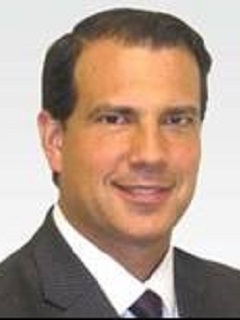
Image of Duncan Hennes
Duncan Hennes
Advisory Managing Director, KPMG

Thank you!

Thank you for contacting KPMG. We will respond to you as soon as possible.

Contact KPMG

Use this form to submit general inquiries to KPMG. We will respond to you as soon as possible.
All fields with an asterisk (*) are required.

Job seekers

Visit our careers section or search our jobs database.

Submit RFP

Use the RFP submission form to detail the services KPMG can help assist you with.

Office locations

International hotline

You can confidentially report concerns to the KPMG International hotline

Press contacts

Do you need to speak with our Press Office? Here's how to get in touch.

Headline