On the CAE Agenda Q1/Q2, 2026– TMT
Internal audit trends in the technology, media, and telecommunications sectors

The role and focus of internal audit (IA) in the technology, media, and telecommunications (TMT) sectors are ever evolving. This installment of the KPMG On the CAE Agenda series provides quick insights into what IA leaders within the TMT industries have hearing, doing, and discussing with their stakeholders across the core elements of their business agendas during the first half of 2026, and how these trends can shape their priorities for the remainder of the year.
Hot topics in IA and key focus areas for TMT
- Artificial Intelligence (AI) governance and quality: "Black box" decision-making, biased algorithms, and lack of human oversight for AI-powered systems; documentation/procedures, stakeholder engagement, and incident handling
- Cybersecurity and data privacy: Cybersecurity resilience(response and recovery for data breaches and theft of intellectual property); threat prevention
- Third-party risk management: Security vulnerabilities, challenge to have visibility into third parties’ evolving data usage practices and actively managing the risks associated with new AI functionalities,risk related to contingent workers (e.g., co-employment)
- Macroeconomic and geopolitical conditions: Trade compliance and restrictions, tariffs and sanctions, inflation and interest rates, competition, lack of unemployment, economic uncertainty, and geopolitical instability ongoing; export controls impacting market access and supply chain
- Intellectual property (IP) protection: IP theft from insiders or external actors, and inadequate controls over sensitive data
- Human capital and talent management: Challenges infinding and retaining the right talent in key areas and operational culture change; talent acquisition strategies and employee retention programs; alignment with business goals; employee relations; succession planning
- New products and enhancements rollout: Research and development and design/production process, market alignment, and regulatory and quality compliance; time-to-market, cost, and return on investment (ROI) analysis
- Supply chain resilience: Single source dependencies, raw materials shortages, logistical disruptions
Spotlight on:
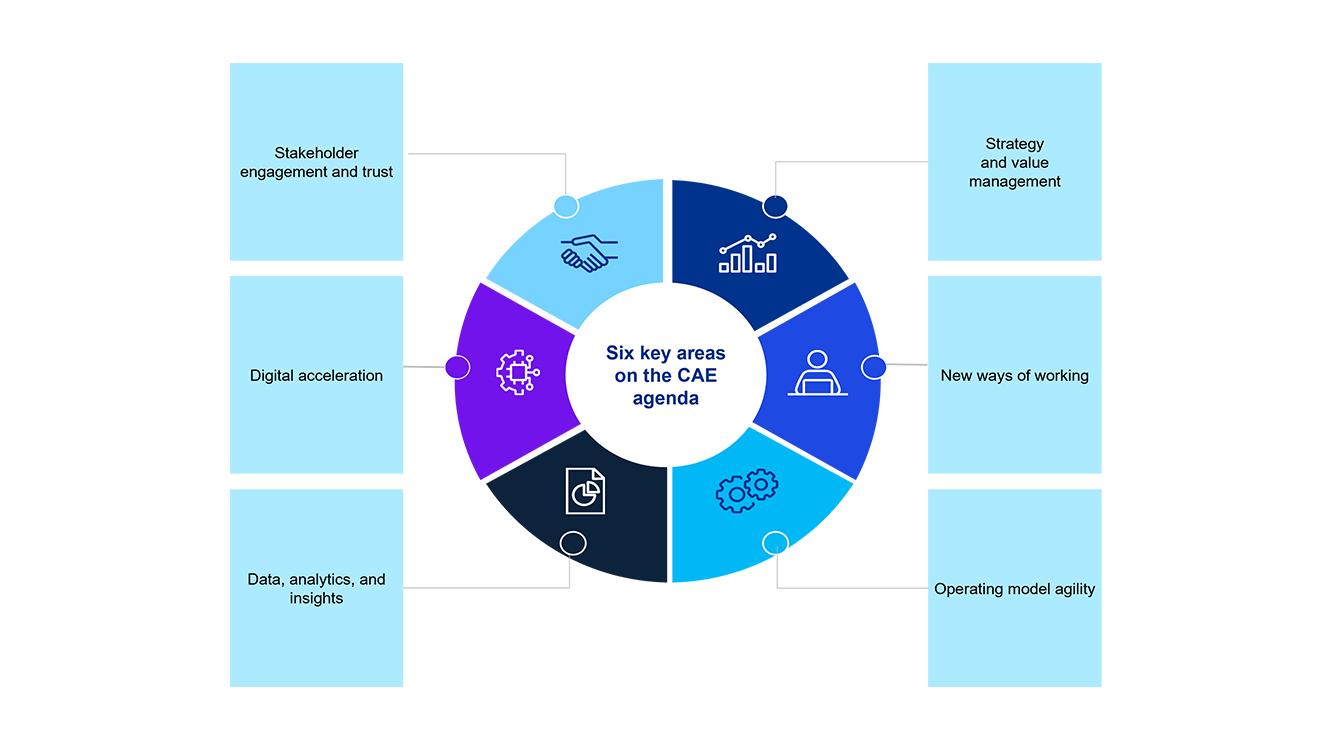
Data, analytics, and insights
- Adoption/use of AI technologies in IA
- Data-driven enterprise and IA risk assessment
- Need for more specialized or mature capabilities around technology, data, and insights
- IA's role in the company's data quality and governance journey
- Risks of agentic AI
- Enhancing IA’s operational model
- Bias and transparency
Operating model agility: IA’s role in cost containment
- Continuously adapt audit plans to prioritize emerging risks in procurement and cost-saving opportunities using real-time data and analytics
- Employ agile auditing techniques to review inventory management systems and operational processes, especially regarding manufacture, distribution, and held for sale
- Use technology to automate compliance checks and establish proactive controls, allowing for swift identification and reduction of discrepancies and shrinkage
- Use iterative assessment approaches to review investments for ROI, adapting evaluation criteria as projects evolve to ensure benefits are realized efficiently
- Implement adaptive expense control: Use flexible, technology-driven auditing processes around expense management, with the ability to rapidly address and correct noncompliance or excessive spending
Dive into our thinking:
Explore more





Meet our team

Michael A. Smith
Partner and US Internal Audit Solution Leader

Parth Jhaveri
Partner, Internal Audit & Enterprise Risk, KPMG US
Michael A. Smith
Partner and US Internal Audit Solution Leader
Parth Jhaveri
Partner, Internal Audit & Enterprise Risk, KPMG US