Consumers & AI drive growth; trade gap widens
Inflation still running hot.
July 30, 2026
GDP growth rose 1.5% in the second quarter, a slowdown from the 2.1% pace of the first quarter. Consumer spending drove overall gains, accelerating at the fastest pace since the third quarter of 2024. Gains were broad-based, with a pickup in spending on goods and services. Fiscal stimulus via lower tax withholdings and a surge in tax refunds helped to blunt the blow of higher prices at the gas pump, while the ultra-wealthy continued to spend with abandon.
The FIFA World Cup provided an extra boost to travel and tourism, but the Federal Reserve’s Beige Book indicates those gains were concentrated in host cities. Low- and middle-income households struggled and curbed spending on discretionary purchases earlier in the quarter. The cost of tickets to the matches soared to staggering heights: the average price of scalper tickets for the final game reached five figures.
Housing activity edged higher, largely due to a late-in-the-quarter burst of construction activity. Mortgage rates have risen in recent weeks, which will quash sales over the summer. Home buying and building is still down relative to a year ago.
Wealth held in real estate remains substantial but is valued less than that held in equities and mutual funds for the third time on record. The other two times were at the height of the tech bubble at the end of the 1990s expansion and as the global economy reopened in 2021.
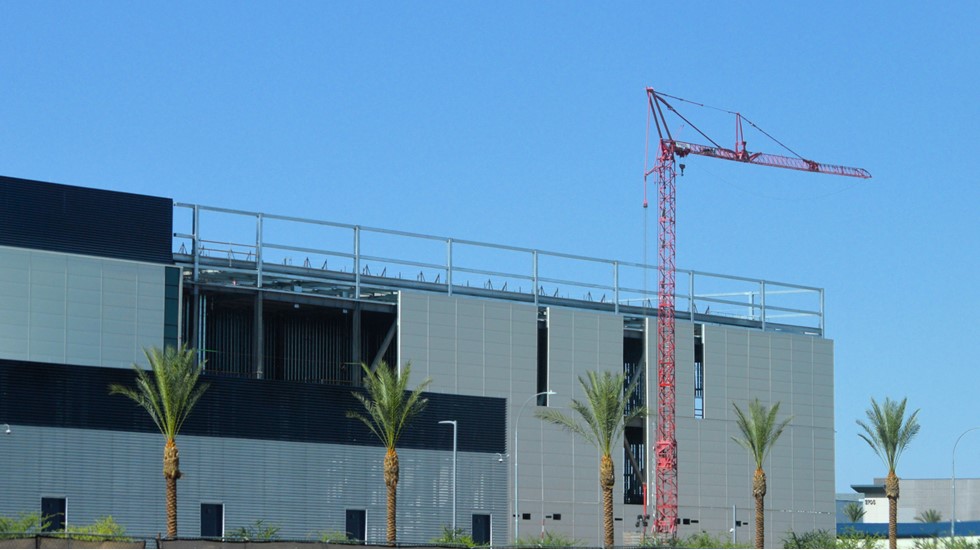
Business investment remained robust, buoyed almost wholly by data center construction and the spillover effects for the energy grid. The pace of expansion in gains outside of data centers remains weak but will get a boost from increased defense spending as we move into 2027. The level of spending remains elevated, while backlogs and backlash to data centers at the state and local levels are intensifying. Regulations regarding AI and data centers are mounting at the state level and will be on the ballot in November.
Total nonresidential construction activity is still contracting, as construction activity outside of data centers and the energy needed to power them is weak. Construction in the manufacturing sector has dropped at a double-digit rate compared to last year, before adjusting for escalating costs.
Inventories were liquidated. Vehicle sales hit their highest level since September 2025 in June, while oil inventories were depleted. They are at their lowest level since the early 1980s. Some in the industry worry that restocking is necessary to prevent damage to storage units and avoid further strain on refining capacity. The bottom of the barrel is more complex and costly to refine – brace for price spikes that are compounded by the on/off hostilities in the Middle East.
Those losses came despite manufacturing surveys which highlighted a desire by manufacturers to restock ahead of price hikes. A new round of tariffs will replace those ruled illegal by the Supreme Court. We expect the effective tariff rate to peak at 12%, the same as the peak in 2025. That does not include increased enforcement at the border. An executive order on June 3 cracks down on country-of-origin rules.
Restocking should buoy inventory accumulations in July. The fly in the ointment is transportation and warehousing costs. The turndown rate by truckers has spiked with consolidation in the sector and is boosting shipping costs along with a rebound in diesel prices. Higher bond yields are upping the cost of financing those inventories.
Government spending contracted after catching up in the first quarter from the six-week government shutdown. A small increase in spending at the state and local levels was not enough to offset a small decline in federal outlays. Cuts to SNAP and Medicaid benefits began to take a toll on government outlays. A larger cliff for those programs is in the schedule for 2027. The offset could be increases in defense outlays.
The administration has asked for an $87 billion supplemental spending this summer, one-third of that for defense, and a 50% increase in the budget for fiscal 2027. It is unclear if the Senate will pass such large increases, with pushback from both sides of the aisle over the conflict in the Middle East. Modern warfare requires a complete restructuring of the defense infrastructure.
Drones may be inexpensive, but the AI needed to up the efficacy of those weapons and the ability to ward off cyberattacks is not. It requires continuous as opposed to one-time capital expenditures.
Those defense outlays will amplify the inflation associated with the AI infrastructure boom. Productivity gains cannot be scaled fast enough to offset those costs.
The largest drag on the economy in the second quarter was the trade deficit, which widened significantly. Imports remained strong, posting double-digit gains due in part to imports of inputs for data centers. Those imports are protected by tariff waivers and come into the country free of tariffs. Exports weakened, as the toll of the conflict in the Middle East was greater on the rest of the world than the US.
The United-States Mexico and Canada trade agreement is now in limbo and subject to annual review. The administration levied more tariffs on the two countries before completing this year’s negotiations. The biggest flashpoint could be the 75% North American content rules, which enable much of trade to cross the borders tariff-free and affect auto manufacturing.
The administration has talked about upping the US content to 50% of that 75%. That would be particularly disruptive to the vehicle industry; parts cross borders multiple times prior to rolling off the production line as a finished vehicle. Plants cannot be moved overnight without substantial costs and increased automation. That could have a chilling effect on trade across the borders with our closest neighbors. The vehicle sector is among the most vulnerable.
Fed inflation gauge still too hot
The PCE price index edged down 0.1% in June from May, largely on the back of lower energy prices. That would mark a much smaller decline than the 0.4% drop in the CPI, which was pulled down by a sharp retreat in gasoline prices. The PCE index rose 3.7% from a year ago, a slight deceleration from the 4.1% we saw in May. The data are backward looking and fail to capture the recent spike in refined petroleum products - diesel, jet and bunker fuels.
The PCE index is still well above the Federal Reserve’s current 2% target. The three- and six-month annualized pace, which better measures momentum, jumped to 3.1% and 4.4% respectively. Both represented a cooling from May but are still well above the pace at the start of the year and will accelerate again in July.
Those gains are prior to the expansion of the war with Iran and another round of tariffs and sanctions. Some of the price hikes from last year’s tariffs have not taken effect yet.
The core PCE index, which stripes out volatile food and energy components, rose 0.1% in June. The core PCE rose 3.3% from a year ago, only 0.1% below the pace of May. That reinforces the concerns of hawks at the Federal Reserve that underlying inflation is too hot and sticky. The debate over a rate hike spilled into the open at the July FOMC meeting, with three dissenting votes in favor of a rate hike instead of holding the rate steady.
The three-and six-month annualized pace for PCE inflation was 2.9% and 3.8% respectively. That represents cooling from the momentum in May but is likely to be short-lived due to the ongoing conflict in the Middle East and its spillover effects. Escalating transportation costs show up in just about everything.
The supercore services PCE, which strips out housing and electricity, rose 0.1% in June. The index rose 3.8% from a year ago, which is still well above the level in late 2025. That index hit 3.9% in May and could reach that level again for July.
The three- and six-month annualized pace rose to 3.2% and 4.0%, respectively. That is slightly cooler than last month, but still too hot. The re-acceleration in service sector inflation resumed in January and February, before one shot was fired in the war with Iran.
The persistence of service sector inflation is at the core of the debate on rate hikes at the Fed. The core group weighing a hike has expanded and hardened their view in recent months.
Downward revisions pending?
The PCE index will be revised going back five years with the benchmark revisions to GDP growth, which will be released on September 30, 2026. The revisions will make improvements in how legal services, portfolio services and consumer electronics are measured. The net effect could shave between 0.1% and 0.2% from year-over-year measures of PCE.
The changes will not alter the current narrative that inflation has remained too hot for too long. Price hikes have compounded and are rapidly becoming the norm, which can cause a vicious cycle of escalating price levels, which the Fed is charged with averting. Fed Chairman Kevin Warsh has argued that “inflation is a choice.” His colleagues are pushing to choose to derail it before it risks becoming further entrenched.
Spending outpaces incomes
Personal consumption expenditures rose by 0.4% after adjusting for inflation. We saw some retreat in prices at the gas pump in June, which helped free up funds for discretionary purchases and added to the economic boost from the FIFA World Cup matches. We need a separate category of spending on ranch dressing, which went viral during the games.
Spending on big-ticket items such as vehicles and services was stronger than spending on food and at food establishments. A cut to SNAP funds, which is showing up as a drag on income growth, and the rise in GLP-1 drugs, are colliding. Spending on food and restaurants declined due to those factors and the erosion in purchasing power due to inflation. Food banks are slammed six years into the recovery. That speaks to the inequality we are enduring and why the economic aggregates often mask the stress most households are enduring.
Even households earning more than $100,000 a year have moved downscale to stretch their purchasing power. The increase is showing up in foot traffic and online at big-box discounters, off-price retailers, and fast-food establishments. However, recent earnings reports suggest that those gains are not enough to offset the blow to demand from low- and middle-income households.
Real disposable income eked out a rare increase of 0.3% after adjusting for inflation in June. Wages and salary gains expanded, along with payouts for Social Security and Medicare, while SNAP payments fell. The baby boom is still in its peak retirement years; the last of the boomers will not turn 65 until 2029. Farm income fell again.
Real disposable incomes have been flat for the longest span on record. We have only seen two months of major increases since August 2021. One of those months was January 2023, when the searing bout of inflation in 2022 showed up as a cost-of-living adjustment in Social Security outlays.
Those shifts are part of the reasons why consumer attitudes about the economy remain subdued, despite low unemployment. The concentration of income gains at the highest level of the income strata is carrying spending gains but is not enough to boost overall income by much. Most households have been treading water or losing purchasing power due to inflation since 2021.
The saving rate, which is what is left over after subtracting consumer spending from overall income, dropped to 2.7%. That is the lowest level since June 2022, when inflation came close to its peak emerging from the pandemic. It is still more than double the all-time low of 1.4% hit during the height of the housing bubble in 2005 – the threshold is low.
The saving rate is currently understating the cushion of wealth and savings in more affluent households. Conversely, the stress on consumer balance sheets is showing up as a jump in delinquencies on subprime debt.
Older student loan borrowers are feeling the most strain. Some 2.6 million student loans were transferred back to the Department of Education for resolution in the first quarter. Generation X men have the highest student debt loads and some of the most negative views on the economy, according to recent surveys by Civic Science.
Some of the jump in credit delinquencies we are enduring represent whiplash from the pandemic. Everything from fiscal stimulus to student loan forbearance alleviated debt burdens and increased access to credit as the economy emerged from the pandemic. Banks are reporting better credit performance by more recent applicants.
We could see some weakness with back-to-school spending and a resurgence in transportation costs.

Diane Swonk
KPMG Chief Economist
Bottom Line
The AI boom, its wealth effects, fiscal stimulus and the lingering effects of earlier rate cuts by the Fed helped offset the drag due to higher energy prices. Some of those cushions could erode if energy prices continue their upward march this summer. We could see some weakness with back-to-school spending and a resurgence in transportation costs, but a significant boost to defense spending cannot be ruled out. Stimulus with inflation still simmering is a bad combination – it tends to lead to more inflation.
The debate on rate hikes spilled out into the open at the July FOMC meeting. The ranks of those arguing for rate hikes are broadening and showed up as a blistering three dissents at the July meeting as the Fed voted to hold rates unchanged. We still expect two rate hikes by year-end. The honeymoon for Fed Chairman Kevin Warsh was short-lived.
Subscribe to insights from KPMG Economics
KPMG Economics distributes a wide selection of insight and analysis to help businesses make informed decisions.
Explore more



Meet our team