Scaling physical AI across digital Infrastructure & key assets
From algorithm to action: As PAI makes infrastructure autonomous, balance operational efficiency with safety and resilience.
Scale PAI across digital infrastructure and national assets
Download sector spotlightAutomate high-density cooling, server management, and freight orchestration.
Prevent software and algorithmic errors from cascading into kinetic failures.
Validate multi-million dollar automation investments using digital twin simulations.
The next frontier of critical and digital infrastructure

Applications for essential services
Maritime ports & intermodal hubs: Coordinates automated guided and motorized vehicles and gantry cranes to maximize container throughput and remove personnel from hazardous zones.
Power grids & utilities: Deploys autonomous inspection drones along transmission corridors and uses predictive modeling to balance fluctuating grid loads.
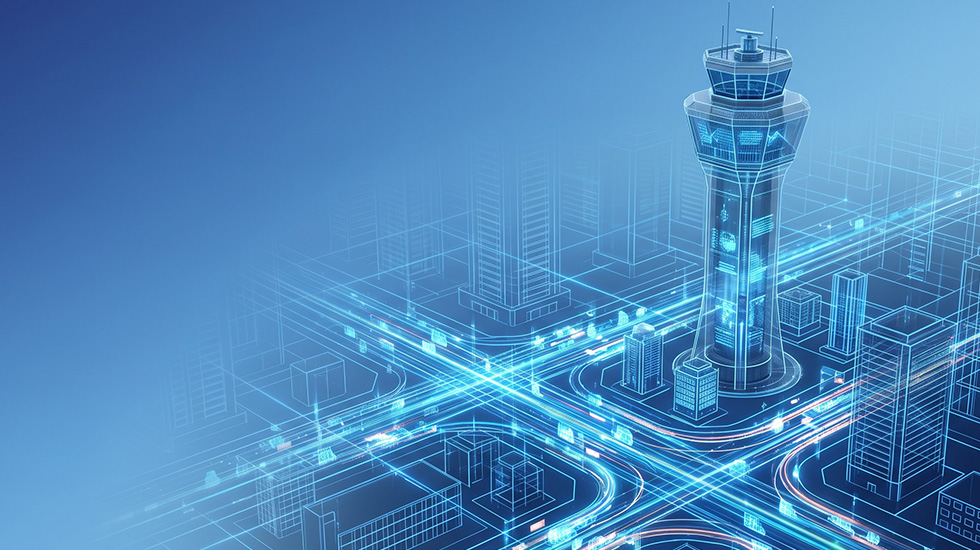
High-density data centers: Optimizes power and liquid cooling dynamically, anticipates thermal stress, and directs autonomous robotics for server rack maintenance.
The stakes of real-world integration
Critical infrastructure is the nexus of national commerce and national security:
Systemic impact: A failure inside heavy physical assets triggers widespread disruption across interconnected economic supply chains.
Kinetic vulnerability: A corrupted cooling controller causes immediate, catastrophic hardware loss; a stalled port orchestration system halts global logistics flows.
Mandatory governance: Safe deployment demands built-in operational resilience, deterministic safety overrides, and multi-tier compliance from day one.
Driving operational efficiency and de-risking capital
"Organizations are leveraging digital twins and simulation models to conduct their own due diligence before making significant capital investments. Simulating real-world conditions helps validate the business case and build the trust required by boards, investors, insurers, and regulators."
— Greg Corlis
Emerging Technologies & Physical AI Leader, KPMG Advisory
Deploy robotics and AGVs to eliminate logistical bottlenecks and continuously maximize asset utilization.
Reassign human operators away from high-risk environments and repetitive heavy lifting to supervisory control roles.
Test kinetic failure scenarios and stress-test new automation strategies within digital twins to secure approvals from boards, insurers, and regulatory agencies.
Navigating interconnected systems
Interconnected environments are essentially a 'system of systems.' If there is a small change or failure in one area—whether in an algorithm or an obscure piece of equipment—it can trigger unpredictable, cascading failures across the entire operation.
Chris Corteen
Emerging Technologies & Innovation Expert, KPMG Client Technology & Innovation
Interconnected assets create interdependent failure modes; an isolated error in crane dispatching propagates terminal-wide logjams.
Segment automated operations to isolate software and mechanical anomalies before they cascade.
Maintain strict interface boundaries between operational technology (OT), commercial scheduling software, and autonomous physical agents.

Scaling digital infrastructure
"We’re moving away from single hardware or single compute failures to potentially larger-scale, data-center-level events that could impact millions of users, destabilize the power grid, and risk hundreds of millions of dollars in equipment. Developing and applying a standardized deployment framework is paramount."
— Iacopo Gambino
Digital Infrastructure Leader, KPMG Advisory
Target initial deployments on high-yield, low-risk functions—such as autonomous thermal tuning and predictive cooling—before expanding into complex physical tasks.
Translate generic automation concepts into prescriptive workflows for rack movement and facility inspection.
Tailor algorithmic controls to each facility's unique electrical layout, floor architecture, and thermal profile rather than assuming standardized operations.
Six strategic actions for deploying physical AI
Organizations can start with these six actions to build safe, trusted Physical AI systems across critical infrastructure.
1
Strategically identify PAI opportunities
Identify the highest-value use cases—whether optimizing port logistics, enhancing data center energy efficiency, or deploying autonomous inspection drones—with a clear business case and risk assessment.
2
Implement PAI-driven predictive maintenance
Use AI to analyze thermal, acoustic, and vibration data to foresee failures in critical machinery before they lead to costly downtime—shifting from reactive repairs to predictive asset management.
3
Develop a grid-responsive energy strategy
Data centers can use AI to shift flexible computing work to off-peak periods and pair it with on-site batteries, so the facility supports the grid instead of straining it.
4
Conduct integrated PAI threat modeling
Run assessments that model how a single cyber-attack could cascade into a kinetic event—such as damage or a widespread service outage—and plan accordingly.
5
Design and test manual overrides
Establish fallback procedures that allow human operators to safely retake control of an autonomous system during a security incident or AI malfunction.
6
Build a unified compliance and assurance program
Address the overlapping requirements of traditional OT security (NIST SP 800-82), AI risk management (NIST AI RMF), and high-stakes regulatory mandates from NERC for grid reliability and CISA for national security.
Wins for our clients
Creating a robotics transformation strategy
| The pain point | The solution | The value |
|---|---|---|
| A company had a vision for an automated data center and needed to connect that high-level goal with a practical roadmap for identifying high-value robotics opportunities and integrating them safely into live operations. | Developed a business-centric deployment strategy: Conducting detailed “as-is” process mapping to identify high-value opportunities and then defining the future state through new operational workflows and an integrated automation operating model. | A clear, actionable strategy for automation: The organization moved from a high-level concept to a concrete, data-driven plan. It now has a prioritized roadmap for deploying robotics, a clear understanding of the expected business outcomes, and the operational model required to scale. |
Unpredictable system-wide risks
| The pain point | The solution | The value |
|---|---|---|
| The company’s complex and interconnected port operations made it difficult to anticipate how equipment failures or new optimization strategies (e.g., for crane scheduling) could create cascading bottlenecks across the entire terminal. | Established a control tower for the port: Creating a dynamic, data-digital twin of the entire terminal. This allowed the enterprise to simulate and validate the real-world impact of new automation strategies and PAI threat scenarios in a safe, offline environment. | Data-driven optimization and enhanced resilience: The company can now safely test and de-risk new operational strategies before deployment, identifying potential bottlenecks and security vulnerabilities and gaining the ability to optimize throughput while building a more resilient and predictable supply chain hub. |
Creating a robotics transformation strategy
Creating a robotics transformation strategy
| The pain point | The solution | The value |
|---|---|---|
| A company had a vision for an automated data center and needed to connect that high-level goal with a practical roadmap for identifying high-value robotics opportunities and integrating them safely into live operations. | Developed a business-centric deployment strategy: Conducting detailed “as-is” process mapping to identify high-value opportunities and then defining the future state through new operational workflows and an integrated automation operating model. | A clear, actionable strategy for automation: The organization moved from a high-level concept to a concrete, data-driven plan. It now has a prioritized roadmap for deploying robotics, a clear understanding of the expected business outcomes, and the operational model required to scale. |
Unpredictable system-wide risks
Unpredictable system-wide risks
| The pain point | The solution | The value |
|---|---|---|
| The company’s complex and interconnected port operations made it difficult to anticipate how equipment failures or new optimization strategies (e.g., for crane scheduling) could create cascading bottlenecks across the entire terminal. | Established a control tower for the port: Creating a dynamic, data-digital twin of the entire terminal. This allowed the enterprise to simulate and validate the real-world impact of new automation strategies and PAI threat scenarios in a safe, offline environment. | Data-driven optimization and enhanced resilience: The company can now safely test and de-risk new operational strategies before deployment, identifying potential bottlenecks and security vulnerabilities and gaining the ability to optimize throughput while building a more resilient and predictable supply chain hub. |
Explore related insights




How KPMG can help
Strategy & roadmapping: Identify high-value use cases, quantify expected ROI, and prioritize phased deployments.
Digital twins & simulation: Build virtual environments to stress-test operations and de-risk major capital investments.
Operating model & Robotics integration: Map workflows, redesign operational processes, and safely embed autonomous systems into live facilities.
Cyber-physical threat modeling: Assess convergence risks between IT and OT to prevent digital attacks from causing kinetic damage.
Unified compliance & assurance: Harmonize NIST SP 800-82, NIST AI RMF, NERC, and CISA requirements into a single governance framework.
Learn more about our industry focus



Meet the team