Hawkish cut by the Fed
Fed risks losing inflation-fighting credibility.
December 10, 2025
The Federal Open Market Committee (FOMC) narrowly voted to cut rates another quarter point, which lowered the target range on the fed funds rate to 3.5% - 3.75%. The vote was contentious with dissents in opposite directions for a second meeting in a row.
Governor Stephen Miran, who is on leave from his job at the helm of the Council of Economic Advisers at the White House, voted in favor of a more aggressive one-half percent cut. Kansas City Fed President Jeff Schmid and Chicago Fed President Austan Goolsbee voted to stand pat. That is the first time that we have had three dissents since 2019.
The statement on the decision resurrected the language used at the end of 2024 to signal a pause in rates in January. “In considering the extent and timing of [emphasis added] additional adjustments to the target range for the federal funds rate, the Committee will carefully assess incoming data, the evolving outlook, and the balance of risks.”
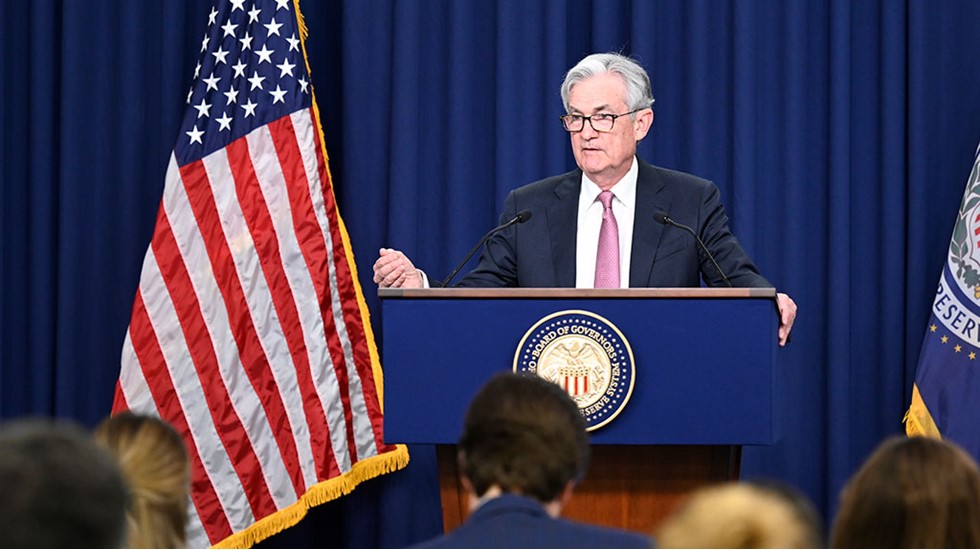
Chairman Jay Powell underscored that “We are well positioned to see how the economy evolves.” He underscored that “we will get data but have to be a bit skeptical” until we can get past disruptions due to the government shutdown. That will not be until we get data for December early next year.
Powell went out of his way to highlight downward revisions to employment that we are likely to get in February. They could push more months into the red in 2025. Powell has sympathy for the need to shore up the labor market. The challenge is if that weakness is due to AI and curbs on immigration, then rate cuts will not do much to shore up the labor market. More could show up in inflation.
The Fed released its Summary of Economic Projections. They are less powerful given the dearth of data we are enduring due to the government shutdown and uncertainty over who will sit around the table next year. The forecast for 2026 was revised up, reflecting catch-up following the government shutdown, ongoing gains in AI and monetary and fiscal stimulus.
The dot plot, which tracks the trajectory of rate moves by the Fed, revealed that six participants wanted to stand pat at this meeting. The median suggests one additional cut in 2026. However, financial markets priced in slightly more than two rate cuts for 2026 after Powell spoke. That reflects his concerns regarding labor market weakness. He is now one of the more dovish members of the Fed.
Governor Miran remained an outlier with rates falling to 2.0% - 2.25%, which suggests significant stimulus ahead. Could that be a proxy for the next Fed Chairman’s views, given Miran’s ongoing ties to the administration?
Powell said that the current rate of 3.5% -3.75% is close to the upper end of neutral. That would imply that additional rate cuts could be more stimulative.
The administration has made no secret about its desire for lower rates. The top contender for that role aligns more with Miran, although much will depend upon the composition of the rest of the officials sitting around the table. The Supreme Court has yet to rule on that but agreed to hear the case in January.
The timing of rate cuts is another concern. They are coming on the heels of the longest bout of inflation since the early 1980s, while more fiscal stimulus is on its way. Expansions to tax cuts last year will show up as record high tax refunds in early 2026. Refunds are treated as windfall gains and are typically used to bolster discretionary spending. That could further entrench inflation much as we saw in the wake of the pandemic.
Those concerns are adding to a wall of worry regarding debt sustainability. Federal debt outstanding is poised to eclipse the US economy for the first time since World War II. That issuance, coupled with a surge in debt to build data center and fund mega-mergers, is a lot of debt for bond markets to absorb.
The Fed is at risk of losing its inflation-fighting credibility. We expect the next fed chair to err on the side of dovishness. How far they get in cutting rates will depend heavily upon the administration’s ability to fire sitting Fed governors, and by extension, Fed presidents.
One of the criticisms of the Fed is its bloated balance sheet and the role it plays in distorting the credit markets. The Fed decided to restart purchases of short-term Treasuries to keep the bond market from seizing. They will be buying $40 billion per month. Powell went to great lengths to explain that as a technical issue and not a policy change. It is not clear that the bond market sees it the same way.
If inflation fails to cool as the Fed expects, then the bond market could grow more skittish about rate cuts.
Diane Swonk
KPMG Chief Economist
Bottom Line
The Fed risks losing its inflation fighting credibility by focusing more on shoring up employment than stemming inflation. We expect it to pause as we move into 2026. We still have a cut in March penciled in due to the downward revisions to employment that Powell warned about. If inflation fails to cool as the Fed expects, then the bond market could grow more skittish about rate cuts. Bond yields have already moved significantly from the low hit in late October.
Explore more



Subscribe to insights from KPMG Economics
KPMG Economics distributes a wide selection of insight and analysis to help businesses make informed decisions.
Meet our team