GENIUS Act: OCC Reporting Forms for PPSIs and FPSIs
Implementing the GENIUS Act for payment stablecoin issuance and related activities

KPMG Regulatory Insights
- Heightened Supervision: Frequency of reporting facilitates supervisory oversight, provides means to assess compliance with regulatory requirements, and promotes transparency into financial condition.
- Framework Alignment: Revisions to reporting forms align with modifications in the OCC’s final implementing rules including issuance, reserve assets, redemptions, capital and operational backstop.
- Potential for Change: Experience with this new regulatory framework and forthcoming regulations from federal payment stablecoin regulators will inform future revisions to the framework and reporting processes.
The Office of the Comptroller of the Currency (OCC or agency) issued a revised proposal for new information collection and reporting forms applicable to permitted payment stablecoin issuers (PPSIs) and foreign payment stablecoin issuers (FPSIs) subject to its jurisdiction under the GENIUS Act. The revisions update reporting requirements originally proposed in June 2026 (see KPMG Regulatory Alert here) to address public comments received and to conform the requirements to the OCC's final rule implementing the GENIUS Act (see KPMG Regulatory Alert here). The OCC continues to expect PPSIs and FPSIs to submit:
— A weekly confidential reporting form addressing payment stablecoin activity and reserve assets (Form PS‑01).
— A quarterly reporting form addressing financial condition, capital, operational backstop requirements, and issuer operations (Form PS‑02).
Subject to approval by the Office of Management and Budget (OMB), Form PS-01 reporting would begin on January 25, 2027, and Form PS-02 reporting would begin on March 31, 2027.
Note: The OCC’s revised information collection for Forms PS-01 and PS-02 have a 30-day comment period expiring November 23, 2026, after which the OMB will have up to 60 days to provide approval (ending January 22, 2027).
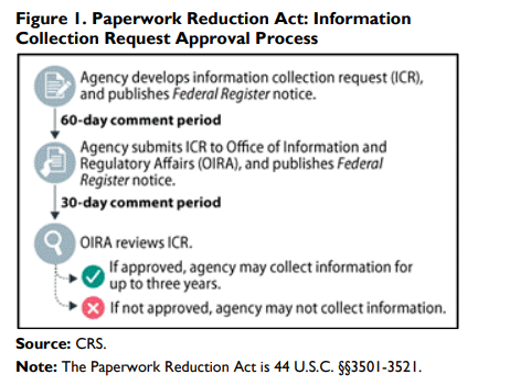
Paperwork Reduction Act
The Paperwork Reduction Act requires federal agencies to justify collecting information from the public by establishing the need and intended use of the information, estimating the paperwork burden to result from the information collection, and providing for public input on each proposed collection. The OMB is tasked with reviewing and approving agency information collections. Agencies must provide an initial public notice with a 60-day comment period for any proposed information collection followed by a second public notice with a 30-day comment period. The OMB must decide whether to approve the information collection within 60 days after the closing of the second public notice comment period.
Source: https://www.congress.gov/crs_external_products/IF/PDF/IF11837/IF11837.4.pdf
Weekly Reporting (Form PS‑01)
Consistent with the June 2026 proposal, Form PS‑01 would continue to collect weekly information regarding payment stablecoin issuance and redemption activity, reserve assets, liquidity, ownership concentrations, and related risk exposures. Notably, the OCC’s recent revisions include:
- Consolidating previously proposed Schedules A and B, reducing the total from eight schedules to seven (schedules A–G).
- Eliminating certain third-party market data requirements (e.g., data re: trading volume of exchanges).
- Expanding information for tokenized assets and digital identifiers.
- Clarifying edits (e.g., definition of terms such as “payment stablecoins” and “redemption”).
- Expanding reporting requirements (e.g., wallet addresses (to include top 20 wallet addresses with the largest cumulative amount of redemption transactions each day, and all wallets that hold more than 2 percent of the total outstanding payment stablecoins each day), nonredeemable payments stablecoins, and reserve asset withdrawals).
- Providing an additional 24 hours to prepare and submit Form PS-01.
Further, Form PS-01 instructions would be amended to reduce the weekly reporting requirement for qualifying “smaller issuers” by allowing them to satisfy revised Schedules D–G with required data only for the reporting period’s last day. Qualified smaller issuers are those that 1) have outstanding issuance value, together with any affiliated PPSI, less than $1 billion; 2) are not currently subject to a formal enforcement proceeding or order; and 3) comply with all reserve and reporting requirements in the applicable sections of the final rule.
Quarterly Reporting (Form PS‑02)
Consistent with the June proposal, Form PS‑02 would continue to collect information on issuers’ financial condition—including income and expenses, assets and liabilities, off-balance-sheet exposures, capital, and operational backstop resources—and operations. The OCC proposes fewer changes to the quarterly report than to Form PS‑01, with substantive revisions related to:
- Capital and operational backstop reporting (e.g., goodwill, intangible assets, deferred tax assets, operational backstop funded by equity) to conform to the final implementing rule.
- Reserve asset diversification and concentration to reflect the quantitative requirement in the final implementing rules and elimination of the safe harbor.
- Issuance and redemption categories to align with revisions on Form PS-01 -though reported across the entire reporting period.
The OCC states that a PPSIs’ senior management and board of directors are required to attest to the accuracy of the quarterly reports submitted to the OCC. The agency adds that, if it believes a PPSI is providing inaccurate data, the OCC has the ability to both require the PPSI to provide additional reports and to examine the PPSI’s books and records.
Dive into our thinking:
GENIUS Act: OCC Reporting Forms for PPSIs and FPSIs
Implementing the GENIUS Act for payment stablecoin issuance and related activities
Download PDFExplore more



Subscribe to receive regulatory and compliance transformation insights
By registering you will periodically receive additional compliance-related communications from KPMG.
Meet our team