At KPMG, people come first.

      Starting your career at KPMG Switzerland means combining hands-on client work with exceptional professional education. Our graduate programs offer structured pathways into Audit, Tax and Advisory — supported by financial assistance, flexible schedules and a learning environment designed to help you grow.

      We provide the guidance, resources and flexibility you need to balance work, studies and personal development — and to build a strong foundation for your future career.

      Meet three colleagues who share how they navigate their graduate programs while developing their careers:

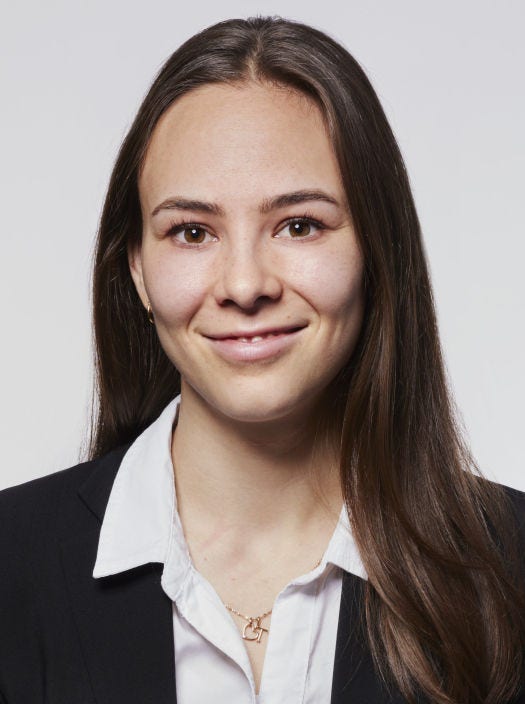
      Meet Tanja

      Tanja is in the middle of training to become a Certified Public Accountant (CPA). Find out how she balances work and education, and what life is like for a young assistant auditor.

      Tanja Vils
      "I love my job because I get to work with all kinds of clients, giving me insights into various industries and companies."

      Tanja Vils

      Assistant Audit Corporate

      Tanja has decided to complete a part-time training program to become a Certified Public Accountant (CPA) at KPMG Switzerland.

      The Swiss training as a Certified Public Accountant is a requirement for auditing the accounts of financial institutions and industrial companies. The program can last between three and four years, depending on education level and professional experience.

      Tanja is able to put into practice any newly acquired knowledge and achieve a balance between theoretical and practical aspects. Along with financial support from KPMG, she receives professional support and enjoys flexibility in how she plans her time.

      What kind of support do you get from KPMG in your Certified Public Accountant training?

      Along with financial support for the training, KPMG offers me internal training courses and update calls, where I learn a lot in addition to my school lessons at Expert Suisse.

      KPMG’s stance as a flexible employer and how it gives me the freedom to decide for myself how long I want to work during summer is something I don’t take for granted.

      I also get time off for studying a week before the final exam so I can prepare for the modules as best as I can and manage all my learning material successfully.

      Tanja, what motivated you to undergo the training to become a Certified Public Accountant (CPA) at KPMG Switzerland?

      Back during my commercial apprenticeship, I developed a huge fascination for the accounting world. With both of my parents also working in this field, I was familiar with their professional duties and was able to greatly identify with the job. So once I had completed my apprenticeship and spent a year as a flight attendant, I decided to study in the accounting field.

      To me, training to become a Certified Public Accountant was the ideal solution thanks to its combination of practice and theory and the new challenges it brings every day. I am delighted that I made that decision. Even when times are stressful, I know I can count on a supportive team who always has time for me and sticks together in the most exceptional ways.

      What makes your job in Auditing so exciting?

      I love my job because I get to work with all kinds of clients, giving me insights into various industries and companies. During the busy season, I take care of around ten customers, allowing me to gain a range of different experiences. In one case, for example, I got to travel to Vienna for several days for a customer. In another, I was able to review the stock of a pet shop before it opened in the morning. That’s why my learning curve has been very steep.

      Something else that makes this training so special is the sense of community I feel with my colleagues. It’s a community that is growing into a kind of family, where we are constantly exchanging with each other and learning together, as we all are going through things together.

      What has been your greatest challenge during the Certified Public Accountant training until now?

      For me, the amount of material I have to study within a short time has definitely proven to be the most challenging part of this training. Given the vast range of subject material, it is also not easy to identify one single focus for the exam. In my first year, I had to learn to create a schedule independently and to structure my tasks. The interaction with my colleagues helped me in this regard. My work year is also highly structured, and each stressful phase has a foreseeable end – so it is predictable.

      How have the internal training courses and exchange with accountants at KPMG benefited you?

      The internal training courses were a great way to prepare for the “Audit” module in my second year. That was the point at which I realized how much my job and the internal training had already taught me. Exchange within the team or with internal specialists is also very valuable.

      The great thing is that I can always find someone at KPMG to answer my questions, regardless of what they are about.

      What does a typical work week look like for a Certified Public Accountant in training at KPMG, Tanja?

      That’s a good question... I’d say that there is no real “typical” work week. Some weeks I spend working at the customers’ premises, sometimes even abroad. Last winter, my team and I spent a week in Vienna. During our free time, we explored the city and went out to eat at some great restaurants. But there are also weeks where I spend more time at the office in Zurich. We have the option of working from home.

      The place of work and customer locations also vary heavily depending on the team and customer. I enjoy working with the team on location, as that’s where I learn the most and a good sense of team spirit makes the workday easier. During the busy season, we don’t have any school, and it doesn’t start again until May. This means we can concentrate fully on our work.

      Who would you encourage to consider this type of apprenticeship? What skills and background do they need to have?

      I would recommend it to people with a keen interest in accounting and who are ambitious and resilient, as there will also be challenging days. Prospective Certified Public Accountants also need to possess strong social skills.

      In addition, they should be open to getting to know customers and employees alike, as they work with a range of different customers and in different teams.

      Meet Nadja and Vincent

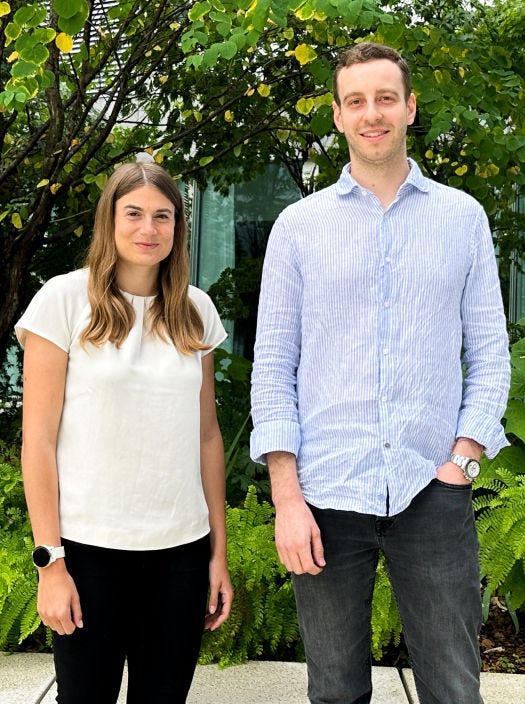
      Nadja and Vincent are on the path to becoming Certified Tax Experts - read more about their experience.

      Nadja and Vincent
      "Training as a Swiss Certified Tax Expert opens up a wide range of career opportunities that are as varied as our work itself. After finishing the program, practically every opportunity in the tax field is an open door."

      Nadja and Vincent

      Manager Real Estate Tax and Assistant Manager International Corporate Tax

      Become a Certified Tax Expert in Switzerland? It’s what Nadja and Vincent decided on.

      The training to become a Swiss Certified Tax Expert is a requirement of KPMG in the departments Corporate Tax and Financial Services Tax. Depending on the apprentice’s educational level and work experience, the program takes 3 to 4 years to complete.

      Vincent and Nadja work with prominent clients and learn from our professional tax experts. In connection with their apprenticeships, they benefit from financial support from KPMG as well as professional supervision and a flexible schedule.

      Who should consider such a program? What are its challenges? And how to achieve the ideal balance of school and work? We delve into these questions in the following interview.

      Nadja and Vincent, why did you decide to become a Certified Tax Expert at KPMG Switzerland?

      Nadja: During my master’s program, I was fascinated by tax law – especially corporate tax law. Then I did an internship in Corporate Tax at KPMG. This practical experience convinced me to train to become a Swiss Certified Tax Expert at KPMG. At KPMG, I have the opportunity every day to deal with current topics and the latest trends.

      Vincent: I always knew that I wanted to work at the intersection of business and law and expand my knowledge in the tax field. After finishing at university, a lot of people look forward to finally entering the “real” professional world, and for me, the Certified Tax Expert training program at KPMG looked like the best of both worlds: advanced training, but also the real world.

      What kind of support do you get from KPMG?

      Nadja: KPMG provides me with both financial support and a flexible schedule. We benefit from comprehensive internal training courses that provide optimal preparation for the exams. Even during the work-intensive “busy season,” KPMG makes it possible for us to attend classes, and half of our class time even counts toward working hours. We also have the option of taking paid leave before examinations so that we can fully concentrate on the exam preparation. All the training costs, including tuition, materials and examination fees, are paid by KPMG.

      Vincent: I have also had the opportunity to reduce my work hours to 80%, which lets me spend every Monday with my two-year-old son. This flexibility is worth more than I can express, as it allows me to perfectly balance my professional and family responsibilities.

      What makes training and work in the field of corporate tax exciting?

      Vincent: In the course of my work in just one position at KPMG, I have had the opportunity to learn about different areas, such as M&A transactions, real estate tax, tax consulting and tax accounting.

      I work with a variety of companies from a variety of branches, which makes for a lot of variation in my everyday work.

      I also get the opportunity to participate in building things from the ground up (within the legal limitations, of course), which is especially exciting. Learning never stops, and the field of tax law is incredibly broad, so I am never bored.

      Who would you encourage to consider this type of apprenticeship? What skills and background should they have?

      Vincent: The prerequisites for this training program are generally a university degree, an interest in tax law and the motivation and curiosity to take on new and exciting challenges on a daily basis. So, it requires a certain amount of curiosity and perseverance.

      Sometimes I am faced with a seemingly insurmountable problem that requires extensive research, much like detective work. But that’s precisely what makes this training program exciting. It’s about immersing yourself in the work from the bottom up and finding solutions. I am never bored.

      What does a typical work week look like for a Tax Expert in training?

      Vincent: Honestly, there is no such thing as a typical work week. We are focused on being there for our clients and making progress on the current projects. I often start the week with a detailed plan, only to have to throw it out on Tuesday because of pressing demands. Flexibility and adaptability are critical skills in our daily work.

      It’s also worth mentioning the team drinks, which takes place every two weeks. It’s the perfect opportunity to converse with your colleagues, relax and celebrate shared successes.

      What career prospects do you anticipate after you finish the training program?

      Nadja: Training as a Swiss Certified Tax Expert opens up a wide range of career opportunities that are as varied as our work itself. After finishing the program, practically every opportunity in the tax field is an open door. There are also a number of internal career opportunities at KPMG that would allow us to shape our own professional paths and continue growing and developing.

      What do you consider the greatest challenge?

      Nadja: The balance between job and school during the “busy season” can be very difficult. The workload is high from January to March, and on top of that, we have about 8 hours a week of classes. But it’s quite manageable with good organization and effective time management.

      Vincent: I fully agree with Nadja. I also had to learn how to stay organized during the busy season.

      Meet Ella

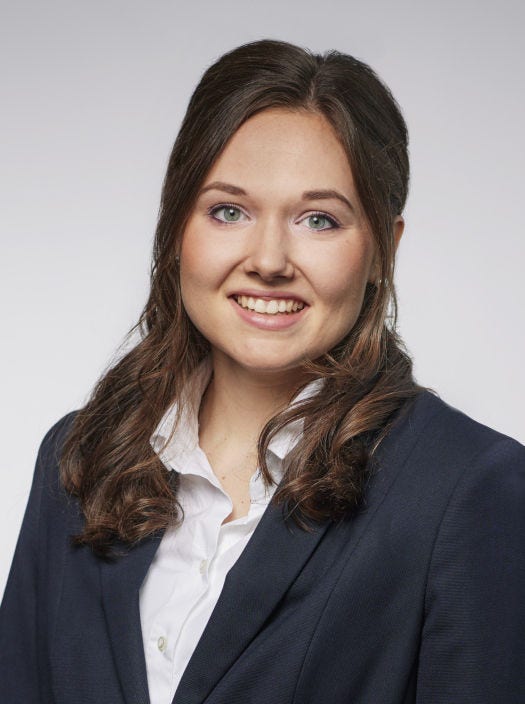
      KPMG offers a 4-year graduate program in Audit & Advisory. Read more about Ella's journey to become a Swiss Certified Accountant with specialized training in Advisory.

      Ella Novak
      "The merging of Audit & Advisory aspects grants me a holistic picture, and I have been learning to assess a company’s financial state. My work is really varied, and this range not only corresponds to my original interests, but also broadens my horizons of experience and knowledge."

      Ella Novak

      Assistant Manager, Acounting Advisory Services

      KPMG offers an exciting graduate program in the field of Audit & Advisory to students like Ella. Over the span of four years, she will not only be trained to become a Swiss Certified Accountant, but will also receive specialist training in the Advisory sector.

      The graduate program allows her to gain insight into two different departments. Specifically, Ella will take on a dual role, spending at least six months each year in the Audit Corporates practice and four months with the Accounting Advisory Services team.

      But how to know if this graduate program is right for you? What are its challenges? And what is the best way to master the balancing act between work and study? We address these and other questions in our chat with Ella.

      Ella, what does your yearly school schedule generally look like?

      Audit season tends to start in November and last until April, then from May through October, I work in Accounting Advisory.

      This time is divided into two months of schooling for my qualification as a certified accountant and three to four months of work in Advisory.

      The module exams and training days at EXPERTsuisse are held mostly in summer. Training days count as work days, meaning we don’t need to make up for them during vacation.

      Why did you choose to do the four-year graduate program in the field of Audit & Advisory?

      I have always been interested in balance sheets, income statements and cash flow statements. Financial reports embody the “language of business,” as Warren Buffett put it, and that’s the language I wanted to learn.

      During an audit, we assess the balance sheets, income statements and other reports generated by a given company. For example, we’ll check to see whether corporate accounts have been maintained in accordance with Swiss and international accounting standards.

      In Accounting Advisory, I have the opportunity to develop solutions to accounting issues or assist clients in preparing their financial reports. I actively participate in customer projects and consult both national and international customers from various industries.

      The merging of these aspects grants me a holistic picture, and I have been learning to assess a company’s financial state. My work is really varied, and this range not only corresponds to my original interests, but also broadens my horizons of experience and knowledge.

      Who would you encourage to consider this type of apprenticeship? What skills and background should they have?

      I would encourage anyone who is interested in accounting and numbers, and who’s excited about learning new things, to consider it. The program provides an excellent basis for acquiring a range of knowledge, from the work in Advisory and solid training to become a certified accountant, to the integrated learning on the job.

      In university you learn in broad theoretical strokes. Implementing those theories in the real world is where true mastery comes into play. It’s a connection that I find extremely exciting.

      In addition to broadening and deepening technical knowledge, the graduate program also teaches skills in project management, customer contact, team leadership and more. Every day brings a new setup and unique challenges. It all makes for an exciting and varied experience.

      What was the greatest challenge you faced during the four-year graduate program?

      I started at KPMG straight out of university. As a student, I had learned about various theories, concepts and models, but applying these things in practice turned out to be far more difficult than I anticipated. Every business is unique, with its own quirks and requirements.

      The challenge was to tailor what I had learned to the respective customers and their specific traits. At the same time, it gave me the opportunity to apply that learning to a host of different situations and companies, thus expanding my expertise.

      What support does KPMG provide?

      KPMG pays me for my school days, which allows me to focus on learning, and covers my school costs. During year four, in cooperation with EXPERTsuisse, they also offer basic and advanced courses internally, which are a huge help for all the final exams.

      What I value most, though, is learning on the job, as KMPG really supports my continued development and allows me to take on new roles.

      What are your career prospects after completing the dual program?

      Graduating from the dual program with a degree as a certified accountant opens up a huge range of professional prospects. One option would be to stay in Audit and pursue my occupation as a certified accountant. At the same time, I could be an asset to another team at KPMG or at a different organization altogether. I could also work full-time in Advisory, concentrating solely on corporate consulting.