Governments, at all levels, are and will be the critical players in leading not only this transformation but also the new wave of sustainable prosperity through jobs, investments, and new industries. Over the past few years, the government of India has launched a host of national programmes that present opportunities for investors to partake in improving India’s infrastructure and citizen service delivery. The state governments, in lockstep with the central governments, have also unveiled a new era of business reforms in the economy.
Digital Transformation: Opportunities and Challenges for Governments
In recent years, growing connectivity, adoption of digital technology, and the pandemic's after-effects have emerged as transformative forces for economies globally. While these rapid changes present immense opportunities for economic and social growth and development, this ‘new reality’ also presents daunting challenges for governments.

Why KPMG in India
- Swachh Bharat’ (Clean India)
- Make in India
- Ease of Doing Business
- Smart Cities
- Digital India
- Skill India amongst others


Our service offerings are designed to deliver successful outcomes
Our sub-service lines


Sectors we work with
India Union Budget 2026-27: Our Sector Insights

KPMG in India point of view 2026 - Public Finance
Union Budget 2026 adopts a measured, credible, and PFM-aligned strategy to place India’s public finances on a stronger and more sustainable trajectory

KPMG in India point of view 2026 - Disaster Management
Climate and disaster priorities are being advanced through mainstream economic and infrastructure policy, rather than through standalone mission

KPMG in India point of view 2026 - Agriculture and Allied sectors
A focus on enhancing farmer incomes through productivity improvement, entrepreneurship development, and integration with global value chains

KPMG in India point of view 2026 - Social and Rural Development
Budget reiterates ‘people-centric development’ approach through targeted interventions for women, Divyangjan, gig workers and vulnerable communities

KPMG in India point of view 2026 - Healthcare
Creates a predictable and compliance efficient tax environment, encouraging long-term investment in biopharma, med tech, and healthcare manufacturing

KPMG in India point of view 2026 - Public Infrastructure
The government has focused on enhancing policy and regulatory mechanisms around the infrastructure sector

KPMG in India point of view 2026 - Urban Transformation
Budget focuses on distributed, well-networked and infrastructure-led growth initiatives prioritizing the development of regional economic corridors

KPMG in India point of view 2026 - Tourism
Likely to shift the sector’s development trajectory from short-term developmental focus toward structural supply expansion

KPMG in India point of view 2026 - Industrial Development and MSME
Budget 2026 positions manufacturing not merely as an important sector, but as the central driver of India’s economic transformation

KPMG in India point of view 2026 - Education and Skill Development
Reinforces consumer-centric orientation, signaling growth driven by higher household spending, domestic manufacturing, and greater rural participation
Success stories and experiences of our valued clients

Discover narratives that highlight the challenges our clients faced, the services we provided, and the results they achieved. These case studies offer a detailed look into our collaborative process, demonstrating our commitment to understanding each client's unique needs and delivering customised services that drive success.
Driving growth with Government trends
- IFAT India 2026
- Digi Health Conclave
- Socio-economic impact of the Indian events and experiences industry
- BRICS friendship cities conclave 2026
- From LNG dependence to domestic resilience
- National AI Summit on Water 2026
- Heritage reimagined
- 15th International heritage tourism conclave
- FE Healthcare Summit 2026
- Maharashtra MSME Summit & Awards 2026
- Digital infrastructure central to power
- Transformation of spiritual tourism in India
- Digital infrastructure is now the core of national power
- Powering smarter government for India
- Evolution of the PPP landscape in Indian healthcare
- Nilachal Mishra
- Arpit Guha
- Sumouleendra Ghosh
- Sandeep Paidi
- Prabal Bhardwaj

Nilachal Mishra
Partner and Head, Government & Public Services (G&PS), National Leader - Government and Infrastructure
KPMG in India
India has demonstrated that it can build environmental infrastructure at scale. The challenge before us now is to transform this infrastructure into an integrated resource economy that secures water, recovers value from waste, and supports sustainable growth in a resource-constrained future.
As India charts its Agrasar path towards Viksit Bharat@2047, resource circularity must become a core pillar of this journey. The transition to a circular economy is not merely an environmental imperative, but an economic necessity for ensuring long-term resource security, industrial competitiveness, and urban resilience.
India's next decade of environmental infrastructure development will be defined not by how much more it builds, but by how effectively it conserves, recovers and reuses resources.

India’s environmental infrastructure journey is entering a new phase, one that goes beyond building assets to securing resources, improving service reliability, and strengthening resilience.
As water stress, climate risks, and urbanisation intensify, the future of water management will be defined not by how much infrastructure we create, but by how effectively it performs. The focus is shifting from water availability to water security, from wastewater disposal to resource recovery, and from isolated projects to integrated value chains.
Water must increasingly be viewed as a strategic resource that underpins economic growth, industrial development, and community well-being. Achieving this will require stronger institutions, smarter use of technology, greater circularity, and a relentless focus on measurable outcomes.
The next decade presents a significant opportunity to reimagine India's water value chain, from source protection and efficient service delivery to wastewater reuse and resource recovery, creating a more resilient and sustainable future.

Sumouleendra Ghosh
Partner and Global Lead - Water Sector, Government and Public Services
KPMG in India
Water utilities may operate in different social, economic and environmental contexts, but many of the challenges they face are strikingly similar. The fastest path to transformation is not to start from scratch, but to learn from what already works and adapt proven solutions to local realities. Governments and international institutions can provide structured platforms for collaboration, while consultants, service providers and technology partners can help transfer ideas and innovation across geographies.
Equally important is utility-to-utility cooperation, where those that have successfully implemented reforms share practical experience with their peers. By institutionalising these channels of knowledge exchange, the sector can reduce the cost and risk of experimentation, accelerate innovation, strengthen resilience and deliver more sustainable water services at scale.

Sandeep Paidi
Partner, Government & Public Services (G&PS); Lead - Health, Human & Social Services (HHSS) and Office Managing Partner – KPMG in Hyderabad
KPMG in India
India’s urban future depends not only on building water infrastructure, but on ensuring long-term water sustainability. Embracing the ‘One Water’ approach will enable us to manage every water source as part of an integrated system, driven by innovation, investment, strong institutions, and partnerships. This integrated perspective will be key to building resilient, water-secure cities and shaping the next phase of urban water management in India.

Sandeep Jha
Partner, G&PS-HHSS
KPMG in India
India has built digital health platform at population scale, with close to 100 crore ABHA IDs and 140 crore linked health records. But IDs are infrastructure, not outcomes. ABDM's real test is whether a record is used at the next visit, follows the patient to a referral, or saves a repeat test. Too often we build the product first and write the policy later. In healthcare it has to be the other way round: consent, data usability, data security and data-retention rules must be settled before the code, not patched in after it.
- Vivek Agarwal
- Aalap Bansal

Vivek Agarwal
Partner and Head - Public Infrastucture, Lead - Industrial and Infrastructure Development Advisory, Government and Public Services
KPMG in India
India's events and experiences industry has become an increasingly important contributor to the nation's economic and social landscape. From live entertainment and business conventions to sporting events, cultural festivals, exhibitions and celebrations, the sector serves as a powerful catalyst for consumption tourism, employment and community engagement.
As India continues its journey towards becoming a leading consumption-driven and experience-led economy, the sector has the potential to serve as a strategic lever for growth, innovation and global positioning.

Aalap Bansal
Partner and Chief Sales Officer – G&PS and Lead – Tourism, Sports and Leisure Practice
KPMG in India

From intelligent traffic management and flood forecasting to digital twins, citizen service automation, and predictive infrastructure maintenance, AI is enabling cities to move from reactive administration to proactive, data-driven governance. The opportunity is not just to build smarter cities, but to create cognitive cities that can anticipate challenges, optimise resources, and deliver citizen-centric services at scale.
AI, trusted data ecosystems, Digital Public Infrastructure, and responsible governance frameworks can help cities improve decision-making, resilience, and service delivery for the future.
As AI adoption accelerates globally, success will depend not only on technology, but also on trust, human oversight, strong data governance, and collaboration across governments, industry, and academia.

Himanshu Rattan
Partner and Lead – Food, Agri & Allied Services, Government & Public Services
KPMG in India
India's fertiliser challenge is often viewed through the lens of supply and pricing. But the larger question is one of strategic resilience. As long as fertiliser production remains closely tied to imported energy, global disruptions will continue to find their way into Indian agriculture. The next phase of self-reliance will come not from managing these shocks better, but from reducing our exposure to them through interventions such as stronger domestic feedstock ecosystems and deeper integration across the energy, fertiliser, and farm value chain.
Nilachal Mishra
Partner and Head, Government & Public Services (G&PS), National Leader - Government and Infrastructure
KPMG in India
Artificial Intelligence and water share a defining trait: both flow across ecosystems, touch everything they pass through, and reward those who learn to channel them well. This parallel frames a critical opportunity for India’s water sector. Over the last decade, India has built some of the world’s most admired digital public infrastructure, including Aadhaar for identity, UPI for payments, DigiLocker for documents, and CoWIN for vaccine delivery, transforming a low-access economy into a digitally inclusive one. Parallelly, more than 20 crore households have been connected to tap water under the Jal Jeevan Mission and AMRUT, generating vast volumes of infrastructure and consumption data. It is time to turn that data into intelligence by building an indigenous AI and Digital Water Stack for the country.
Aalap Bansal
Partner and Chief Sales Officer – G&PS and Lead – Tourism, Sports and Leisure Practice
KPMG in India
Aalap Bansal
Partner and Chief Sales Officer – G&PS and Lead – Tourism, Sports and Leisure Practice
KPMG in India
Heritage tourism reaches its full potential when cultural assets are brought to life through engaging interpretation, immersive experiences and meaningful community participation.
Combined with technology and accessibility, this approach strengthens destination competitiveness and creates lasting value for visitors and local communities.

Healthcare data remains scattered, creating disconnected “islands of health data” across providers, policy makes, payors and patients. Unlocking the full potential of digital health and intelligence requires organisations to invest in connecting these islands through interoperable, integrated, and secure systems for future ready care delivery.
Dharmesh Goswami
Partner, G&PS - Industrial and Infrastructure Advisory
KPMG in India
Technology creates impact only when it becomes part of everyday decision making. As AI becomes accessible to businesses of every size, MSMEs have an unprecedented opportunity to embed intelligence into every stage of their enterprise, from improving productivity and strengthening customer engagement to making faster, data driven decisions. The real transformation will come from using AI not simply to automate tasks, but to build more resilient, innovative and globally competitive businesses.
Nilachal Mishra
Partner and Head, Government & Public Services (G&PS), National Leader - Government and Infrastructure
KPMG in India
Digital sovereignty is a nation’s ability to govern its data, infrastructure, and tech stack. For India, the Viksit Bharat vision needs more than adoption. It needs alignment and a clear recognition that digital infrastructure is now central to power, access, and opportunity.
- Vivek Agarwal
- Aalap Bansal
Vivek Agarwal
Partner and Head - Public Infrastucture, Lead - Industrial and Infrastructure Development Advisory, Government and Public Services
KPMG in India
India’s spiritual tourism sector is at an inflection point, where scale and diversity of demand are converging with the need for more structured and experience-led development.
The opportunity lies in moving beyond managing footfall to designing holistic destination ecosystems that integrate infrastructure, storytelling, and technology. If executed effectively, spiritual tourism can become a key pillar of India’s broader tourism and economic growth strategy, while preserving the authenticity and sanctity of its cultural heritage.
Aalap Bansal
Partner and Chief Sales Officer – G&PS and Lead – Tourism, Sports and Leisure Practice
KPMG in India

India’s security architecture is at a turning point. As AI reshapes decision support, Atmanirbharta must go beyond tech acquisition. It must define control, authority, governance, and accountability across systems with clear, explainable outcomes.
Nilachal Mishra
Partner and Head, Government & Public Services (G&PS), National Leader - Government and Infrastructure
KPMG in India
India's public sector stands at a critical juncture as it moves from digital implementation to intelligent, outcome-led transformation.
While AI, data and cloud provide the technological impetus, lasting impact will depend on three foundations:
- robust digital infrastructure,
- seamless institutional integration, and
- trusted cross-sector partnerships.
By embedding citizen-centric design, responsible Al and resilient operating models into the core of government, India can accelerate execution, enhance public trust, and deliver long-term value at scale.
The PPP landscape in Indian healthcare has evolved from infrastructure development‑led models to those centered on clinical service management, operational delivery, population health, and last‑mile care delivery. These models increasingly combine public health infrastructure with private sector delivery capabilities, technology, and payor system like AB-PMJAY.
Hear from the experts


India Insights
Our insights is your gateway to thought leadership and in-depth reports. Explore our curated collection of valuable content, where we delve into complex business challenges, share industry trends, and provide actionable insights.
Something went wrong
Oops!! Something went wrong, please try again
Media
Global insights


Key Contact
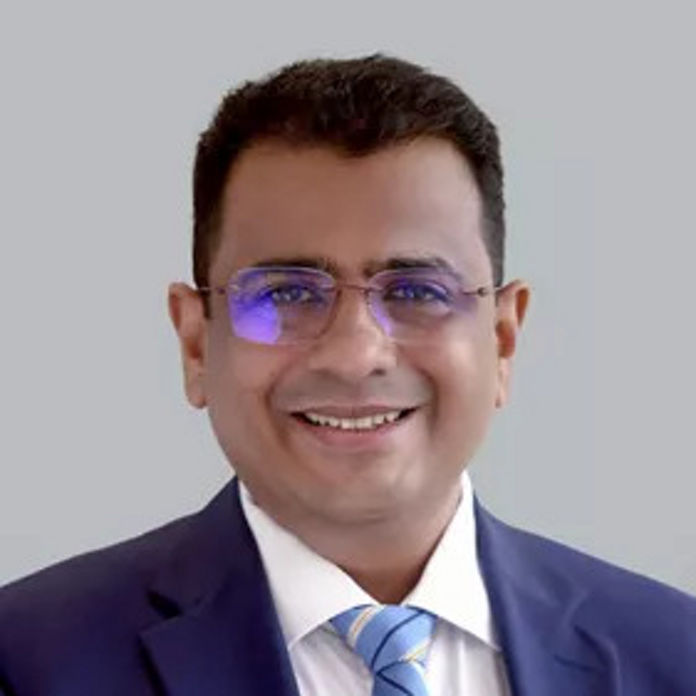
Nilachal Mishra
Partner and Head, Government & Public Services (G&PS), National Leader - Government and Infrastructure
KPMG in India