

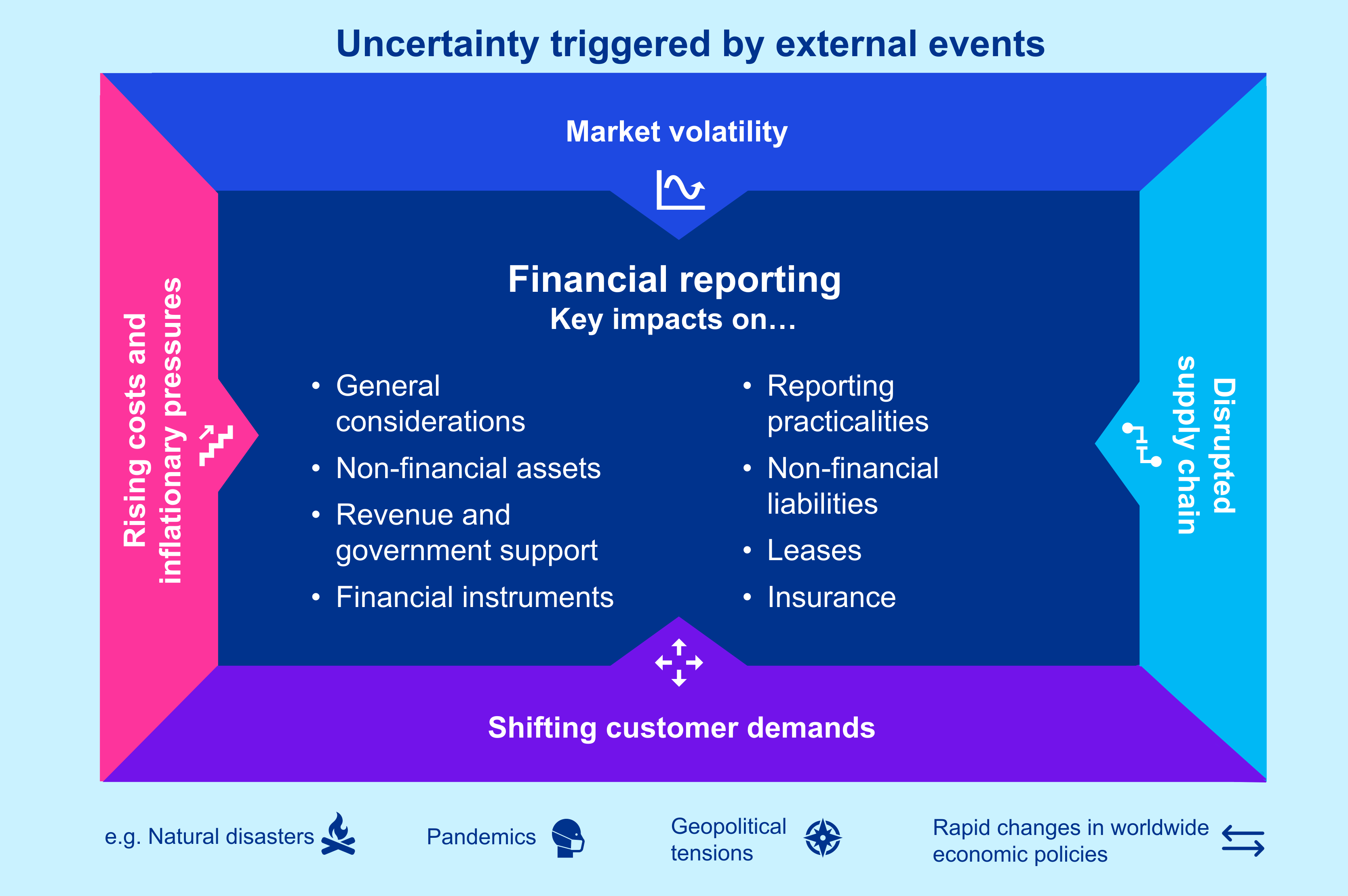
External events – e.g. natural disasters, pandemics, geopolitical tensions or rapid changes in worldwide economic policies – may trigger uncertainty and cause market volatility, inflationary pressures, shifting customer demands and disrupted supply chains.
In times of heightened uncertainty, investors and regulators look for clarity in your annual report. They want to know how your company is affected, how you address the challenges, what judgements, estimates and assumptions you make, and how you have reflected it all in the financial statements. So you should expect more scrutiny.
To help you determine the financial reporting impacts, read our guide and use the articles in this hub.




- Going concern – Assessing the impact
- Subsequent events – Assessing the impact
- Interim financial statements – Assessing the impact
- Fair value measurement – Practical challenges
- Exchange rates – Lack of exchangeability
- Hyperinflationary economies – Impact of increased levels of inflation and hyperinflation

- Impairment of non-current assets – Assessing the impact
- Impairment – Impact of import tariffs
- Impairment reversal – Assessing the impact
- Deferred tax assets – Assessing recoverability
- Revenue-cycle assets – Assessing recoverability
- Relationships with investees – Assessing the impact
- Capitalised borrowing costs – Assessing the impact


- ECL measurement – Assessing the impact
- Trade receivables – Assessing impact on ECL
- Credit risk – Assessing the impact
- Loans and borrowings – Current vs non-current classification
- Loans and borrowings – Impact of concessions
- Own use exemption – Assessing the impact
- Hedge accounting – Assessing the impact
- Hedging – Impact of a payment holiday

- Revenue – Assessing enforceability of customer contracts
- Revenue – Reviewing estimates
- Government grants – Determining timing and amount to recognise
- Government assistance – Evaluating nature and type
- Insurance proceeds – Assessing the impact
- Tax incentives – Determining which accounting standard to apply


More content


© 2026 KPMG IFRG Limited, a UK company, limited by guarantee. All rights reserved.