How our people are helping to build a more sustainable world.

      Case study 1

      Embedding sustainability into financial decision-making

      Collaborating to close the gap between climate science and corporate strategy

      As organizations accelerate their climate and sustainability commitments, a critical barrier has emerged: the world still struggles to translate sustainability risks and opportunities into clear financial implications. Without this connection, companies and governments face challenges in mobilizing investment, scaling climate action, and responding to the urgency of what science is telling us.

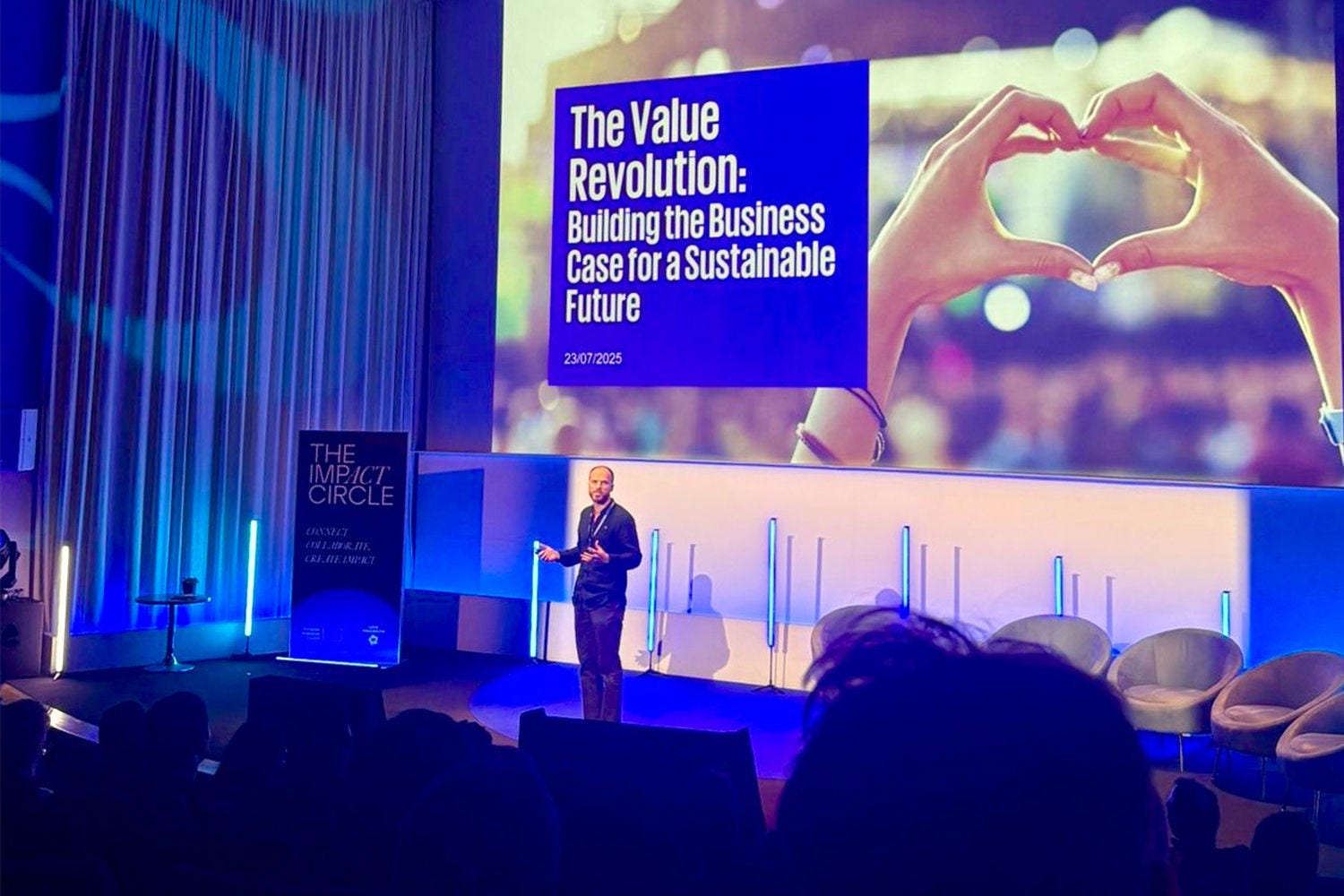
      Recognizing this gap, KPMG International has spent the past year working alongside the World Business Council for Sustainable Development (WBCSD) to bring together the accounting profession, strategy houses, investors, academics, regulators, and corporate leaders to cocreate a new approach based on value — one that embeds sustainability into core financial decision- making.

      The message has been consistent: the world needs greater honesty, transparency, and collaboration to address climate and broader sustainability challenges. With WBCSD, KPMG professionals have been leading efforts to build that coalition and drive alignment across the market.

      In 2025, KPMGI and WBCSD convened a session that united voices from across the climate and finance ecosystem: investors calling for clearer disclosures, regulators focused on greater consistency, academics advancing the science, and companies navigating the practical realities of implementation. Throughout the year, KPMGI and WBCSD shared emerging insights at London Climate Action Week, Climate Week NYC and COP30, helping to elevate the global conversation about how financial systems must evolve to reflect climate reality.

      In 2026, the work enters a critical new phase, moving to designing the solution itself — one that strives to connect corporate finance with climate science, strengthens incentives for sustainability-aligned action, and creates consistent, useful outputs that can be applied across global markets.

      This multi-year effort reflects our belief that meaningful progress happens when we work together. By helping to shape a unified, science- aligned approach to assessing sustainability-related financial risks and opportunities, KPMG is contributing to a future in which capital flows toward climate ambition — not away from it.


      Case study 2

      Koala friendly carbon

      Climate action with heart

      When KPMG Australia set out to tackle climate change, the team wanted to do more than just offset emissions — they wanted to make a real difference for nature and communities.

      The result? KPMG Australia became the first organization to purchase 18,000 Australian Carbon Credit Units (ACCUs) from the Koala Friendly Carbon Initiative, a groundbreaking project that restores koala habitats while driving climate action.

      Launched in 2022, the initiative began by planting 177,800 trees across 135 hectares in northern New South Wales, a region critical for endangered koalas. The project is a collaboration between WWF-Australia, Climate Friendly, Indigenous partners, and local landowners, with support from the NSW government and HP Inc. KPMG Australia’s investment pays a premium for high-integrity carbon credits, recognizing the unique biodiversity benefits and supporting First Nations’ engagement in caring for Country.

      For farm manager Matt Bleakley, the transformation has been remarkable: “Eighteen months ago this was a quiet paddock with not much sign of life. Nearly 30 varieties of trees were planted and now they're all thriving in their own way. Life is starting to flourish in the forest environment. It's incredible.”

      The impact is tangible — some trees now stand over three meters tall, creating corridors that reconnect fragmented habitats and allow koalas to move safely. The project uses accredited methods, including scat surveys, to verify koala activity and ensure the plantings deliver real benefits. Income from carbon credits stays within local communities, supporting sustainable farming and livelihoods.

      With stage 2 underway, the initiative is scaling up to plant 289,000 trees across 573 hectares, expanding into new regions. For KPMG Australia, this is more than a transaction — it’s a commitment to environmental stewardship, community partnership, and a future where koalas and people can thrive together.


      Case study 3

      Reforestation

      Restoring ecosystems and building climate resilience

      KPMG firms are advancing environmental stewardship through innovative reforestation and afforestation projects, helping restore ecosystems, support biodiversity, and build climate resilience in communities around the world.

      In Canada, KPMG collaborates with organizations including Flash Forest, Project Forest, and veritree to help restore landscapes impacted by wildfires and climate change. Flash Forest’s technology supports reforestation efforts in remote, northern regions impacted by wildfires, enabling the planting of 50,000 trees in Saskatchewan and another 50,000 in Quebec. Project Forest works in partnership with the University of Alberta to advance research into climate-resilient forests, with 15,000 trees planted in the first research phase, and also supports community-led rewilding initiatives in partnership with First Nations, including the Siksika First Nation Community Shelterbelt project. 

      The veritree initiative is rehabilitating land degraded by industrial activities in Sudbury, Ontario, with over 11,000 trees, and restoring Sawle Lake, Alberta, with over 7,000 trees, using smart-forest monitoring to support wildfire mitigation. 

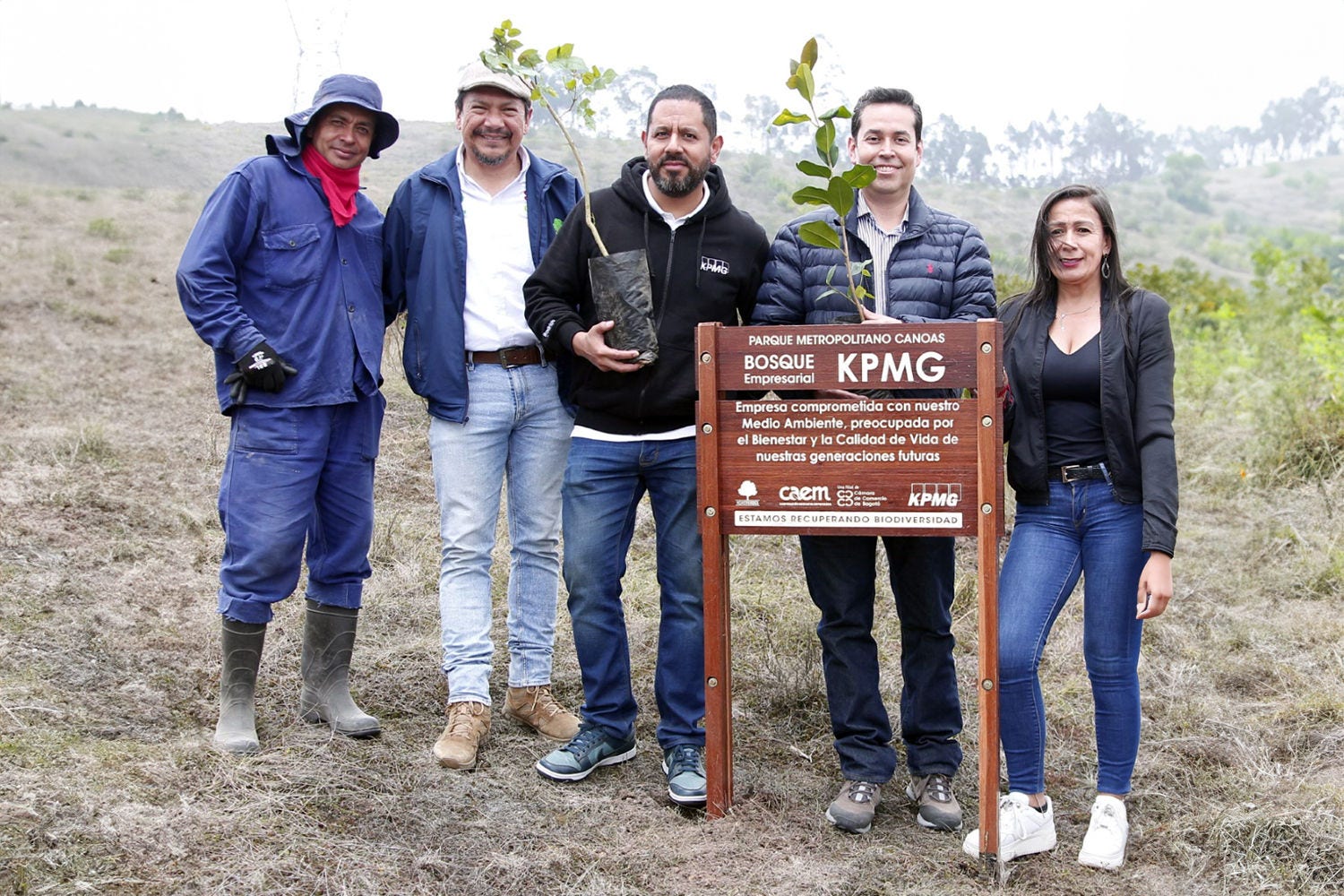
      Meanwhile in Colombia, the Corporate Conservation Forest Project aims to restore the Andino Forest ecosystem by planting 3,000 native trees by 2026 — with 2,000 already planted. Each tree is linked to a KPMG professional, fostering personal responsibility and emotional engagement. The project boasts a 93.4% survival rate, supports endangered species, and benefits the Alto de La Cruz community through job creation and circular economy practices. It aligns with KPMG’s Global ESG strategy and the UN Sustainable Development Goals.

      On the other side of the world, KPMG International supports WWF’s Trillion Trees project in Kenya and eastern Africa, funding forest restoration that benefits people, nature, and climate. To date, five projects have planted 127,684 trees, restored 212 hectares of forest, and directly benefited over 8,000 local people. The restored forests are expected to sequester more than 40,000 tonnes of carbon over the next 20 years.

      Through initiatives such as these, our global organization is helping to restore vital habitats, support local communities, and contribute to global climate change mitigation.


      How we make the difference for our people, planet and communities

      Our people are creating a workplace where everyone can thrive

      Our people work with their communities to deliver lasting impact

      Our people live Our Values and help to build and maintain trust