




India’s defence ambitions will depend on how effectively we translate technological progress into operational capability. The opportunity lies in bringing capital, innovation and industry together to build a stronger, more competitive domestic defence ecosystem.
Aerospace and Defence sector in India is at an inflection point
Given the modernisation and indigenisation programmes being undertaken by all the three services of one of the largest military forces in the world. The Ministry of Defence in India has laid out an expansive plan for modernisation of obsolete equipment through the long-term perspective plans, capability plans, capability roadmaps and capital acquisition plans.
India being one of the largest importers of arms and defence platforms, the three services, supported by specialised inter-service commands and institutions, have collectively taken upon themselves to be harbingers of ‘Make in India’ for hardware and infrastructure being inducted into their fold.
The Government of India has identified the aerospace and defence sector as a key focus area under the 'Make in India’ (Aatmanirbhar Bharat) initiative and has taken significant steps to promote the establishment of indigenous manufacturing infrastructure, supported by a strong research and development ecosystem. This is clearly reflected in the substantial changes introduced in the Defence Policy Framework 2020, which is anchored in indigenous manufacturing and value addition. Additionally, with India opening its space sector to private and foreign participation, the domain has the potential to unlock long-term opportunities and partnerships, leveraging synergies between defence and space.
An interplay of policies governing the sector clearly carve out the integral role of Indian manufacturing and value addition in future procurements. One development supporting the above is the establishment of two defence corridors at Uttar Pradesh and Tamil Nadu. These two corridors shall focus upon development of indigenous manufacturing capabilities and in turn become the springboard for all development activities undertaken by the government in the sector.
Hear from the experts
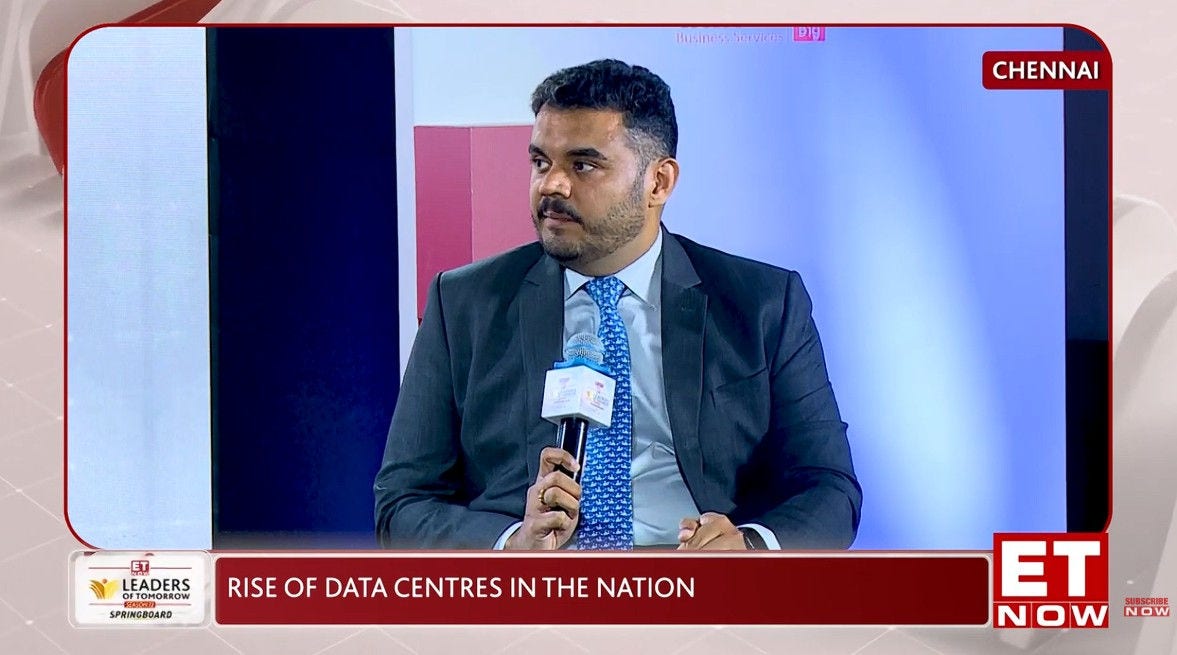
ET Now Leaders of Tomorrow | Vikram Srinivas
Vikram Srinivas shares his insights with a power-packed panel at the ET Now Leaders of Tomorrow - Chennai Springboard.
Driving growth with Aerospace, Defence & Space
- Agrasar Bharat Manch
- Three dimensions redefining the Indian skies
- Union Budget 2026-27
- Future ready aviation system
- Fueling India’s Defence Industry
- Sustainable skies
- Hemant Jhajhria
- Gaurav Mehndiratta

- Yezdi Nagporewalla
- Hemant Jhajhria
- Nilachal Mishra
- Mohit Bahl
- Purushothaman KG
- Gaurav Mehndiratta
- Nikhil Sethi
- Himanshu Rattan

India’s ambition to become a developed nation is clear. The opportunity before us now is to accelerate that journey while ensuring that the progress we create is meaningful, sustainable and inclusive.
Agrasar Bharat represents this spirit of purposeful progress, moving ahead with confidence and a shared sense of direction. Viksit Bharat 2047 may define our destination, but it is the choices and momentum we build today that will determine how we get there.
India’s defence ambitions will depend on how effectively we translate technological progress into operational capability. The opportunity lies in bringing capital, innovation and industry together to build a stronger, more competitive domestic defence ecosystem.

Nilachal Mishra
Partner and Head, Government & Public Services (G&PS), National Leader - Government and Infrastructure
KPMG in India

As India advances its AI ambitions, success will depend not only on innovation but also on the trust that underpins it. Building responsible, inclusive, and accountable AI systems can help ensure that technological progress translates into sustainable economic and societal value.

As AI reshapes economies and industries, the conversation is moving beyond adoption to sovereignty.
For India, building capabilities across compute, models, talent, infrastructure and governance is critical to ensuring that AI innovation remains aligned with national priorities, strengthens resilience and accelerates inclusive economic growth. Sovereign AI can be a key enabler in advancing the vision od an Agrasar Bharat - one that is innovative, competitive and self-reliant in the age of intelligence.

Nikhil Sethi
National Sector Leader - Consumer Markets and Co-Lead Customer & Operations
KPMG in India
As India advances towards becoming a developed nation, food security alone will not be enough. The focus must increasingly shift towards ensuring nutritious food is available, accessible and affordable for all.
Strengthening agricultural value chains, reducing post-harvest losses, leveraging technology and improving market linkages can help build a more resilient and sustainable food ecosystem that meets the needs of a growing population.

Himanshu Rattan
Partner and Lead – Food, Agri & Allied Services, Government & Public Services
KPMG in India
As India advances towards becoming a developed nation, food security alone will not be enough. The focus must increasingly shift towards ensuring nutritious food is available, accessible and affordable for all.
Strengthening agricultural value chains, reducing post-harvest losses, leveraging technology and improving market linkages can help build a more resilient and sustainable food ecosystem that meets the needs of a growing population.

Akhilesh Tuteja
Partner & National Leader - Clients and Markets and Technology, Media & Telecommunications (TMT)
KPMG in India
Three dimensions that are redefining the Indian skies:
- From Passenger Hub to Financial Node: We aren't just looking at 2,250+ aircraft by 2035; we are looking at onshoring the $50 Billion market that manages them. The goal is to see the next generation of widebodies registered and financed right here in GIFT IFSC.
- The Trust Engine - The PIAO Act 2025: In aviation, trust is the ultimate currency. The enactment of the Protection of Interests in Aircraft Objects (PIAO) Act finally aligns us with the Cape Town Convention. By solving the IDERA hurdle, we’ve cleared the runway for global lessors to deploy capital with absolute confidence.
- The Convergence of Tech & Policy: The 2026 reforms have moved beyond just tax incentives. We are building a Full-Stack ecosystem linking leasing in GIFT IFSC with our growing MRO capabilities. This is how we will build a self-sustaining aerospace economy.
A notable policy move in this year’s Budget is the extension of Basic Customs Duty (BCD) exemption to raw materials used in manufacturing aircraft parts for MRO purposes, including engines – though limited to imports made by PSUs. This is a welcome step in strengthening domestic MRO capability and supply‑chain competitiveness.
At the same time, certain areas fell short of industry expectations. The defence R&D capital outlay, a long-standing priority for long term capability development, remains broadly unchanged at ~8% of total defence Capex Budget. The Space Sector has similarly seen only a modest 2.2% YoY rise to INR 13,706 crore (~USD 1.5 Bn), signaling a measured spending stance despite the sector’s rapidly evolving strategic relevance globally.
Overall, with the Defence sector once again receives the highest allocation among all ministries – accounting for nearly 15% of the Union Budget [INR 7.84 lakh crore (~USD 85.6 Bn) out of INR 53.5 lakh crore (~USD 583 Bn)]. The government has reaffirmed its sustained commitment to strengthening India’s defence preparedness. While the Budget delivers a strong capability focused push, it also underscores the need for continued dialogue around innovation led enablers such as R&D and Space.
Akhilesh Tuteja
Partner & National Leader - Clients and Markets and Technology, Media & Telecommunications (TMT)
KPMG in India
India's aviation sector is on the cusp of transformative scale and a clear pathway to building a super connected, globally competitive ecosystem. With AI powered operations, multimodal integration, and future ready infrastructure, the opportunity to support over a billion annual passenger journeys by 2047 is within reach.
Strengthening domestic manufacturing, MRO, leasing, cargo and skilling will be essential to converting this scale into lasting strategic advantage. At the same time, advancing sustainable aviation fuels and next gen technologies will anchor long term resilience and environmental leadership. With disciplined execution and aligned collaboration, India can emerge as one of the world’s most efficient and future ready aviation systems.
For India to become a global defence industrial power, increased capital expenditure and a significant boost to defence R&D are crucial. Bold tax incentives will encourage private sector and startup involvement in defence production and exports.
- Vivek Rahi
- Jodhbir Sachdeva

India’s SAF journey will be built on the intelligent use of our abundant feedstock base - from agricultural residues and municipal solid waste to press-mud and used cooking oil. With technology pathways such as HEFA, alcohol-to-jet and FT moving towards scale, it is important that we develop multiple pathways in parallel, as no single route can meet our long-term needs. The key will be establishing viable supply chains and long-term offtake frameworks involving airlines, OMCs, and technology providers.

India's aviation sector is at a defining moment, balancing rapid growth with climate responsibility. Even as airlines induct new fuel-efficient aircraft, overall fuel use continues to rise with expanding capacity. Sustainable Aviation Fuel offers the most scalable path towards decarbonisation and presents India with a strategic opportunity to lead this transition.
Driving impact through delivery
Policy overview
KPMG in India provides expert interpretation and guidance on the Defence Acquisition Procedure (DAP) 2020, focusing on its provisions related to acquisition procedures. Our team helps clients navigate the complexities of DAP 2020, ensuring compliance and optimising acquisition strategies. We offer insights into the policy's impact on procurement processes, helping businesses align with national defence priorities and achieve their strategic objectives.
Indigenous content optimisation
KPMG in India is driving transformational impact by leveraging the Indigenous Content (IC) policy. We devise strategies to enhance Indian value addition and optimise IC, ensuring businesses potentially benefit from enhanced local sourcing and compliance with national priorities. Our services include evaluating the feasibility of meeting IC requirements, assisting in the review of IC computations, analysing compliance requirements for tier vendors involved in contracts, and obtaining express clarifications on IC computations from the Indian Ministry of Defence.
Industrial license/arms license
KPMG in India offers expert assistance in navigating the complexities and seeking approvals and clarifications related to industrial license/ arms license requirements on proposed activities for clients as governed by Industries (Development and Regulation) Act, 1951 and Arms Act 1959 and Arms Rules, 1962. Our services include determining the applicability of industrial licenses, obtaining express clarifications on their applicability, and providing extensive support in securing the necessary licenses. Through these tailored services, KPMG in India helps ensure clients achieve compliance and streamline their operations effectively.
Offsets
KPMG in India offers an extensive overview of the Indian Defence Offset Policy, fostering indigenous capabilities. We provide detailed mechanics and avenues for offset discharge, ensuring clients are well-informed. Our market landscape analysis highlights numerous offset opportunities, driven by the demand for advanced defence technologies and the government's push for self-reliance. Additionally, we showcase key players fulfilling offset obligations for Original Equipment Manufacturers (OEMs) in India. Through these strategic initiatives, KPMG in India assists clients in navigating the complexities of the offset policy, assist in compliance and maximising benefits.
Tax optimisation
KPMG in India is dedicated to providing comprehensive tax-related services, including methodologies for tax optimisation, assisting in availing tax exemptions, identifying tax-optimised business structures, and formulating implementation strategies. Additionally, KPMG in India supports bid preparation through tax cost evaluation and contract review, analyses tax implications on technical and commercial offers, and assists in tax repatriation and devising exit strategies to clients across the globe regarding Indian Regulatory and Taxation laws.
Import/export policy
KPMG in India is actively assisting with the policy regarding regulation of defence equipment import and export. We provide expertise in navigating the Indian Trade Classification based on the Harmonised System (ITC HS policy), which includes specific restrictions and prohibitions on the import or export of certain notified goods. Our guidance assists compliance with these regulations, facilitating smooth and efficient trade operations.
KPMG in India’s advanced capabilities in the space industry
Market opportunities assessment in the space sector.
Feasibility studies for space infrastructure.
Regulatory and policy ecosystem analysis.
Policy formulation for sectoral advancement.
Strategic planning and developing vision/mission statements.
Tax evaluation of proposed business models as well on transfer of technology.
Business case development and preparation of Detailed Project Reports (DPRs).
Implementation roadmap design.
Extensive implementation support through Project Management Unit including bid process management.
How can KPMG in India help?
The Aerospace and Defence practice has a well-established track record of advising government as well as most of the leading global and Indian original equipment manufacturers and other members of the A&D supply chain. We have a well-defined and robust approach to support our clients effectively across a spectrum of projects in business performance services, transaction services and tax and regulatory services including offset advisory.
We provide consulting services across the project lifecycle including but not limited to:

Why select KPMG in India?
We at KPMG in India recognise the significant opportunity that the Aerospace and Defence sector presents to our clients. We have an extensive team of specialists comprising policy experts, personnel who were formerly with the Indian armed forces, defence procurement and programme development along with subject matter experts from aerospace and defence manufacturing who have previously worked with R&D organisations to assist clients and provide comprehensive services from strategy formulation to execution. Our team is complimented by a strong international network of global defence teams, working in tandem with each other. We have played an integral role in serving most of the major stakeholders of the sector viz.

Our credentials across
Being a sensitive sector critical to national security, the A&D sector is one of the most highly regulated sectors of the Indian economy. Our team helps a number of major defence players to navigate through the interplay of various policies and regulations governing the sector, including procurement policy, import and export regulations as well as tax.
The Aerospace and Defence practice of KPMG in India has also been at the forefront of reform advocacy in the sector. It has led a number of policy-streamlining initiatives with the Ministry of Defence and has developed concept papers and thought leaderships leading to progression of reforms. The firm provided a number of significant inputs to the Indian Ministry of Defence in relation to some important aspects of the procurement policy. Several recommendations contributed towards fine tuning defence contracting in line with global best practices. KPMG in India was also recognised as a key stakeholder in policy formulation by the Ministry while announcing the Defence Acquisition Procedure, 2020.
The practice holds marquee credentials and significant experience across all areas of consulting engagement. The team has been able to leverage the experience that it has garnered from personal engagement with the Aerospace and Defence sector as well as the engagements taken up as a practice to deliver substantial value to our clients and to assist them in their strategic pursuits in the sector.
India Union Budget 2026-27: Our Sector Insights
KPMG in India point of view 2026 - Aerospace and Defence
Reflects a maturing defence industrial base, and a deepening commitment to building a self-reliant, globally integrated A&D ecosystem
Success stories and experiences of our valued clients

Discover narratives that highlight the challenges our clients faced, the services we provided, and the results they achieved. These case studies offer a detailed look into our collaborative process, demonstrating our commitment to understanding each client's unique needs and delivering customised services that drive success.
India Insights
Our insights is your gateway to thought leadership and in-depth reports. Explore our curated collection of valuable content, where we delve into complex business challenges, share industry trends, and provide actionable insights.


