We strive to improve social mobility by providing opportunities for young people to build their literacy, numeracy and essential skills- as well as giving them insights into the world of work- to ensure they're equipped for the future.
Our role in powering
social mobility
We lead collaborative engagement with schools, charities, community groups and other businesses to create a lasting impact, for better.
Focusing our efforts on improving social mobility is a commitment to powering growth, productivity, equality and social cohesion.
To respond to these challenges, we launched Opening Doors to Opportunities in June 2023 with a commitment to support 1million young people to develop their skills by 2030, building on our longstanding efforts to improve social mobility within our local communities.
We take action in three ways
Support students – we work directly with young people to develop the skills they will need to thrive in the future.
Empower schools and communities – we support schools, teachers and communities to create positive change within the education system.
Research, convene, influence – we use our voice and influence to drive campaigns and research.
We have now supported over 800,000 people to develop their skills. This includes providing almost 16,000 young people with a ‘world of work’ insight day, hosted in our offices across the UK.
Aligned to the UN Sustainable Development goals ensuring quality education and lifelong learning opportunities for all, our work also supports our wider KPMG global ambition to economically empower 10 million young people by 2030.
As a people business, we have the opportunity to ensure young people are equipped with the skills to succeed in the future job market - such as technology and sustainability - and to ensure that our society has the skilled workers to drive economic growth and future prosperity.

- Exposure to the workplace
- Foundational skills
- Essential skills
- Future skills
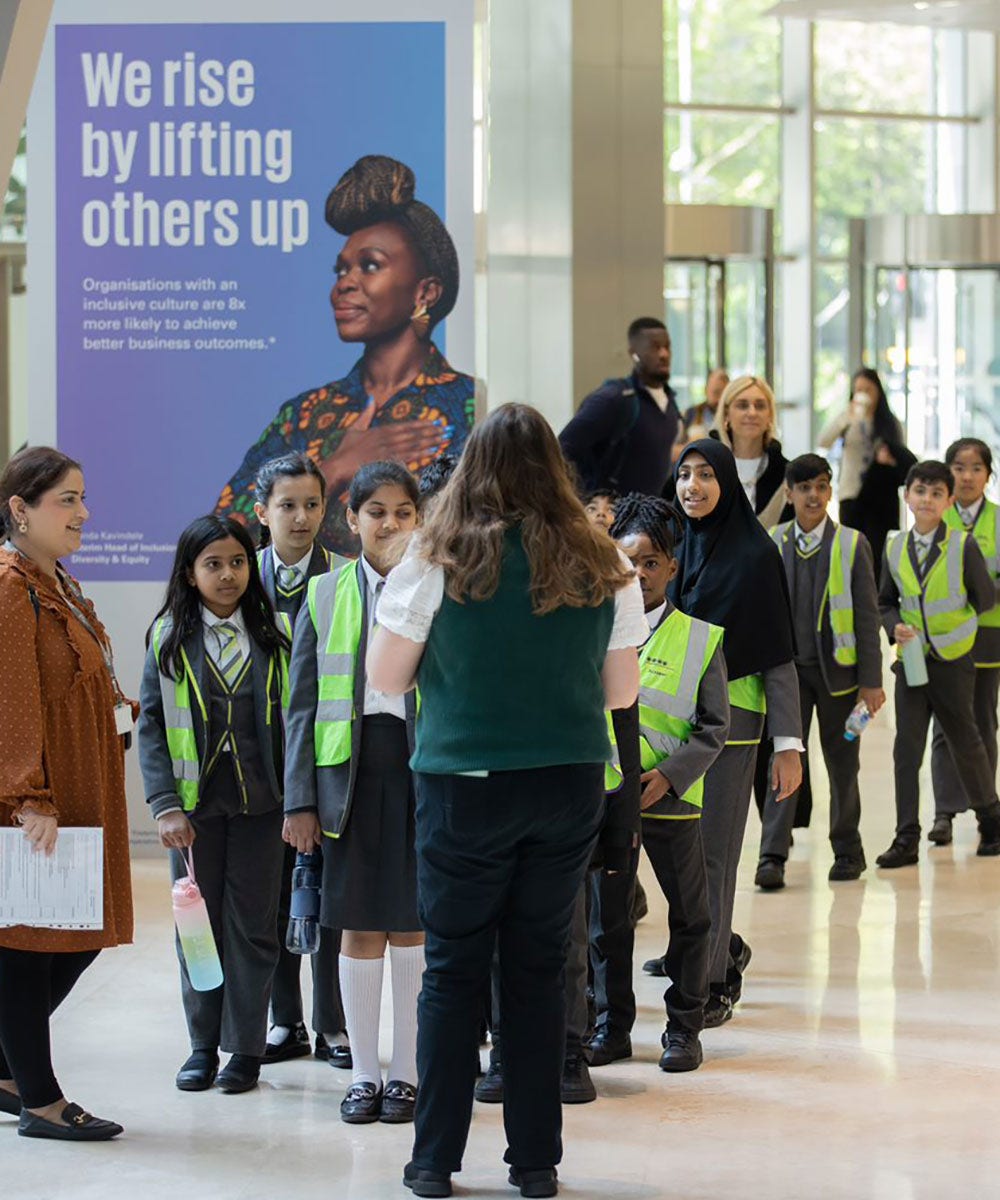
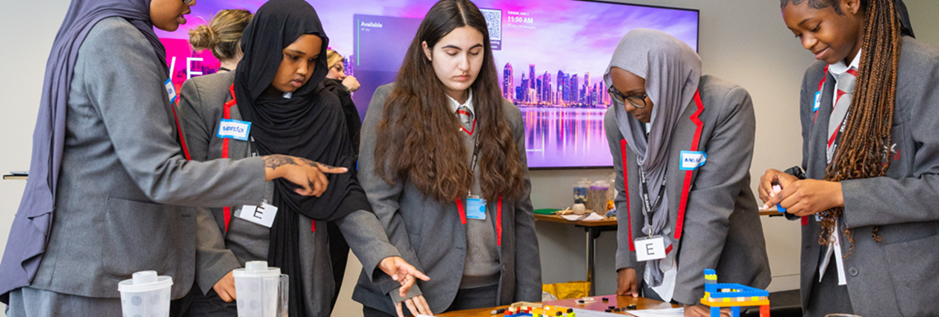
In support of our 2030 commitment, we invite schools into our offices across the UK to complete two-hour ‘world of work visits’.
We know that when young people have meaningful encounters with workplaces, the chance of them becoming NEET (Not in Employment, Education or Training) is much lower, they have a greater chance of progressing into fulfilling careers which they may have felt were beyond their reach.
Supported by our people, students gain insight into our business and take on some of the challenges facing our clients today, helping them develop their essential skills.
The programme features the best of what KPMG has to offer, from technology, AI and cyber to sustainability – offering young people a window into the changing world of work.
Reimagining work experience
In June 2025 we built on this programme and delivered the first employer-led, multi-sector pilot programme in collaboration with the Careers and Enterprise Company (CEC), Talent Foundry and five - employers.
Our aim was to give students from underserved communities in East London access to two employers in one day – deepening the insights and experience they gain, while reducing the burden on schools to find work experience opportunities.
Impact
Supporting teachers
We also host events for teachers in our offices, sharing with them the skills we value as an employer and giving them greater insights into the corporate workplace, to inform their teaching of careers in schools.
In June 2025, we held a Teacher Encounters visit at our Manchester office, in partnership with the Greater Manchester Combined Authority. The aim of this visit was to ensure educators feel confident delivering impactful skills and careers education to young people, seamlessly embedded into the curriculum.
As part of the visit, educators from Rochdale, Oldham & Bury had the opportunity to learn more about pathways into KPMG, meet current apprentices, and hear directly from them about how those who are early on in their careers feel about skills and careers education. Attendees also shared best practice on how to support students to develop their skills in the workplace.
Our Chief Executive, Jon Holt, joined the visit to answer questions about the skills KPMG looks for, the challenges young people may face when entering the world of work, and how he sees skills needs evolving in the future.
Literacy and numeracy and early years language are fundamental to young peoples’ future success and in ensuring there’s a diverse and empowered workforce of the future. In the UK, in 2025, 41% of adults were reluctant to engage with numbers.¹ National Literacy Trust (NLT) research highlights that in 2024, almost a quarter of 11 year-olds left primary school without the reading and writing skills they need to thrive.²
Through our volunteering programmes our people take action on improving literacy and numeracy by supporting Tutoring programmes.
- 25% more students were reading at the expected standard at the end of the year compared to when they started a Chapter One reading session.³
- Action Tutoring’s pupils were nearly 13 percentage points more likely to pass maths GCSE than other disadvantaged pupils nationally (65% compared to 52%).⁴
- Through our partnership with The Economist Education Foundation students for the 3rd year consecutive year, young people have made 7 times more progress across speaking, listening, problem solving and creativity compared to students without interventions.⁵
¹National Numeracy Day Impact Report 2025
²Vision for Literacy Business Pledge | National Literacy Trust
³Chapter One Impact Report 2023/24
⁴Action Tutoring Impact Report 2023/24
⁵The Economist Educational Foundation, Impact Report 24-25.pdf
Literacy
In 2015 KPMG and the National Literacy Trust jointly founded the award-winning Vision for Literacy Business Pledge to champion much needed change. Given the substantial societal and economic impacts of the UK’s literacy challenge, the Vision for Literacy Business Pledge brings the business community together with charities, schools and the government to prioritise literacy and improve the literacy skills of children and young people who need it most.
As of 2025, 111 businesses have joined the Pledge, publicly committing to changing lives through literacy.
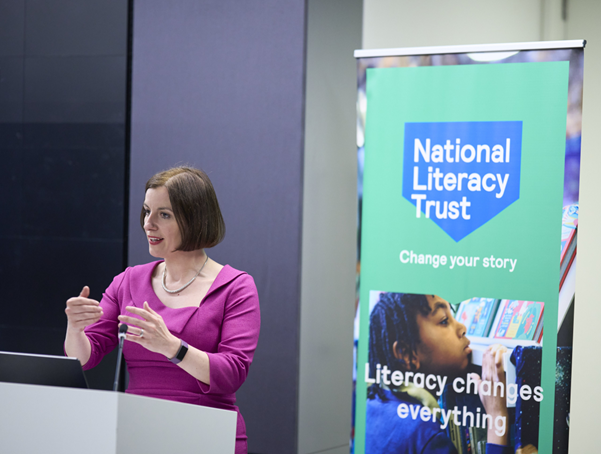
In April 2025, we celebrated 10 years of the Pledge with an event for all signatories in our Canary Wharf office. We were joined by Rt Hon Bridget Phillipson MP, Secretary of State for Education who addressed the audience about the benefits of reading for pleasure from a young age and acknowledged the role of partnership for the future of literacy.
As the founding partner, we remain committed to championing collaborative action between the public, private and third sectors to help shape and strengthen the future of literacy. Literacy forms a key building block of social mobility and working together with experts in the sector like NLT we want to play our part in making equal opportunities a reality for all.
KPMG in the UK, was named as one of the first supporters for the National Year of Reading 2026. This bold initiative will tackle the steep decline in reading across all age groups in the UK. Working alongside the Department of Education the campaign will champion reading as a powerful modern activity, deliver events in schools and communities and unite multi-sector partners to use their influence to get the nation reading again.
In August 2025, NLT published research commissioned by KPMG sharing the impact of AI on the future of literacy for both young people and teachers. As generative AI becomes embedded in education and everyday life, it’s essential that we navigate this shift carefully. We all have a role to play in understanding both the opportunities and risks, ensuring that AI is used responsibly and in ways that genuinely support children’s literacy.
The report highlighted that:
- Two thirds of young people use AI, with nearly half using it weekly or more
- Young people are using AI to improve vocabulary (39.5%), ask for feedback (20.7%), and even for story ideas (19.3%) - showing how AI can support writing in rich and diverse ways
- And yet more than half (51.4%) of teachers were concerned about the impact of AI on pupils' engagement with learning, while 2 in 3 (66.5%) believed that generative AI might decrease the perceived value of developing writing skills, and 1 in 2 (48.6%) thought that it might have a negative impact on the perceived value of developing reading skills
Numeracy
Numeracy forms part of our social mobility flagship Opening Doors to Opportunities, Poor numeracy is estimated to cost our economy up to - £25 billion a year¹, this is as much a business issue as a societal one.
Around 17 million adults – 49% of the working-age population of England – have the numeracy level that we expect of primary school children⁶.
National Numeracy Day 2025
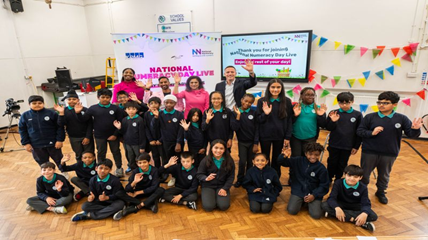
Together with charity National Numeracy, KPMG founded National Numeracy Day in 2018, as the UK’s only campaign dedicated to everyday maths. It’s for families, educators, individuals, children and organisations of all kinds. It wants the value and benefits of being able to use numeracy in everyday life to be well understood in the UK and for people to be inspired to take their first steps towards improved numeracy.
This year’s campaign theme was “The Money Edition”. Research carried out by YouGov revealed that almost a third (32%) of UK adults who want to improve their maths and numeracy skills, want to do so to manage their money better. The campaign shone a spotlight on how everyday maths supports budgeting, saving, shopping smart, and planning for the future.
The eighth National Numeracy Day took place on 21 May 2025. The campaign has grown year on year, and this year it inspired 1.2million¹ actions to improve numeracy in 2025.The campaign garnered support from 13,369 individuals and organisations including leading consumer brands, schools and colleges, as well as government departments.
The National Numeracy Day Live assembly that we delivered with National Numeracy, brought together over 25,000 young people across 1,000 primary schools across the UK for an interactive numeracy picnic focused on everyday maths, boosting confidence and practical skills. The assembly was hosted by National Numeracy Ambassador and broadcaster Bobby Seagull and KPMG Ambassador Uzoma Mezue and Bina Mehta, Chair, KPMG in the UK.
Throughout May, we organised a national roadshow for schools focused on numeracy. Our aim was to engage young people from communities with low social mobility in practical discussions about numeracy. Activities ranged from learning how to calculate taxes to introducing primary school students to basic investment concepts. In June, during the International Tennis Tournament, we hosted the Liverpool Tennis Day, where students participated in numeracy-based games designed to strengthen their mental maths skills.
Recent research by KPMG and National Numeracy⁶, while 88% of UK adults feel confident with numbers, one in four are “silent savers” who keep financial matters private. The study highlighted ongoing challenges in budgeting and financial literacy, and featured psychologist and National Numeracy Ambassador Dr Linda Papadopoulos, who explored how understanding different financial personalities can help build confidence. These findings underscore the continued need for practical, confidence-building initiatives like National Numeracy Day.
National Numeracy Leadership Council
Launched in September 2021 with the support of HM Treasury - the National Numeracy Leadership Council brings together leading businesses with government department to accelerate action on poor numeracy. “KPMG are members of the council, and together members are building sustained and collective effort across business, government and every aspect of civil society to tackle the issue. Improving numeracy levels nationally offers benefits right across society, stimulating the economy and helping people to get on in vital aspects of their lives.
Essential skills such as teamwork, creativity, and problem solving are key to young people developing the adaptability and resilience that’s needed to move into – and between – jobs.
KPMG has been proud to support Skills Builder since 2015 when the KPMG Foundation provided seed funding to the organisation. The Skills Builder Partnership is tackling an important barrier to employability and social mobility. We have worked with them for over ten years to strengthen and share their concept.
Skills Builder Framework 2.0
We were delighted to support the launch of the Skills Builder Framework 2.0¹ in June 2025. The updated framework builds on the successes of the model to date and incorporates the latest research and insights on essential skills development. The robust framework identifies 8 essential skills that are embedded across KPMG’s programmes to support young people to transition from education to the workplace.
Skills Builder Accelerator programme
We have provided long term funding to the Skills Builder Accelerator programme which supports schools to develop a complete strategy for achieving excellence in the essential skills we know pupils will need when entering the workplace. The programme provides training for teachers to deliver systemic change in how essential skills are taught in schools. We have also collaborated on teaching resources focused on embedding essential skills in lesson time.
More than 1.8 million learners develop essential skills through approved Skills Builder Partnership programmes by end of 2024.
Learners on their Accelerator programmes made 3.3 times the rate of progress in essential skills compared with peers who didn’t take part.


Build the eight essential skills
to succeed

Collaborating across our sector to improve social mobility: RISE
In December 2021, we came together with our peers in five of the big accountancy firms to found the RISE Initiative. Through this collaborative initiative, our volunteers support young people in social mobility cold spots to develop essential skills and better understand career pathways into our industry. To date, over 42,000¹ young people have taken part in workshops, and since its launch over 30 partner organisations2 have joined the collaboration.
Technology
Aligned to the Future skills strand of our education strategy we want to ensure that young people develop the technology skills necessary to thrive in the future world of work and ensure that they are taking steps to stay safe online.
This year, IT’s Her Future, KPMG’s flagship programme driving gender equity in technology, marked ten years of impact. A key part of the programme is our continued work to give young people the confidence to pursue a career in tech through our annual Junior Future Leaders programme – which was a finalist in the 2025 Tech Impact Awards for Inspiring the Next Generation. The programme, which is delivered in 5 regions across the UK supported more than 150 young people to raise their awareness of routes into careers in technology and the wider impacts of tech on society in the advent of new technologies and AI.
Our flagship employability programme, Opening Doors to Opportunities In School (WorkReady), is delivered exclusively in social mobility coldspots, opportunity areas and areas of high deprivation, to help young people develop their digital literacy and green skills.
In the North West, we are collaborating with the Ahead Partnership to work with young people who are at risk of exclusion from the technology careers pipeline through workshops, career panels, networking events and more. In FY25 we reached over 3,500 students, making a vital contribution to addressing the UK’s skills shortage and increasing representation in the technology sector.
Meanwhile our CyberSavvy campaign is designed to equip young people with the knowledge and skills to stay safe online, and we had colleagues deliver workshops in schools about Artificial Intelligence during London Tech Week.
Collaborating to address areas most in need
Regional inequality plays a significant role in social mobility across the UK. The UK needs to be rebalanced, and long-term efforts to level up by supporting, empowering, and connecting people are key to driving sustainable change in communities. We know one organisation can’t do this alone; it’s a collective effort to tackle these challenges.
We take a place-based approach to target areas of greatest need, working with over 800 schools across the UK. We work collaboratively with communities, stakeholders, our charity partners, businesses, and the government, we co-create tailored provisions which address local challenges, recognising that each area is unique.
Our outreach initiatives include career insights and skills development opportunities for young people through workplace visits, meaningful encounters with our colleagues and work experience programmes.
Our targeted support