India’s bus market is undergoing a significant transformation, rebounding strongly after COVID-related disruptions. Historically stable at 35,000-50,000 units annually, the sector is now poised for sustained expansion, driven by fleet modernisation, infrastructure upgrades, and rising mobility needs. Electrification of buses has emerged as a cornerstone of India’s transition to a low-carbon economy, given their dominant role in passenger mobility.

      Electric bus adoption has accelerated sharply over the past few years, led primarily by the public sector. Successive government schemes-FAME I, FAME II, PM-eBus Sewa, and PM E-DRIVE-have evolved to address gaps left by their predecessors. Recent programs have broadened their focus beyond vehicle subsidies to include ecosystem readiness, signaling a more holistic approach to electrification. While public sector adoption has led the charge, the private segment is also witnessing growing interest from traditional operators and new-age mobility startups.

      On the supply side, both incumbent and new-age OEMs are expanding their production capacity to meet escalating demand. However, supply chain vulnerabilities remain a critical challenge with high dependence on Chinese imports. Recognising these risks, the Government has been taking proactive measures aimed at fostering self-reliance in the sector, paving way for large-scale e-bus deployment across the country.

      The success of India’s bus market transition hinges on unified action across government tiers, industry players, financiers, and end-users. Policymakers need to actively engage stakeholders across the value chain in co-creating adaptive and forward-looking regulations, which are flexible enough to accommodate innovation while maintaining necessary safeguards. The next decade is likely to be pivotal in defining sustainable mobility - with electric buses at the core, delivering economic, environmental, and social benefits at scale.

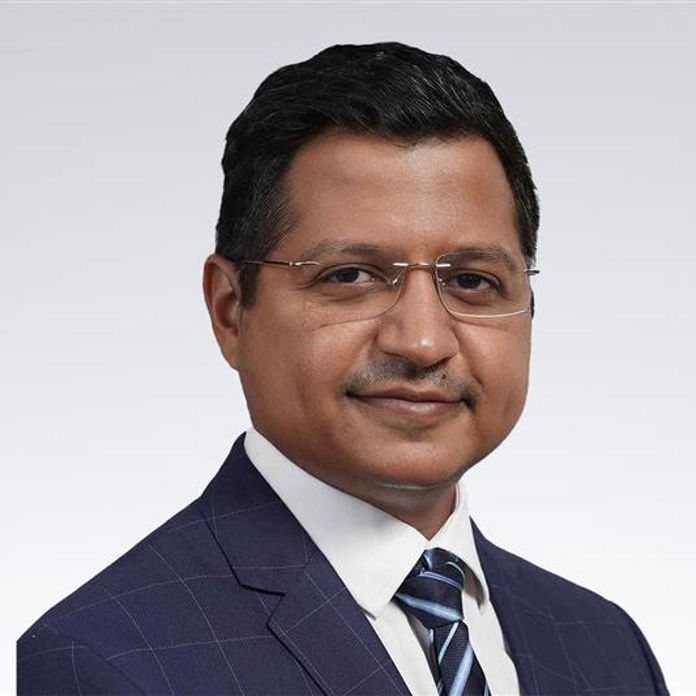
      India’s electric bus transition is moving beyond a policy-led initiative to becoming a structural transformation opportunity for the broader mobility ecosystem. Public transport electrification has already created strong momentum, supported by government procurement programmes, improving cost economics, and increasing infrastructure investments. Going forward, the focus will increasingly shift towards building a scalable ecosystem that combines domestic manufacturing, financing innovation, charging infrastructure expansion, and operational efficiency to support sustainable long-term growth across both public and private transport segments.
      Rohan Rao

      Partner, Automotive & Lead, Electric Mobility

      KPMG in India


      India’s e-bus ecosystem is entering a critical phase where scale, localisation, and execution capabilities will become key differentiators. While public transport undertakings continue to lead adoption, the next phase of growth is expected to emerge from private intercity mobility, airport transport, platform-based mobility solutions, and corporate fleets. The transition will require coordinated action across OEMs, operators, infrastructure providers, financiers, and policymakers to address supply chain resilience, charging readiness, financing accessibility, and operational sustainability as India accelerates towards its broader clean mobility and net-zero ambitions.
      Raghavan Viswanathan

      Partner, Deal Advisory

      KPMG in India


      Key highlights of the report

      • Government fleets leading electrification

        More than 90 per cent of electric bus sales are concentrated in state-run operations, driven by government-led tenders, a decade of progressive government initiatives and cost parity for intracity operations with CNG buses. Aggressive tendering has been central to the government’s strategy, with nearly 62,000 e-bus tenders issued and 46,000 awarded under different schemes. Looking ahead, India plans to tender approximately 40,000 e-buses by FY30, with flagship schemes targeting both mega cities and Tier-2/3 towns

      • Early signs of private adoption

        High upfront costs, limited charging infrastructure, range constraints for long-haul routes, and lack of policy incentives have slowed adoption in the private segment. However, the ecosystem is evolving rapidly with emergence of innovative financing models such as Battery-as-a-Service (BaaS) and operating leases, expansion of charging infrastructure along highways and introduction of next-generation models with extended range and enhanced passenger comfort. Near-term adoption is expected to concentrate on airport shuttles, platform-based mobility, and select intercity routes, with tech-driven startups planning to deploy approximately 16,000 e-buses. Cost parity with diesel for intercity operations is projected by 2030, paving the way for accelerated scale-up post FY30

      • Proactive government actions to address supply chain bottlenecks

        Supply chain resilience is hindered by low localisation levels, reliance on China for critical components including cells, rare earth magnets and semiconductors, and single-source suppliers. Key government initiatives - PLI schemes, strict localisation mandates under Phased Manufacturing Program (PMP), and strategic programmes including India Semiconductor Mission, National Critical Mineral Mission, alongside global partnerships for lithium and cobalt sourcing – aim to strengthen domestic manufacturing and secure critical resources

      • The road ahead

        India’s e-bus market stands at a pivotal juncture. Strong policy support and improving cost economics are driving rapid electrification, but sustained growth requires a holistic ecosystem approach. This includes integrating supply chain resilience with robust charging and grid infrastructure, innovative financing models, and skilled workforce development. Targeted incentives for private fleets such as tax breaks, reduced tolls, depot access, adoption mandates, and scrappage benefits, can speed up electrification, while battery reuse and recycling initiatives will strengthen confidence in long-term asset economics. Collectively, these interventions will create a scalable, sustainable framework for India’s e-mobility future


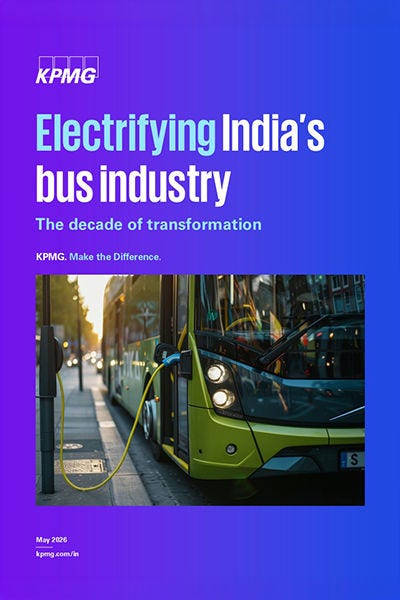
      Electrifying India’s bus industry: The decade of transformation


      Analysing India’s e-bus market evolution, public and private adoption trends, supply-side dynamics, and strategic pathways for electrification
      Key Contacts

      Rohan Rao

      Partner, Deal Advisory

      KPMG in India

      Raghavan Viswanathan

      Partner, Deal Advisory

      KPMG in India

      How can KPMG in India help

      Energy has been universally recognised as one of the most important inputs for economic growth and human development.

      India’s automotive sector transformation is powered by AI, electric mobility, and connected solutions

      KPMG India’s Transport and Logistics practice comprises a dedicated network of professionals with a deep understanding

      Access our latest insights on Apple or Android devices