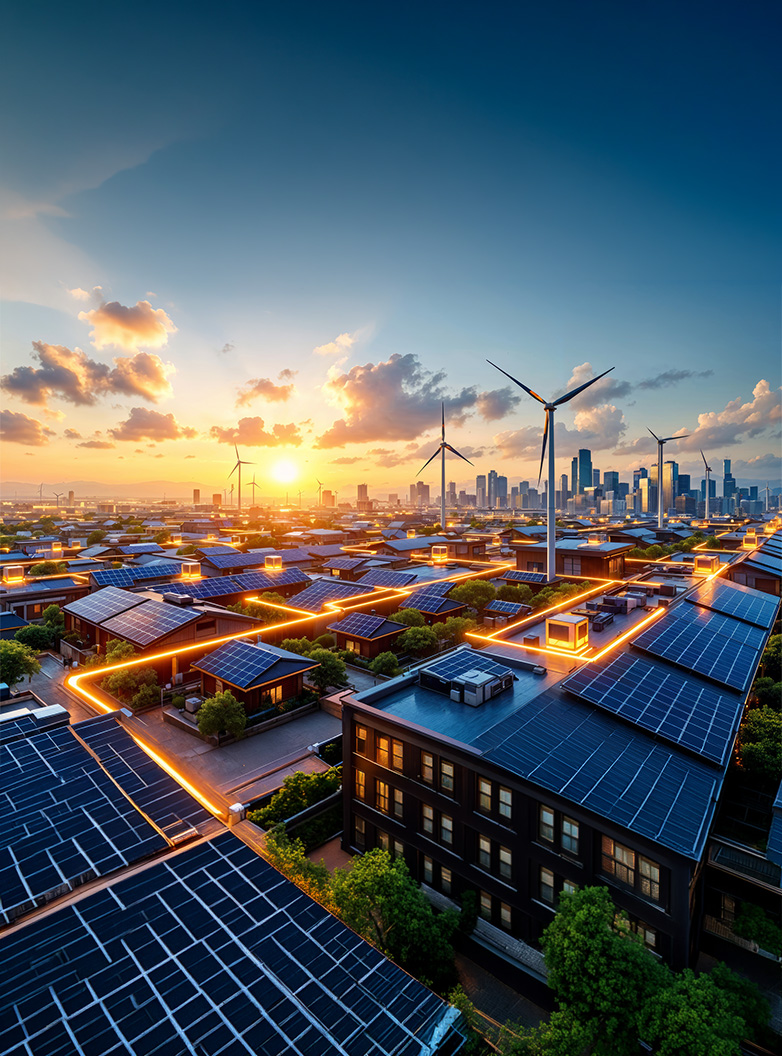
India stands at an inflection point where economic ambition and energy security are converging. As the country accelerates toward becoming the world’s third‑largest economy, its energy choices might define not only growth but long‑term resilience. This is a very critical moment for India’s energy journey. Today, India’s installed electricity capacity stands at roughly 500 GW1. By 2047, projections suggest we could be looking at a grid of nearly 2,100 GW2–an extraordinary expansion driven significantly by renewables, especially solar.
But renewables come with intermittency challenges. If we are to power an industrial‑scale economy of the size we envision, we will need reliable baseload generation. At the same time, the planet is warming, and the global call for decarbonisation is only growing stronger. Irrespective of geopolitical shifts, low‑carbon or zero‑carbon energy sources are not optional. They are essential.
Nuclear energy, once sidelined in global conversations, has returned to centre stage. In India, given the scale of our ambitions, it has become a key focus. We are currently at about 8.8 GW of nuclear capacity3, and over the next two decades we aim to scale this more than tenfold to 100 GW4. That requires not just ambition, but evolution in technology, supply chains, talent, land acquisition, and commercial frameworks.
A landmark legislation has opened the door to greater private sector participation, which the government recognises as necessary to achieve this scale. At the same time, India consumes nearly 20 percent of the world’s data but has only about 2.5 percent5 of global data centre capacity –The recent Union Budget’s thrust on data centres underscores the importance of data sovereignty, security, and building a resilient domestic ecosystem. Global data‑centre electricity demand is surging, adding pressure to national grids.
There are real questions we must address–on pricing and tariffs, on supply chains, on commercial mechanisms, and on trust. Even as nuclear returns to serious consideration, public confidence must be earned, especially when building at this magnitude. If we are to move beyond 2.5 GW per annum and eventually exceed 5 GW per annum post‑2032, it will demand coordinated action across government, industry, and society. The scale of the challenge is immense, but so is the opportunity. India now stands poised to shape an energy transition that is not only ambitious but globally influential, aligning growth with sustainability and long‑term security.