The most sophisticated sellers realize carve-outs can be a fantastic financial arbitrage play. The sum of the parts is often worth more than the whole, and every dollar of CarveCo EBITDA improvement can be worth 10–20x in deal value (the multiple), while the cost to implement is often less than 1x.
However, few sellers run their best race; they don’t fully maximize value by articulating a full potential CarveCo. Two lessons stand out:
- The race is won or lost, long before the starter’s bell: Value creation needs to be brought forward — before the decision to divest — ideally embedded in ongoing portfolio analysis. The earlier you move the value levers, the more of them price into the deal
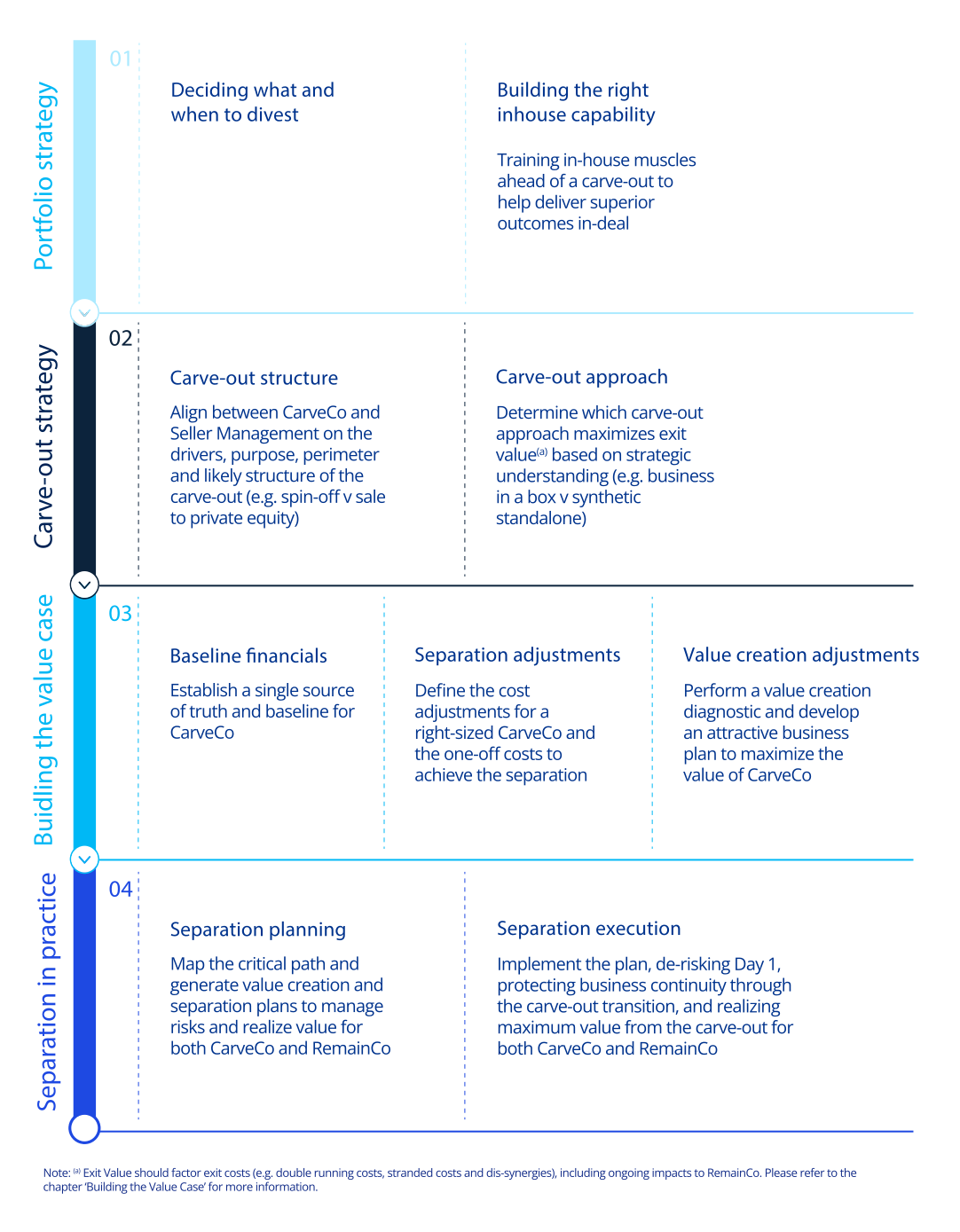
- Carve-outs aren’t a normal sprint. specialized race tactics and handoffs need to be learned: Carve-outs are not “Business As Usual” (BAU) and require a specific execution muscle to be built in advance. Choosing to spin, sell or list is a strategic call that demands its own tool-set. A superpower is to flex this muscle while simultaneously executing BAU.
Most carve-out articles will tell you where teams stumble, or what the accounting carve-out guidance says. In this series we seek to buck that trend and focus on ‘the how’: the decisions, capabilities and sequencing that turn a carve-out into a premium performing deal.