ENRich 2026

      ENRich is KPMG in India’s annual flagship energy and natural resources conclave which brings policymakers and industry leaders together to deliberate on key sectoral themes.

      Amid unprecedented global uncertainty, ENRich 2026 seeks to explore how the energy and resources ecosystem can build resilience, unlock opportunity, and sustain growth.


      Resilience in a changing world

      For energy and infrastructure leaders, resilience is no longer simply a defence against disruption. It is a strategic capability that shapes competitiveness, independence and long-term value creation.

      The global energy and resources system is undergoing structural change. Geopolitical conflict, supply chain disruption, climate volatility, capital repricing and rapid technological acceleration are no longer isolated shocks, but part of an enduring operating reality. The events of the past year have brought this shift into sharper focus.

      Disruptions to critical trade corridors and intensifying geopolitical and economic fragmentation are reshaping energy flows, commodity pricing and investment decisions. Their effects extend across infrastructure, manufacturing, consumer markets and national fiscal positions, underscoring how closely global systems are connected.

      In parallel, the accelerating adoption of artificial intelligence, data infrastructure and digital operating models is redefining how energy organisations manage assets, risk, capital and talent.


      Yezdi_Nagporewall_Agrasar_Bharat
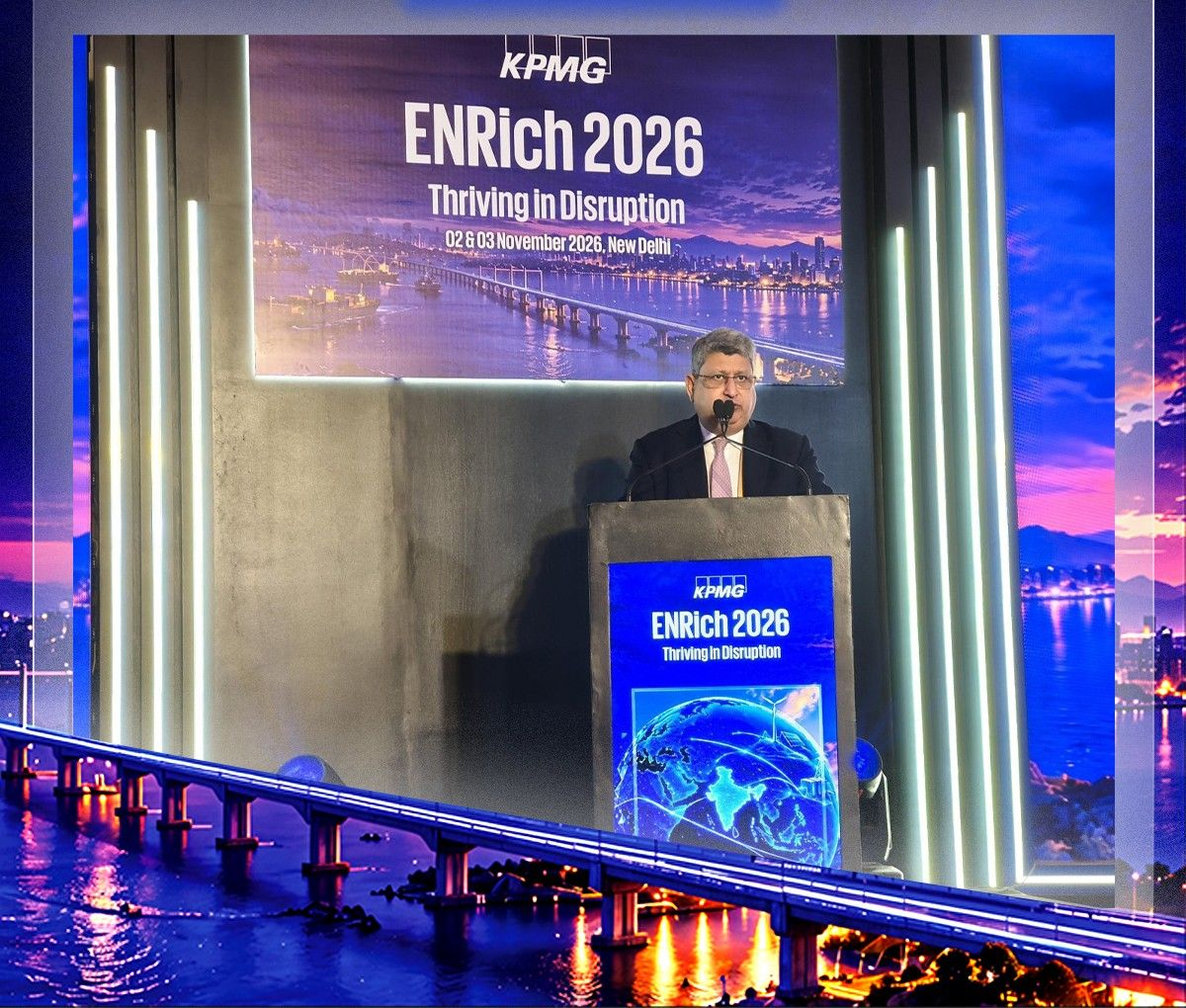
      Disruption is no longer an isolated event; it is reshaping the very foundations of the global economy. Geopolitical shifts, changing trade relationships, energy security and technological advances are redefining how nations and businesses think about growth and resilience. For India, this moment presents an opportunity not merely to navigate uncertainty, but to emerge stronger by building capabilities, fostering innovation and embracing new business models. The imperative is to look beyond immediate challenges and recognise the possibilities that change creates. Through platforms like Enrich 2026, we bring together diverse perspectives to challenge conventional thinking and shape solutions for a more resilient and sustainable future.
      Yezdi Nagporewalla

      Chief Executive Officer

      KPMG in India


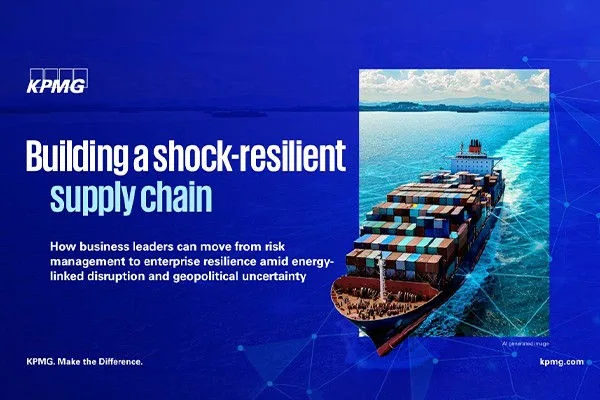
      Building a shock-resilient supply chain


      How business leaders can move from risk management to enterprise resilience amid energy-linked disruption and geopolitical uncertainty

      Watch session recordings


      02 November 2026

      Part 1 - The changed world
      Watch recording

      Part 2 - Innovation for a changing energy future
      Watch recording

      03 November  2026

      Part 1 - The global economy and our energy future
      Watch recording

      Part 2 - Geopolitics, climate and the future of energy
      Watch recording

      Part 3 - From risk and resilience to AI reality
      Watch recording

      Part 4 - Securing the opportunities for India 
      Watch recording


      At the 17th edition of ENRich, KPMG India launched the Energy Innovation Collaborative (EIC), in the presence of Shri Ghanshyam Prasad, Chairman, Central Electricity Authority (CEA), along with Anish De, KPMG International and Vikas Gaba, KPMG India.

      EIC is a year-round initiative to bring together industry, academia, startups, experts and capital to address some of the most pressing challenges shaping the energy sector. Beginning with grids, EIC will focus on three critical imperatives: Expand, Modernise and Optimise.

      Through three interconnected platforms:

      Grid pulse

      To bring critical sector challenges into focus

      Grid innovation

      Radar to spotlight promising innovations and solutions

      Grid dialogues

      To bring stakeholders together and foster meaningful collaboration


      About ENRich 2026

      Against this backdrop, ENRich 2026 brings the Energy and Natural Resources (ENR) industry together to explore the challenges, choices and opportunities ahead. Now in its 17th edition, ENRich builds on more than a decade and a half of dialogue at the intersection of energy, geopolitics, technology and policy. Over the years, it has evolved into a platform for shared foresight, cross-sector learning and practical leadership perspectives.

      ENRich 2026, with the theme ‘Thriving in Disruption’

      Designed as a two-day, high-level forum to examine how the world has changed, how shocks transmit across economies and sectors, and how policy, capital, technology and innovation can be harnessed to build resilience and unlock growth.

      While geopolitics, trade and technology create shared challenges, national responses and policy choices differ according to economic momentum, demographics and resource endowments.

      For India, growth remains a defining priority despite economic shocks driven largely by energy vulnerability. Official economic growth and consumption data for Q1 of FY 2026–27 suggest that the Indian economy has remained notably buoyant.

      The theme and sessions at ENRich 2026 reflect the opportunity to thrive amid continuing disruption and emerge as a stronger economic force. Realising this potential is not assured. It must be harnessed effectively for India and the wider world, including the Global South.


      ENRich will explore the possibilities, choices and imperatives for turning that potential into progress. Two days - Two connected perspectives
      • Day 1: The changed world

      Day 1 will examine the nature of the shocks reshaping the global landscape, what has fundamentally changed in the global order, and how disruption travels across geographies, sectors and balance sheets.

      The discussions will consider the wider macroeconomic context for India and the world, the evolution of geopolitical and economic risks, and the implications for energy and resources businesses, policymakers, investors and consumers.


      • Day 2: Reimagining energy and resources

      Day 2 will translate this understanding into responses. It will explore how leaders can rethink risk, governance, technology adoption and policy alignment, with innovation-led leadership at the heart of the conversation.

      The programme will move from the macroeconomic outlook for the global and Indian economies and its cross-sector implications to the strategic imperatives facing energy producers and users. It will connect an understanding of disruption with the choices, capabilities and actions needed to respond.

      International and national thought leaders from KPMG’s global network of member firms, the industry and the wider ecosystem will come together for insightful, action-oriented conversations on navigating disruption, building strength and realising growth opportunities.


      KPMG in India leaders on ENRich 2026

      Yezdi Nagporewalla

      Chief Executive Officer

      KPMG in India

      • From globalisation to strategic diversification: The next economic shift

        As geopolitical shifts, supply chain disruptions and evolving trade dynamics reshape the global economy, India has an opportunity to strengthen its competitive position. Diversifying economic strengths across manufacturing, semiconductors, critical minerals and data centres, while continuing to build on its services leadership, will be key to sustaining long-term growth. The organisations that thrive will be those that balance opportunity with resilience and innovation

      • India stands at a defining moment in its energy journey. The challenge is not just to meet our growing energy needs, but to do so in a way that is affordable, sustainable and secure. This will require bold thinking, innovation, collaboration and the ability to turn emerging opportunities into scalable solutions. ENRich provides an important platform to bring policymakers, industry leaders, investors and innovators together to shape India’s energy future and accelerate its transition towards greater self-reliance.

      • Disruption is no longer an isolated event; it is reshaping the very foundations of the global economy. Geopolitical shifts, changing trade relationships, energy security and technological advances are redefining how nations and businesses think about growth and resilience. For India, this moment presents an opportunity not merely to navigate uncertainty, but to emerge stronger by building capabilities, fostering innovation and embracing new business models. The imperative is to look beyond immediate challenges and recognise the possibilities that change creates. Through platforms like Enrich 2026, we bring together diverse perspectives to challenge conventional thinking and shape solutions for a more resilient and sustainable future.

      Anish De

      National Leader - Energy Natural Resources & Chemicals (ENRC) and Infrastructure

      KPMG in India

      • India stands at a rare inflection point in history. The convergence of global geopolitical and economic shifts presents a once-in-a-generation opportunity for India to strengthen its global position, redefine its strategic relevance and emerge as a key architect of the new world order.

        India’s opportunity lies not in insulating itself from the changing global order, but in engaging with it strategically. As global interdependencies evolve, India must balance openness with resilience, build trusted partnerships, diversify its economic relationships and define clear boundaries for engagement. The real opportunity is to become a confident, competitive and indispensable player in the emerging world order

      • Evolving shape of the global economy and our energy future

        The global energy landscape has reached a defining inflection point, where geopolitics, economic uncertainty and technological disruption are increasingly shaping energy security. Recent developments in the Middle East have exposed the vulnerabilities of global supply chains and challenged the assumption that energy independence guarantees insulation from geopolitical shocks. The US may have transformed from a major oil importer to a leading producer and exporter, but the strategic importance of the Persian Gulf remains undiminished. At the same time, weakening global demand and economic pressures are adding further complexity to an already volatile market. The lesson is clear: energy security cannot be viewed merely through the lens of production and supply, but must account for resilience, interdependence and geopolitical realities. The future of energy will depend as much on navigating uncertainty as on securing resources.


        The energy transition must go beyond electrification to building a resilient and diversified energy ecosystem. With electricity’s share of global energy consumption rising from 16% to 23% since 2000, the ambition is to reach 35% by 2035. However, supply-chain dependencies and unequal national capabilities pose significant challenges. The priority must be smarter electrification that balances sustainability, energy security, affordability and resilience.

      • India's energy transition is generating an unprecedented scale of infrastructure activity. As we expand electrification, the focus must extend beyond generation to transmission networks and energy storage. The real question is whether our planning, investment and execution capabilities are keeping pace with the scale of ambition. Building capacity is only one part of the equation; ensuring that the infrastructure can support, transmit and store energy efficiently will be equally critical.

      • Rising oil prices, tightening inventories and higher financing costs highlight the need for immediate diversification and efficiency measures. Longer term, resilience will depend on building energy systems that are secure, affordable and sustainable.

        For India, this is both an imperative and an opportunity: ensuring energy security while creating capabilities that power growth at home and competitiveness globally.

      • Geopolitical uncertainty, rising demand, the rapid adoption of AI and the transition to cleaner energy systems are reshaping the global landscape. Yet beneath these emerging trends lies a timeless challenge: ensuring energy remains affordable, secure and sustainable.

      • The energy sector has traditionally been built on reliability, scale and operational excellence rather than continuous experimentation. Yet the energy transition demands a different approach, one that embraces greater investment in research, technology and new ideas. The real challenge is not generating innovation, but creating the conditions to commercialise it, scale it and translate it into lasting impact.

      Regina Mayor

      Global Head of Clients & Markets

      KPMG International

      • What makes today's business environment particularly challenging is not the scale of any single disruption, but the way multiple risks are converging and reinforcing one another. Geopolitical tensions, resource constraints, cyber threats and energy-linked disruptions are creating ripple effects that extend far beyond their point of origin. Organisations that strengthen resilience, anticipate change and build the agility to adapt in an increasingly interconnected world will be better positioned to navigate uncertainty and unlock long-term growth.

      • The global energy landscape has changed dramatically since the pandemic. While many believed COVID-19 marked the peak of global oil demand, consumption has since rebounded to record levels, underscoring the world's growing appetite for energy.


        The rapid expansion of AI, data centres, electric mobility, manufacturing and rising living standards is driving unprecedented demand for electricity. At the same time, energy security and grid resilience are becoming critical priorities.


        The challenge is not simply to increase energy supply, but to balance growth with efficiency, decarbonisation and resilience. Energy is no longer the unsung force working behind the scenes. It has become central to economic growth, technological progress and national security.


        Energy is no longer just an operational consideration; it is central to business strategy, competitiveness and resilience. CEOs are increasingly focused on diversifying energy sources, improving efficiency and leveraging AI to drive more sustainable business outcomes. What is particularly encouraging is the growing recognition that sustainability must be embedded into the way businesses operate, not simply in response to regulation, but because it makes sound business and economic sense.

      Akhilesh Tuteja

      Partner & National Leader - Clients and Markets and Technology, Media & Telecommunications (TMT)

      KPMG in India

      When the world depends on a single solution, it also becomes vulnerable to a single point of failure. The story of the Big Mike banana reminds us that diversity is not merely an option; it is the foundation of resilience. Nature teaches us that putting all our eggs in one basket can threaten an entire ecosystem. The same lesson applies to businesses, economies and global supply chains.

      AI is increasingly creating a new form of monoculture in the way we think, decide and act. Consider Google Maps: when 500 people are directed to the same faster route, an opportunity to save time quickly becomes another traffic jam. The same risk applies to business strategy. If every competitor relies on the same AI-generated insights and recommendations, differentiation begins to disappear. Even creativity is at risk, as AI-generated presentations, communication and content start looking remarkably alike. When everything looks unique but feels identical, we risk creating banner blindness. The real competitive advantage will lie not in simply adopting AI, but in using it to think differently.

      AI promises to make every business smarter and more differentiated, but when everyone uses the same intelligence, the same insights and follows the same recommendations, differentiation becomes an illusion. The real risk is not that AI will make us less intelligent, but that it will make us all think alike. In a world of algorithmic sameness, the ultimate competitive advantage will be the courage to think differently.

      AI should not replace human thinking; it should amplify it. The real value emerges when we bring our own experience, judgement and imagination to AI, rather than simply outsourcing our thinking to it.

      Don't use AI merely as an elevator to reach familiar destinations faster. Use it as a telescope to explore possibilities you never imagined. The choice is ours: create an era of amplified human potential or settle for an era of incompetent mediocrity.

      Purushothaman KG

      National AI Leader and Head – Technology Transformation

      KPMG in India

      • To unlock enterprise-scale value from AI, organisations must focus on high-impact business problems that traditional approaches cannot solve effectively.


        The priority should be identifying use cases where AI can deliver measurable outcomes, drive better decisions and create sustainable value at scale.


        Equally important is building AI with privacy, security and scalability by design. As adoption grows, organisations must ensure that implementation costs remain under control, infrastructure can scale efficiently and returns are rigorously measured. Ultimately, successful AI programmes are defined not by the sophistication of the technology, but by the business outcomes they deliver.

      • AI is moving beyond generating generic responses to delivering contextual, explainable and decision-ready intelligence. The real transformation lies in engineering human skills, adapting regulatory frameworks and ensuring that AI-driven decisions are not just intelligent, but also transparent, accountable and relevant to the business context.


        Trust in AI will ultimately depend not just on what models can do, but on how securely they protect what they know. Privacy by design must be the foundation of responsible AI, not an afterthought.


        The biggest challenge in AI transformation is not moving from experimentation to implementation; it is moving from implementation to measurable business value. AI must move beyond isolated pilots and become embedded in everyday workflows, decision-making and operations. The real measure of success is not how many AI solutions we deploy, but how fundamentally they transform the way we work.

      Gautam Bhattacharya

      Partner & Head – Technology Consulting

      KPMG in India

      Building in sectors like waste management, water restoration and compliance is about creating impact beyond technology. It means solving tangible, on-ground challenges through community participation, sustainable practices and scalable solutions. The real innovation lies in transforming complex environmental challenges into meaningful, lasting change for society.

      For the AI-native generation, AI is not a disruptive technology to adapt to; it is a natural extension of how they think, create, innovate and solve problems. Their advantage lies in not just using AI, but reimagining what is possible with it.

      Building a venture in sectors such as waste management, water restoration and compliance is about creating impact beyond technology. It is about addressing real-world challenges through community participation, sustainable practices and scalable solutions. The true measure of innovation lies in transforming grassroots challenges into meaningful, lasting change for society and the environment.

      Mohit Bahl

      Partner and Head - Risk and Integrity Advisory

      KPMG in India

      Resilience in today’s interconnected world is not about preventing every disruption; it is about anticipating risks, strengthening supply chains and building the agility to navigate uncertainty. The businesses that thrive will be those that turn resilience into a strategic advantage.

      Crises reinforce the importance of industry-wide collaboration. Businesses must look beyond their individual interests, strengthen connections across the ecosystem and adopt a collective approach to building resilience and navigating uncertainty.

      Energy security and risk management must move beyond individual industries to encompass the entire interconnected ecosystem. True resilience requires a holistic perspective that brings together energy, transportation, shipping, power, utilities and critical infrastructure.

      Vikas Gaba

      Partner, C&O Energy and Infra

      KPMG in India

      • Energy resilience will define economic resilience.


        As India accelerates its renewable energy transition, diversification will be critical to balancing affordability, security and sustainability.


        A resilient energy future cannot rely on a single pathway. It requires a mix of technologies, stronger infrastructure and continuous innovation to meet growing demand while sustaining long-term growth.

      • India's next phase of growth will be determined not by how well it navigates disruption, but by how effectively it turns disruption into an opportunity to transform.
         

        • The changing nature of disruption
          Disruption is no longer episodic; it is becoming the operating environment for every business and government.

        • Supply-chain resilience
          Resilience will not come from localisation alone, but from the right balance of diversification, domestic capabilities, strategic buffers and global collaboration.

        • India's energy transition
          Electrification is not merely an energy transition for India; it is an economic growth, energy security and competitiveness imperative.

        • Leadership in an uncertain world
          In an interconnected world, leaders must move beyond managing individual risks to building systems that can anticipate, absorb and adapt to disruption.

        • India's opportunity
          India's opportunity is to move from being a consumer of global innovation to becoming a creator of technologies, products and solutions for the world.
      • Innovation is not constrained by a lack of ideas; the real challenge is taking those ideas to scale. The Energy Innovation Collaborative is designed to bridge this gap by bringing together industry, academia, startups and investors to identify critical challenges and accelerate solutions.

        Our ambition goes beyond facilitating conversations; it is about institutionalising innovation and connecting promising ideas with the capabilities, partnerships and capital needed to succeed. We are beginning with grids because resilient, adaptive and future-ready grid infrastructure is fundamental to the success of the energy transition.

        The question we must ask of every innovation is whether it can help grids carry more, see more, respond faster, flex more and recover better. Ultimately, we want to create a collaborative ecosystem that turns innovation into meaningful, scalable impact.

      Mike Hayes

      Climate Change and Decarbonization Leader, Global Head of Renewable Energy

      KPMG in Ireland

      • Energy is now a boardroom issue

        As disruption becomes a permanent feature of the global landscape, organisations must address two critical imperatives: the affordability of energy and reliable access to it.

        These considerations extend far beyond an organisation's own operations. They influence supply chains, production economics, competitiveness and long-term growth. Increasingly, the ability to secure dependable and cost-effective energy is becoming a critical determinant of business resilience and sustained value creation

      • The 35 by 35 electrification ambition is achievable, but commitments alone will not deliver transformation. The real challenges lie in building the grid and infrastructure at scale, driving demand-side electrification across industries, and creating the government policies that unlock investment. India offers an important lesson: when government and industry work together, clean energy ambitions can translate into phenomenal progress.


        The future of energy lies not just in generating more power, but in intelligently matching supply with demand. AI-driven grid flexibility and falling battery storage costs will be key to solving the energy equation.

      • Energy is not a cost for the AI industry; it is the source of its revenue and future growth. Hyperscalers are no longer just looking at power generation – they are increasingly influencing the development of grids and the future energy mix.

      • Geopolitical uncertainty, rising demand, the rapid adoption of AI and the transition to cleaner energy systems are reshaping the global landscape. Yet beneath these emerging trends lies a timeless challenge: ensuring energy remains affordable, secure and sustainable.

      Dr Matt Pearce

      Head of Energy & Natural Resources

      KPMG Australia

      • The grid of the future must orchestrate, not just distribute. Distributed energy is redefining the role of utilities. As rooftop solar and battery storage reshape demand patterns, grid operators must evolve from moving electrons to orchestrating two-way energy flows. The future lies in flexible services, demand-side participation, and customer-centric grid management that balances reliability, affordability, and resilience.

      • The connections in our energy systems have always existed. What 2026 has exposed is the speed and scale at which disruptions in one part of the system can ripple across the entire ecosystem.

      • One of the reasons ENRich remains such an important global forum is its ability to bring together diverse perspectives on the future of energy. I'm especially looking forward to conversations around four interconnected challenges:
         

        • Growing energy demand
        • Unlocking investment
        • Managing the complexity of multiple transition priorities
        • Ensuring progress withstands increasing scrutiny


        Success will depend on turning intent into outcomes.

      Matt Firla-Cuchra

      Partner at KPMG, UK Head of Water, Power & Utilities, Global Lead Nuclear Energy

      KPMG in the UK

      • AI and energy are like two moons colliding – each needs the other. Energy is fundamental to AI's growth, while AI has the potential to transform energy systems through optimisation, efficiency and smarter operations. The real challenge is managing the risks as these two industries converge.

      • In an increasingly volatile world, energy leaders are being asked to manage far more than supply and demand. Extreme weather events, cybersecurity threats, geopolitical uncertainty, evolving market dynamics, and aging infrastructure are all placing unprecedented pressure on the stability of energy systems.
         

        The conversation now needs to shift beyond short-term reliability to long-term resilience. How do we strengthen electricity and broader energy systems while keeping costs affordable? How do we accelerate investment in critical infrastructure? And how do governments, regulators, investors, and industry work together to build systems that can withstand disruption not just today, but over the next 15 to 20 years?
         

        These are the discussions that will shape the future of energy.

      Colm O'Neill

      Partner, Head of Consulting, Global Head of Power and Utilities

      KPMG in Ireland

      • Efficiency powered the last decade. Resilience will define the next

        For years, leadership was defined by efficiency. The next era may be defined by resilience. As technology, geopolitics and economic shifts accelerate, short planning cycles risk becoming outdated. The challenge for leaders is to think further ahead, anticipate where disruption could lead, and invest today in the capabilities that will matter tomorrow.

      • Geopolitics, climate and technology - Implications for energy, resources, and connected infrastructure

        India’s energy journey is defined by ambition and pragmatism. As the country navigates the energy transition, how can it balance the twin imperatives of energy security and affordability amid growing geopolitical uncertainty?


        AI is both a driver of rising energy demand and a potential solution to the energy challenge. Bridging the electricity gap while advancing semiconductor innovation will be critical to powering the next generation of AI and building a more efficient, sustainable energy ecosystem.

      • The cheapest energy is not necessarily the most economical. In today's geopolitical environment, we must look beyond the unit cost to the risk-adjusted cost of supply. Reliability and deliverability are becoming as important as price.

      Sammy Ahmed

      Partner, Chief Operating Officer

      KPMG Middle East

      2026 has made one thing unmistakably clear: energy security, food security and economic resilience are no longer separate conversations. They are deeply interconnected challenges that demand a common response.

      Mark Lof

      Partner & Sector Lead ENR

      KPMG in the Netherlands

      From the Netherlands' shift from domestic natural gas production to greater import dependence, to broader efforts to balance affordability, security and sustainability,energy systems are being reshaped by forces that extend well beyond markets alone.

      The key question facing policymakers and industry leaders alike is whether market mechanisms can deliver change at the required pace, or whether stronger coordination between governments, regulators and businesses is needed to accelerate transformation. Understanding how different countries are responding to these challenges may hold valuable lessons for building more resilient and future-ready energy systems.

      Jim Barron

      Partner, KPMG Global Mining Lead

      KPMG Canada

      Meeting rising demand for energy and critical minerals requires more than ambition. It requires projects that can be financed, approved and delivered at scale. Mining depends on reliable, affordable energy, while energy infrastructure relies on the materials mining supplies.

      As geopolitics reshapes supply chains and AI drives new infrastructure demand, this interdependence has never been more critical. The opportunity lies in creating the conditions that give investors confidence, enable project viability and deliver lasting value for communities.

      Ian Proudfoot

      Global Head of Agribusiness, Partner - Audit

      KPMG in New Zealand

      • Energy and food are two sides of the same coin. Disruptions in fertiliser and energy supply today could translate into lower agricultural yields and higher food costs tomorrow. We need to start thinking beyond the farm gate.

      • Farmers don't just grow food. They produce biomass, an underutilised source of energy with significant economic potential. By integrating biomass into energy systems, we can strengthen distributed energy networks, enhance energy security and create new, sustainable revenue streams for agricultural communities.

      Feras Fakhro
      Feras Fakhro

      Head of clients

      KPMG Bahrain

      As energy demand rises and infrastructure struggles to keep pace, disruption can have immediate global consequences. AI is adding to power demand, but it can also help address the challenge by improving system efficiency, strengthening supply chains and enabling organisations to anticipate and respond to disruption more effectively.

      Nikhil Moghe

      Partner, C&O-Energy & Infra-O&G
      KPMG in India

      The energy landscape is being reshaped in real time. From shifting geopolitical dynamics and AI-driven innovation to technological breakthroughs and climate commitments, the forces reshaping the energy ecosystem are accelerating.

      As organisations rethink resilience, competitiveness, and growth, ENRich 2026 will bring together leading voices to explore how today's disruptions can become tomorrow's opportunities. Join us for the 17th edition of our flagship initiative

      Vartika Shukla

      Senior Advisor, Transformation-MPA
      KPMG in India

      India’s energy transition is shaped by two equally important priorities – energy security and affordability. Despite geopolitical uncertainties and global disruptions, India’s ambition must be matched with pragmatism, ensuring that the transition is resilient, sustainable and aligned with the country’s economic realities.

      Amit Dey

      Associate Partner, Markets
      KPMG in India

      The energy landscape is being reshaped in real time. From shifting geopolitical dynamics and AI-driven innovation to technological breakthroughs and climate commitments, the forces reshaping the energy ecosystem are accelerating.

      As organisations rethink resilience, competitiveness, and growth, ENRich 2026 will bring together leading voices to explore how today's disruptions can become tomorrow's opportunities. Join us for the 17th edition of our flagship initiative

      Hear from the experts

      The best defence against disruption is self-disruption. Growth and resilience depend on constantly challenging long-held assumptions about customers, business models, and sources of competitive advantage. In an AI-enabled world, organisations that reinvent proactively will be better positioned than those forced to react to disruption

      The energy conversation has never been more consequential. Geopolitical uncertainty, rising demand, the rapid adoption of AI and the transition to cleaner energy systems are reshaping the global landscape. Yet beneath these emerging trends lies a timeless challenge: ensuring energy remains affordable, secure and sustainable

      Organisations must focus on high-impact business problems that traditional approaches cannot solve effectively. The priority should be identifying use cases where AI can deliver measurable outcomes, drive better decisions and create sustainable value at scale

      For years, leadership was defined by efficiency. The next era may be defined by resilience. As technology, geopolitics and economic shifts accelerate, short planning cycles risk becoming outdated. The challenge for leaders is to think further ahead, anticipate where disruption could lead, and invest today in the capabilities that will matter tomorrow

      In an interconnected world, risks no longer remain confined to individual sectors. Energy disruptions impact inflation and growth, while technology shifts reshape supply chains and competitiveness. Leaders must broaden their field of vision, understand the ripple effects across industries, and build organisations designed to adapt continuously

      As disruption becomes a permanent feature of the global landscape, organisations must address two critical imperatives, the affordability of energy and reliable access to it

      The next chapter of the energy transition will be measured by delivery. Four major interconnected challenges are faced by leaders: meeting growing energy demand, unlocking investment, managing the complexity of multiple transition priorities, and ensuring progress withstands increasing scrutiny

      The future of energy will be defined by the resilience of the systems that power it. In an increasingly volatile world, energy leaders are being asked to manage far more than supply and demand. Extreme weather events, cybersecurity threats, geopolitical uncertainty, evolving market dynamics, and aging infrastructure are all placing unprecedented pressure on the stability of energy systems

      Energy transitions are never just about energy. They are about navigating systemic change. From the Netherlands' shift from domestic natural gas production to greater import dependence, to broader efforts to balance affordability, security and sustainability, energy systems are being reshaped by forces that extend well beyond markets alone.

      The world’s energy transition will be decided by projects that move from plan to reality. Meeting rising demand for energy and critical minerals requires more than ambition. It requires projects that can be financed, approved and delivered at scale. Mining depends on reliable affordable energy, while energy infrastructure relies on the materials mining supplies

      Farmers don't just grow food. They produce biomass, an underutilised source of energy with significant economic potential. By integrating biomass into energy systems, organisations can strengthen distributed energy networks, enhance energy security and create new, sustainable revenue streams for agricultural communities

      AI, geopolitics and energy are now inseparable strategic priorities. As energy demand rises and infrastructure struggles to keep pace, disruption can have immediate global consequences. AI is adding to power demand, but it can also help address the challenge by improving system efficiency, strengthening supply chains and enabling organisations to anticipate and respond to disruption more effectively

      Rising oil prices, tightening inventories and higher financing costs highlight the need for immediate diversification and efficiency measures. Longer term, resilience will depend on building energy systems that are secure, affordable and sustainable

      The energy landscape is being reshaped in real time. From shifting geopolitical dynamics and AI-driven innovation to technological breakthroughs and climate commitments, the forces reshaping the energy ecosystem are accelerating

      Disruption has become the world’s new baseline. Geopolitical uncertainty, rapid technological advances, climate pressures and evolving energy systems are creating a new reality for organisations worldwide. The challenge for leaders is not simply navigating disruption but using it as a catalyst for growth and competitive advantage

      Our perspectives

      Transformation stories

      Supporting the delivery of clean, reliable power through programme governance and project controls

      You can transform E&P value chain with AI

      You can transform renewable operations with AI

      You can accelerate oil and gas discovery with AI

      You can transform turbine design with AI

      You can optimise power scheduling with AI

      You can enhance renewables energy generation with AI

      India insights

      Explore the integrated analysis of global energy production, consumption, and emissions, revealing how the energy landscape is evolving

      A strategic roadmap to scale sustainable aviation fuel (SAF) and strengthen India’s aviation energy security and resilience

      Discover how energy leaders are shaping the Intelligence Age through AI and emerging technologies

      A strategic perspective on scaling ethanol beyond E20 to strengthen India’s energy security, sustainability, and fuel system resilience

      Global insights

      Insights from 420 Investors in Energy & Natural Resources

      A blueprint for creating value through AI-driven transformation

      A midyear update: opportunities for businesses to navigate uncertainty with confidence

      Related content

      Energy, Natural Resources and Chemicals

      Energy transition enabling resilient and future-ready industrial ecosystems
       

      Energy, Natural Resources and Chemicals

      Energy and Renewables Insights

      India has a unique challenge in looking to grow its energy sector rapidly while decarbonising simultaneously
      Energy and Renewables

      ENRich 2026: Innovation Awards

      The ENRich 2026 Innovation Awards identify and recognise innovative solutions developed by startups, corporates and the public sector
      ENRich 2026 Innovation Awards

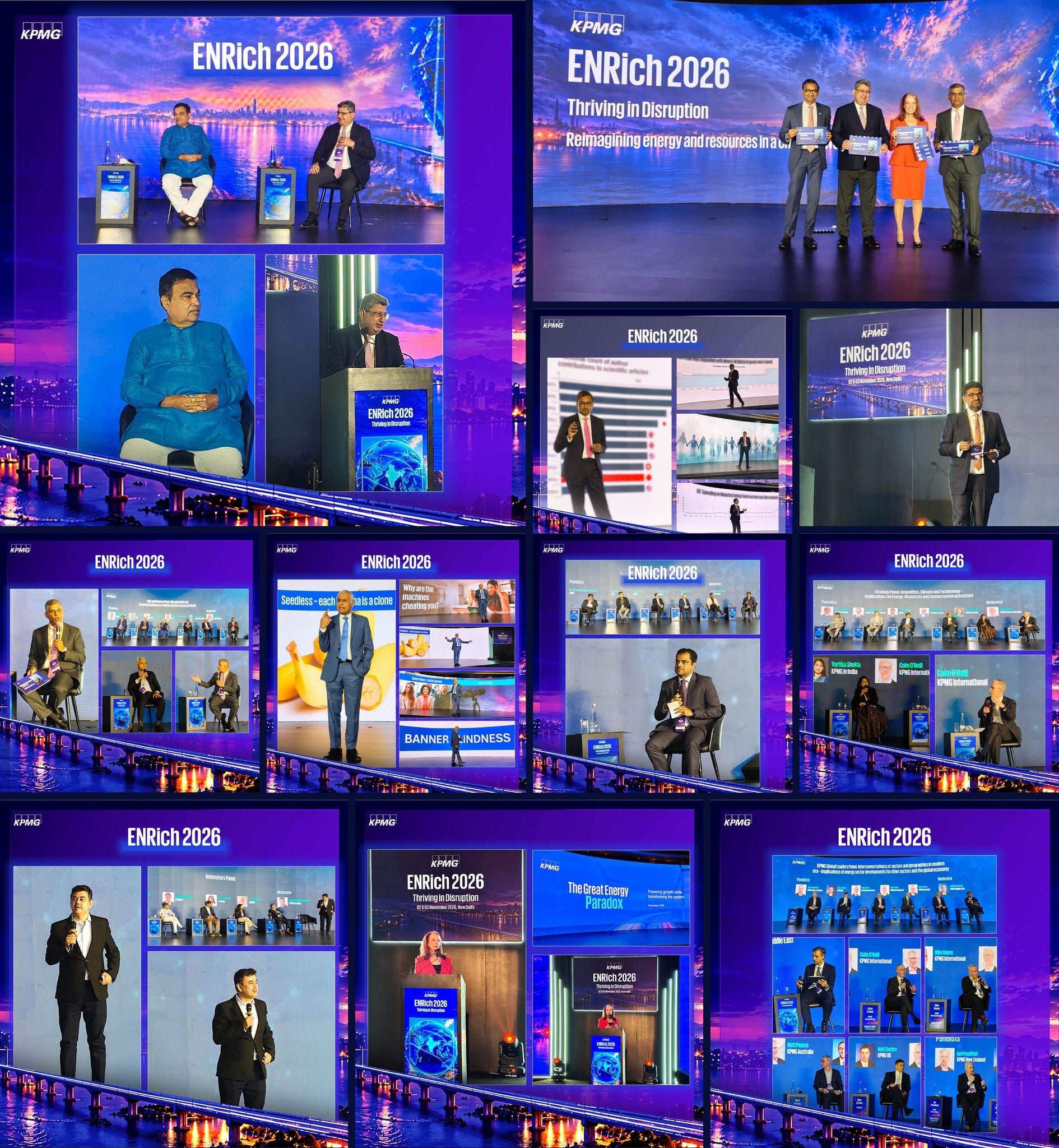
      Glimpses of the event


      Press releases

      Organisations need resilience, visibility, advanced technologies, and agility to respond to disruption and support sustainable growth

      ENRich 2026 spotlights breakthrough solutions addressing critical sustainability and resource challenges

      Key Contact

      Anish De

      National Leader - Energy Natural Resources & Chemicals (ENRC) and Infrastructure

      KPMG in India

      KPMG Insights Edge

      KPMG Insights Edge

      On the go access to KPMG in India’s insights and publications