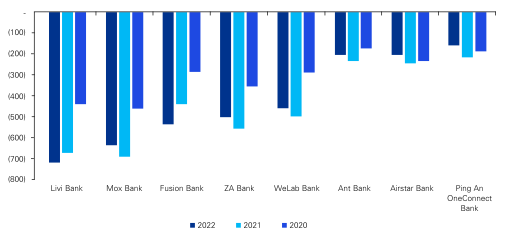
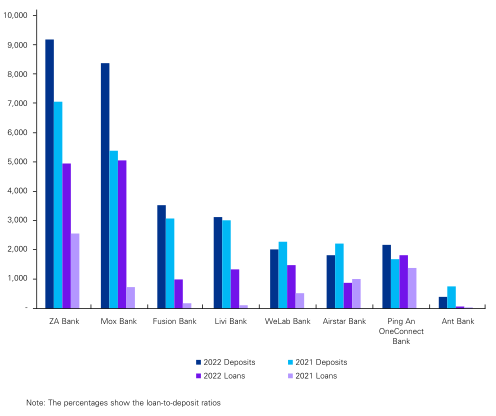
Nonetheless, higher loan sizes did not always correlate strongly to higher profitability during 2022. For instance, Ping An OneConnect Bank increased its loan-to-deposit ratio by 1 percentage point to 84% and saw a decrease in loss before tax of 27%, making it the best performer among the virtual banks. In stark contrast, Fusion Bank increased its loan-to-deposit ratio by 23 percentage points to 28%, but had an increase in loss before tax of 22%.
To improve profitability and become sustainable, virtual banks will need to factor in other parameters aligned with their individual cost optimisation strategies.
Except for ZA Bank and Mox Bank, which continued to grow their deposits substantially and deploy those into lending, the other six virtual banks experienced much slower, or even negative, growth in deposits in 2022. In some cases, however, this has been a strategic decision. Virtual banks are aware that unrestrained growth in deposits may adversely increase their cost of funds, so some have decided to limit deposits taken and to strike a balance adapted to their individual risk appetite.
All in all, as the Hong Kong banking landscape becomes ever more competitive, it is imperative for virtual banks to keep innovating and implement strategies to attract and retain customers if they are to become profitable. While in the short run some virtual banks may be able to benefit from parental support, they ultimately need a credible path to profitability. As such, we maintain our view that some virtual banks could quietly cease operations or consolidate their operations over the next few years.