

Highlights
To make the right decisions, users need the right information at the right time. When preparing a sustainability statement under ESRS, a company needs to provide decision-useful information without obscuring it with unnecessary detail.
A robust double materiality assessment (DMA) is key to achieving this. It requires a company to assess sustainability topics from both an impact perspective and a financial perspective. However, determining what information to report can be challenging.

Catarina Vieira
Director
KPMG in Portugal
Why double materiality matters
Double materiality sits at the heart of sustainability reporting under ESRS, because it:
- helps a company focus on the information that users need; and
- provides the basis for determining what information to report and the level of detail.
Key considerations include the following.
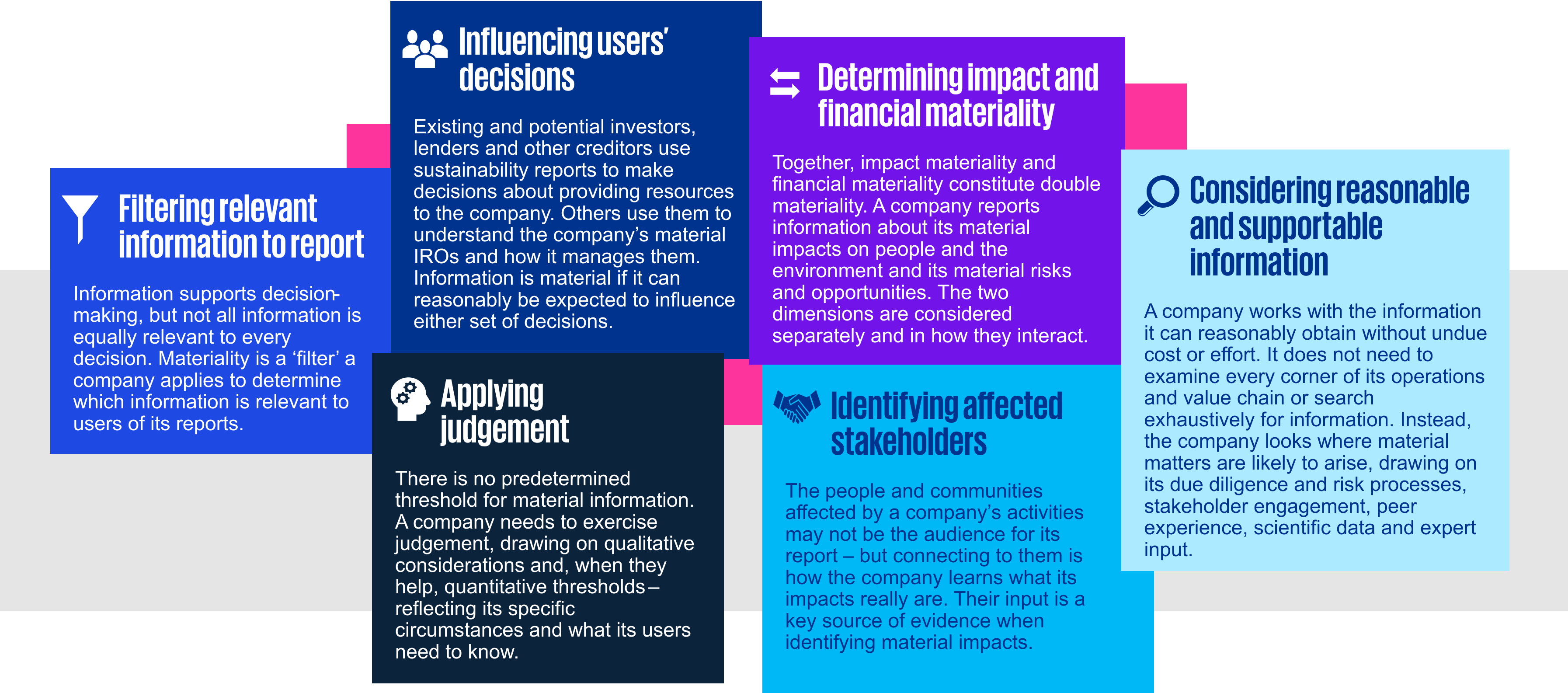
Understanding these considerations is only the starting point. A company also needs a robust DMA process to move from identifying material sustainability topics to determining what to report.
A practical six-step approach
Our how-to guide is here to help, setting out a practical six-step approach to performing a DMA.
- Steps 1 to 3: Identify and assess material IROs.
- Steps 4 to 6: Determine the information to report for each material IRO.

It uses sustainability-related scenarios and experience-based insights to address common questions and implementation challenges, highlighting what works well, pitfalls to avoid and areas requiring particular attention.
A company does not need to duplicate work already performed. It can build on its existing processes, assessments and information when necessary to meet ESRS requirements and reflect its current facts and circumstances.
Find out more
Read our how-to guide to explore each step of the DMA process in more detail. Visit our Sustainability reporting in the EU page for our latest insights and resources.
© 2026 KPMG IFRG Limited, a UK company, limited by guarantee. All rights reserved.