

- The SET Index steadily advanced in Q2/2026, reaching a 33-month high as US-Iran peace negotiations eased geopolitical pressure.Market sentiment was further reinforced by two consecutive months of foreign net buying, along with a positive economic signal as actual GDP growth announced by the Ministry of Finance (MOF) reached 2.5%, well ahead of its 1.6% forecast.
- Conflict de-escalation reduced energy cost premiums from approximately 80.0% to 20.0% above pre-conflict levels.
- At its June MPC meeting, the BOT revised Thailand’s GDP growth forecasts for FY2026 and FY2027 to 2.3% and 1.8% (from 1.6% and 2.0%), respectively, citing stronger exports, global AI investment trends, and Iran conflict de-escalation. However, recovery for SMEs and consumers remains constrained by sluggish wage growth and rising cost-of-living pressures.
- The Thai baht weakened from 33.0 to 33.4 THB/USD in Q2/2026 (BOT average selling rate), primarily driven by U.S. Federal Reserve policy trajectories and global risk aversion.
Capital market performance
- US federal funds rate: At its July meeting, the Federal Open Market Committee (FOMC) maintained the target range for the federal funds rate at 3.50% to 3.75%. The Committee noted that economic activity continues to expand at a solid pace despite elevated uncertainty from the Iran conflict, while inflation remains elevated relative to its 2.00% goal, partly driven by energy supply shocks.
- Thai policy interest rate: The MPC maintained the policy rate at 1.00% in June 2026. As the increase in inflation was mainly driven by supply-side factors, the Committee assessed that the current policy rate remains appropriate to support a slowing economy and navigate heightened uncertainty.
- Inflation: Headline inflation for 2026 and 2027 is projected to align with previous estimates, averaging 2.8% and 1.4% respectively, temporarily exceeding the target range in late 2026 due to energy pass-throughs before moderating in 2027 as supply pressures ease. Core inflation is expected to stay steady at 1.5% in 2026 and 1.4% in 2027 with medium-term expectations anchored within target through business cost pass-through behavior.
- Yield and spread: Thailand government bond yields shifted downward for all maturities in Q2/2026, reversing the upward momentum from Q1.
Source: BOT and Federal Reserve
In Q2/2026, SET and sector multiples experienced expansions with the exception of RESOURC and COMSUMP which experienced mild contractions.
Sector betas reflect relative volatility against the market portfolio. A consecutive rally in TECH sector stock prices throughout Q1/2026 and Q2/2026 pushed its beta higher, while betas for the other sectors remained relatively stable.
- Carrying momentum from the previous quarter, Thailand’s SET Index delivered superior 1-year returns relative to its regional peers. Notably, Indonesia’s JCI return lagged behind SET for the first time since 1Q2023, falling 34.7% from its January peak as the market experienced heavy foreign outflows.
- Within the domestic market, the TECH sector led all sectors with a 69.0% 1-year return and remained the strongest performer over the 5-year horizon with 24.2% annualized returns. Conversely, the CONSUMP sector delivered the lowest returns across both timeframes, recording 4.4% for 1-year and (17.5%) over 5 years.
- The Total Return Index (TRI) measures the total return from investing in securities.It comprises (1) returns arising from changes in value of the securities or “capital gain/loss”, and (2) dividends paid, assumingthey are reinvested in the securities.
- Q2/2026 dividend yield increased from 4.0% to 4.1% compared to the prior period.
Data criteria
Thailand valuation multiples by sector
- The SET sector classification serves as the principal criterion for the illustrated sectors.
- The sector valuation multiples are based on the respective median.
- 12-month trailing multiples are derived from Q2/2025 to Q2/2026.
- The Q2/2026 multiple is based on the latest available financial statement information as at Q1/2026.
- The sectors’ betas are based on market capitalization-weighted adjusted betas, excluding securities with negative beta values.
- Data in historical periods may change according to Capital IQ’s retrospective adjustments.
Regression on returns and volatilities
- The total number of trading days per year is assumed to be 252 days.
- The period in the study is 1 July 2021 to 30 June 2026.
SET and SET TRI
- Annual dividend yields are based on dividend yields from Bloomberg.
KPMG Deal Advisory
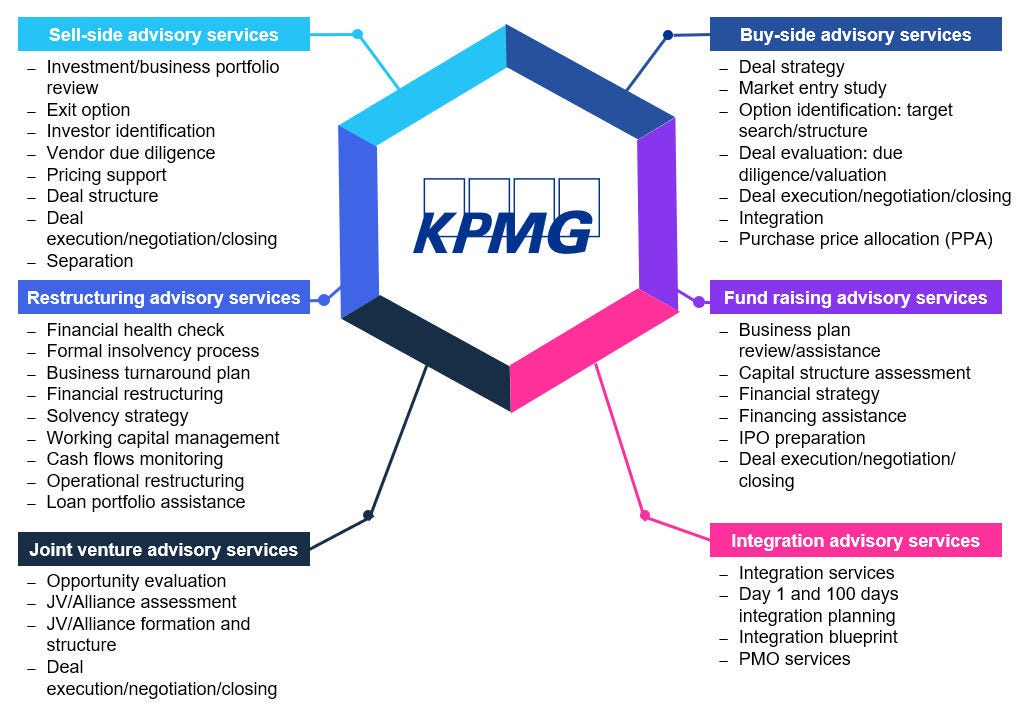
"KPMG provides a full range of valuation services for all sell-side, buy-side, tax restructuring, fund raising, and joint venture transactions."
Capital market and business valuation insights | Q2/2026
The quarterly update from Deal Advisory services, KPMG in Thailand
Key contacts


- Ian Thornhill
- Canopus Safdar
- Surayos Chuepanich
- Boonyaporn Donnapee
- Theraphol Saikaew
- Dominic Kobel
- Nalinnit Satsri
- Worachit Sirikajornkij
- Ming Ern Chew

