Rehabilitation cases saw a brief increase during and after the COVID-19 period, as businesses affected by macroeconomic pressures or acute challenges used the process to support recovery. More recently, global economic uncertainty, geopolitical instability — including the Middle East conflict — cost pressures, and tighter credit conditions are again weighing on corporate balance sheets. As financing becomes more selective, vulnerabilities that were previously managed or deferred are re-emerging across multiple sectors, increasing the risk of financial distress and prompting companies to consider restructuring options, including court-led rehabilitation across sectors.
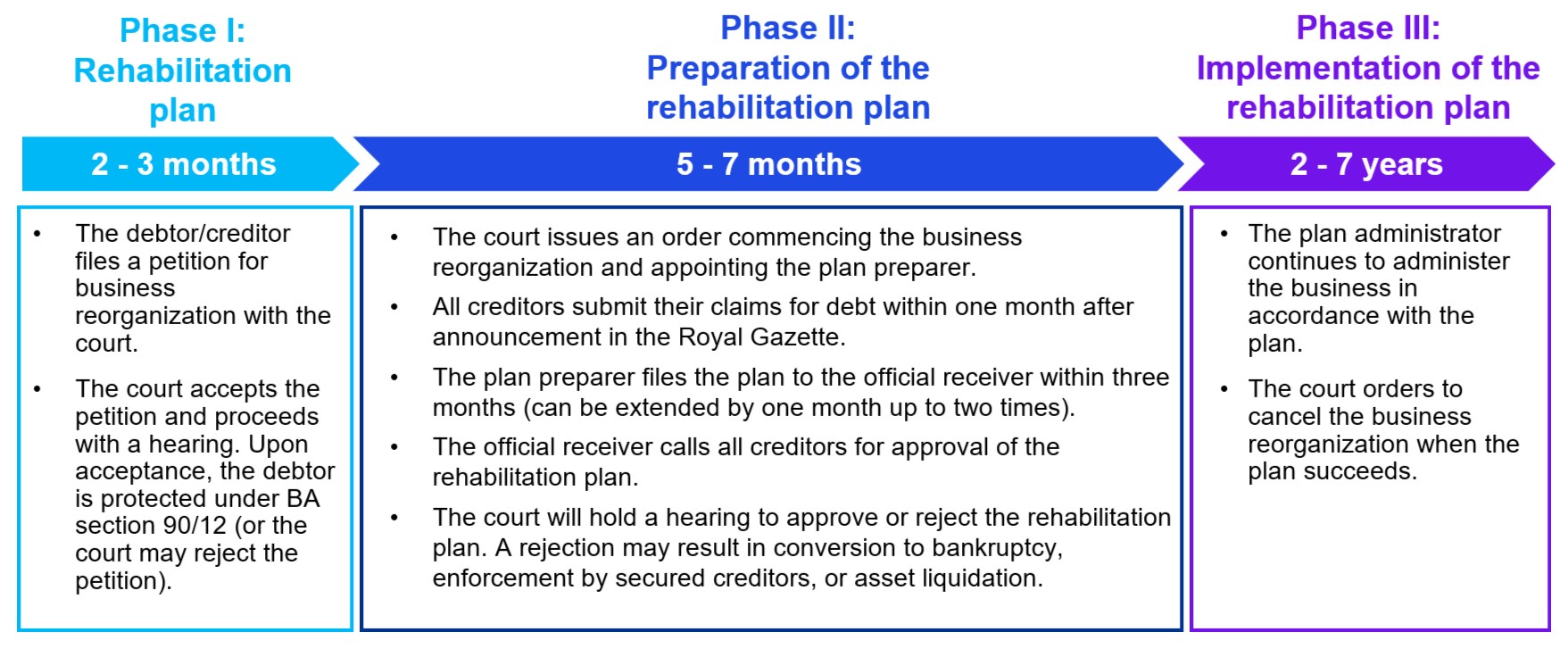
While formal court-led rehabilitation is not the only option for companies facing financial stress, restructuring activity is likely to increase as businesses seek to address liquidity constraints, rebalance their capital structures, and respond to pressure from creditors. Creditors may enforce security interests or initiate legal actions, including lawsuits against the debtor or petitions for the debtor’s bankruptcy. We therefore set out below a high‑level introduction to the court rehabilitation process in Thailand, together with key considerations for companies and stakeholders navigating periods of financial stress.