Strengthening India’s Sports Ecosystem presents a in-depth perspective on the opportunities, challenges, and interventions required to accelerate the growth of sport in India. At a time when the country is witnessing increased participation in sports, greater public and private investment, and growing international ambitions, the report explores how India can build a more inclusive, sustainable, and high-performing sports ecosystem. It examines the factors that influence the development of sport across the country, from grassroots participation and talent identification to elite athlete performance and international competitiveness.

      The report covers key pillars of the sports ecosystem, including sports participation, athlete development, sports infrastructure, sports governance, sports technology, sports science, sports tourism, sports manufacturing, sports funding, and sports education. It highlights the importance of creating an environment where athletes, coaches, administrators, educational institutions, businesses, and policymakers work together to drive long-term growth. The report also recognises sport as more than a competitive pursuit, emphasising its contribution to health and wellness, youth development, employment generation, community engagement, and economic growth.

      A key focus of the report is the need to strengthen the entire sports value chain rather than addressing individual challenges in isolation. Expanding access to quality sports infrastructure, improving athlete pathways, professionalising sports governance, and developing a skilled sports workforce are identified as critical priorities. The report also explores how emerging areas such as sports technology, data analytics, performance monitoring, sports science, and innovation can enhance athlete development and improve decision-making across the sector.

      Another important theme is the shift towards outcome-based sports development. Success should not be measured solely by the number of facilities created or the amount of funding allocated, but by meaningful indicators such as participation rates, athlete progression, infrastructure utilisation, sporting success, and economic impact. A stronger focus on measurable outcomes can help ensure that investments deliver tangible benefits for athletes, communities, and the broader sports ecosystem.

      The report further highlights opportunities for India to strengthen its position in the global sports economy through sports tourism, major sporting events, sporting goods manufacturing, and innovation-led enterprises. With growing consumer interest in sport and increasing demand for sports-related products and services, India has the potential to emerge as a significant sports business destination alongside becoming a sporting powerhouse.
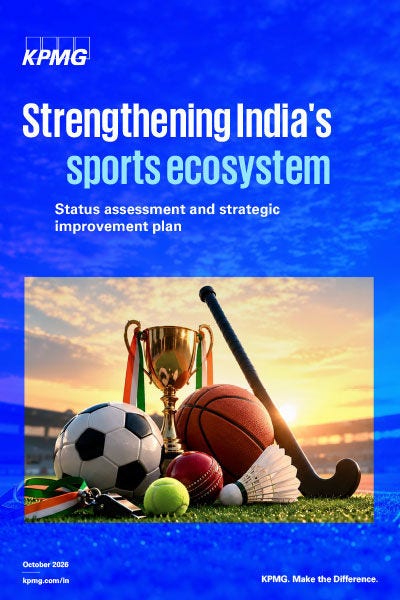

      Key highlights of the report

      • Increasing sports participation across India

        Sports must become more accessible and inclusive across all age groups and demographics. It recommends developing mechanisms to measure sports participation and physical literacy, helping policymakers and stakeholders track progress and design effective interventions to increase participation at the grassroots level

      • Strengthening athlete development pathways

        A structured and well-connected athlete pathway is essential for long-term sporting success. Better talent identification, access to quality coaching, competition exposure, and athlete support systems to help individuals progress from grassroots sport to elite performance

      • Improving sports governance

        Strong governance is identified as a key enabler of sports development. Greater transparency, professional management practices, clearer performance metrics, and stronger institutional capacity to improve the effectiveness and credibility of sports organisations

      • Enhancing sports infrastructure utilisation

        While significant investments have been made in sports infrastructure, the importance of improving accessibility, utilisation, and maintenance of existing facilities. Better planning and community access can help maximise the impact of infrastructure investments and support broader participation


      • Accelerating technology and innovation adoption

        The growing role of sports technology, digital platforms, and data-driven decision-making in modern sports. Leveraging technology can improve athlete development, performance monitoring, talent management, operational efficiency, and fan engagement

      • Expanding sports science and athlete support services

        The importance of sports science, sports medicine, nutrition, mental well-being, and rehabilitation services in improving athlete performance and welfare. Expanding access to these services can help athletes perform at their best while reducing injury risks

      • Unlocking economic opportunities through sport

        Sport is increasingly emerging as an important economic sector. Opportunities in sports tourism, sporting events, sports technology, media, and sporting goods manufacturing, which can generate employment, attract investment, and contribute to economic growth

      • Building a collaborative sports ecosystem

        The importance of collaboration between government agencies, sports federations, educational institutions, private sector organisations, and community stakeholders. A coordinated approach can help create a more sustainable, inclusive, and globally competitive sports ecosystem for India

      Ultimately, the report presents a roadmap for building a sports ecosystem that is accessible, athlete-centric, technology-enabled, and future-ready. Through collaboration between government agencies, sports federations, educational institutions, private sector organisations, investors, and community stakeholders, India can create an ecosystem that nurtures talent, drives sporting excellence, generates economic value, and promotes lifelong participation in sport. The recommendations outlined in the report aim to strengthen the foundations of Indian sport while supporting the country's aspirations to become one of the world's leading sporting nations.


      Strengthening India’s sports ecosystem


      A strategic assessment of India’s sports ecosystem, outlining key measures to drive participation, excellence, innovation, and economic growth

      Key Contacts

      Prasanth Shanthakumaran

      Partner and Head of Sports sector

      KPMG in India

      Nilachal Mishra

      Partner and Head, Government & Public Services (G&PS), National Leader - Government and Infrastructure

      KPMG in India

      Related content

      KPMG India Public Sector Excellence (PSX) initiative

      Agrasar Bharat presents a 20-year agenda to accelerate India's journey towards Viksit Bharat through agility, ability and accountability

      How Artificial Intelligence is reshaping modern warfare through decision superiority, autonomous systems, and data-driven defence capabilities

      Exploring how India can build resilient, nutritious and sustainable food systems to meet the needs of a Viksit Bharat

      How can KPMG in India help

      Improving business performance, turning opportunities into action and developing winning strategies

      The economic, social and political environment globally and in India seems to be evolving

      Collaborating for progress, development, citizen empowerment and upliftment
      KPMG Insights Edge

      KPMG Insights Edge

      On the go access to KPMG in India’s insights and publications