The value case for a carve-out is built in strategy, sharpened through the deal, and ultimately proven in the planning and execution of separation. But this is where value is most often won or lost. By underestimating separation complexity, organisations create risks that can quickly turn into value leakage. In the final instalment of our carve-out series, we uncover the five biggest value traps and the actions that keep value intact.
Carve-outs have become an increasingly prominent feature of today’s dealmaking landscape. However, there is no universal playbook for executing a successful carve-out. As we noted in this recent article in our series, much will depend on the specific approach you choose to take when preparing the deal – i.e. how far do you go with your carve out, when do you start and what is your risk appetite.
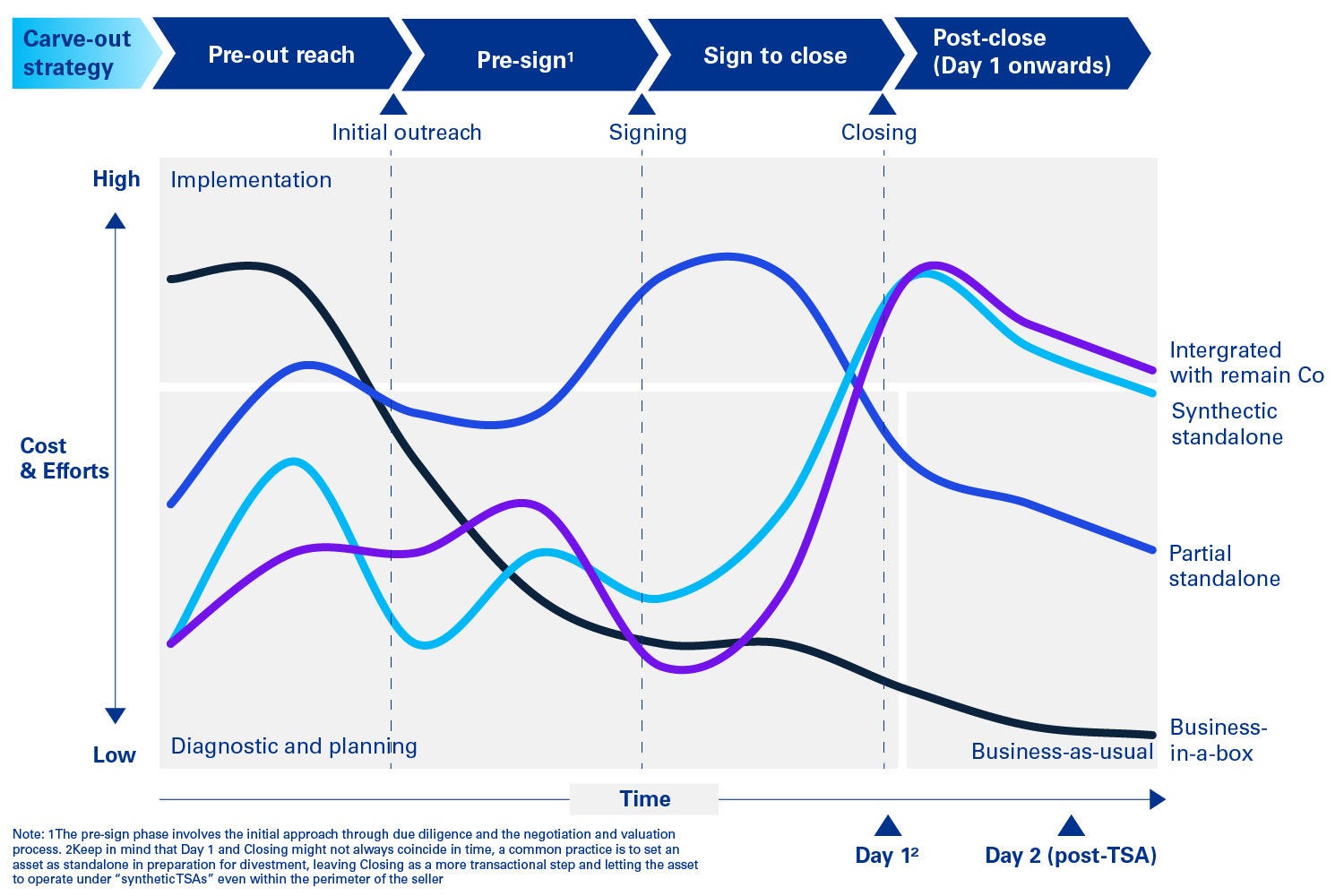
Those who present buyers with a ‘business-in-a-box’ or ‘virtual carve out’ approach, for example, tend to address many of the risks and complexities upfront. On the other hand, those who keep the CarveCo integrated with the RemainCo until the very last minute may find their complexity and effort spike around deal close. The fatigue curve looks different depending on your approach.