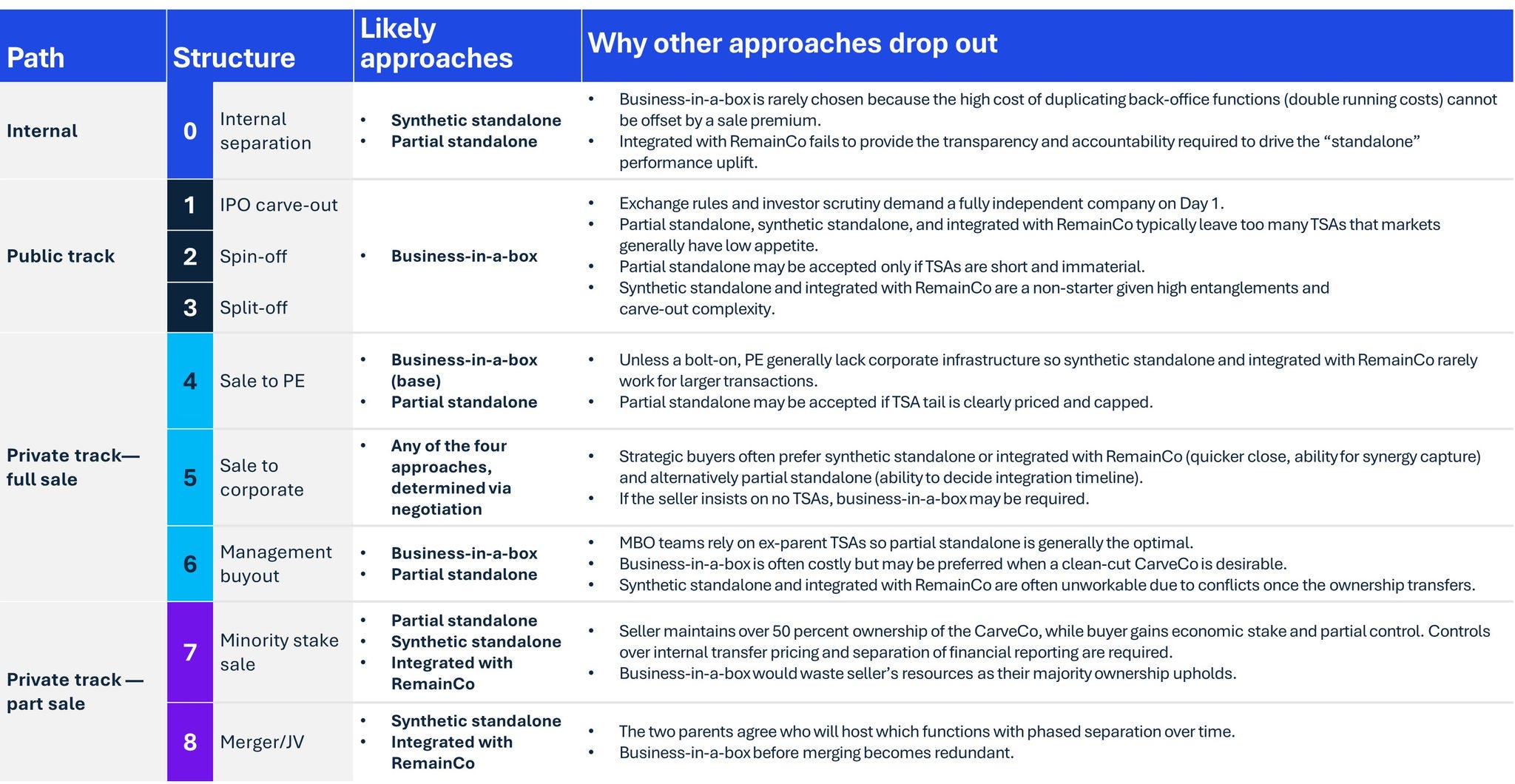
Whilst, this approach can consume significant seller time, effort and cost, in less certain deal scenarios, clients may opt for simpler or less extensive carve out preparation which provides the seller with sufficient evidence to make a more informed decision in how to present the business.
Where the buyer universe is unknown, there are multiple exit options, or where the buyers are likely to be strategics looking to recognise synergies, sellers may want to consider taking a ‘partial standalone’ approach. This is where the CarveCo business operates independently while the RemainCo provides certain support functions such as HR, IT, transactional finance etc and operational foundations through intercompany service agreements. This approach enables sellers to focus on revenue value opportunities while avoiding the build-up of a fully separate operating model.
“Using a partial standalone approach enables sellers to implement aspects of the carve out before the deal is completed, which will derisk the transition, whilst also providing more flexibility for deal perimeter and structure.” explains Mala.
Slightly less onerous for the seller is a ‘synthetic standalone’ or ‘virtual carve out’ where the CarveCo has a defined perimeter and reports financials separately but remains largely operationally and organisationally integrated with the parent company in terms of people, processes, technologies, assets and controls. For buyers, that means getting a full cost baseline for the separated company which helps accelerate the due diligence process.
“A synthetic standalone gives potential buyers the data they need to make confident investment decisions without forcing the seller to undertake a heavy operational build until later in the process,” adds Marc. “A virtual carve out also allows the management team to start to make decisions independently of the Seller’s normal practices, to enhance performance and value ahead of deal completion” adds Mala.
In some cases, sellers may choose to keep the asset ‘integrated with RemainCo’ with no separation implementation pre-outreach. This approach is particularly useful in situations where the buyer is a strategic or a PE house with high integration potential. While this approach involves minimal separation effort and cost up-front, it effectively shifts the heavy lifting down the road, increases the requirements for transitional services from the seller and gives buyers less confidence in the potential upside.