Advances in AI and wider technology are converging with market pressures, reshaping legal practice and driving one of the most significant structural shifts in the sector. The ability to translate it into better delivery is far less evenly distributed.
AI adoption is accelerating, private capital is reshaping parts of the sector, clients are challenging established delivery and pricing models, and cyber and regulatory exposure continues to rise. Together, these forces are making the operating core of the law firm a source of competitive advantage.
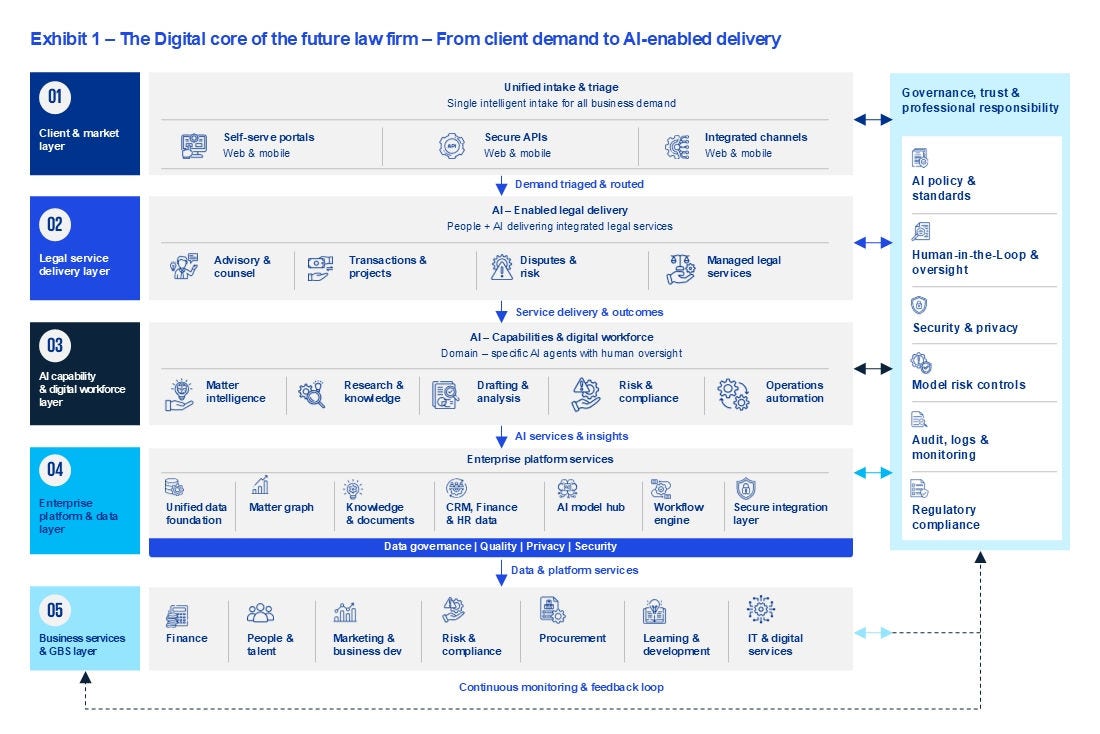
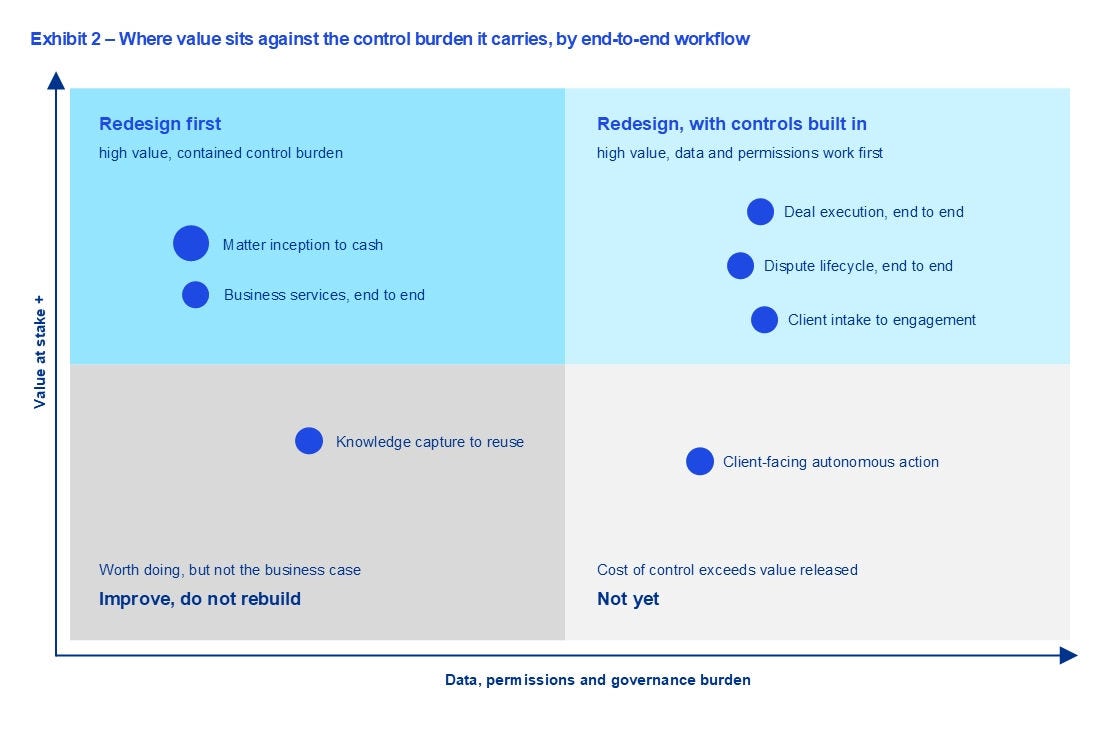
That core is the combination of matter workflows, trusted data, people, platforms and controls that connects client demand to delivery. Firms that pull ahead will prioritise the end-to-end workflows where value is high and the control burden manageable; strengthen the data, permissions and accountability required for AI to operate safely; and evidence the results at matter level.
For investors, the operating core is not simply a technology consideration. It determines integration cost, the speed at which acquisitions can be absorbed, the risk embedded in transformation plans and whether the value-creation case is credible. The competitive divide will be between firms that deploy technology and those that can prove it is improving client value, matter economics and the ability to scale.
This article examines why change is accelerating, what the future law firm could look like, where the greatest sources of value lie and what leaders should test now.