
      KPMG in Ukraine presents the eighth edition of its annual survey, “KPMG CEO Outlook: Ukraine 2026”, conducted as part of KPMG’s global CEO Outlook initiative.

      Amid a situation of prolonged war and continued uncertainty, the findings of this latest survey reveal that Ukrainian business leaders have become more cautious about growth prospects: only 33% of leaders in 2026 are confident about their companies’ growth over the next three years, compared with 49% a year earlier, while only 22% are optimistic about the growth prospects for Ukraine’s economy (down from 34% in 2025).

      Becoming more cautious in their expectations does not mean that businesses are stepping back from investment, however. Ukrainian companies continue to transform their operating models and invest in technology and people, while the solutions that have helped them adapt to working in wartime conditions are becoming increasingly embedded as a permanent feature of local business operations.
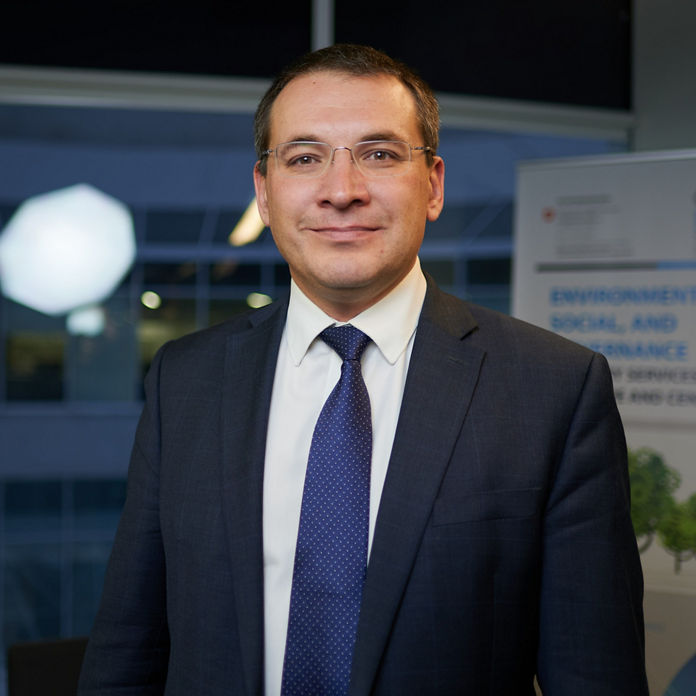

      Ukrainian businesses have changed significantly in recent years. Companies have become more agile in their planning, reshaped their operating models, and invested in energy autonomy, people development, and automation. At the same time, business leaders are gradually shifting their focus from adaptation to growth, identifying applications for new products and services while developing international partnerships and investment and reconstruction projects.
      Andriy Tsymbal
      Andriy Tsymbal

      Managing Partner

      KPMG in Ukraine


      Ukrainian executives rate the growth prospects of their own companies higher than those of the global economy

      Ukrainian managers became significantly more cautious in assessing business growth prospects in 2026. Confidence among executives in the growth prospects of their own companies over the next three years fell to 33% (from 49% in 2025), far below the global level of 64%. However, confidence in the overall global economy also declined sharply, down from 32% to 17%, indicating that Ukrainian business leaders still maintain more confidence in local prospects than a challenging global economic environment.

      For Ukrainian executives, muted expectations are attributed to prolonged military hostilities and the associated security risks, with high levels of uncertainty having a direct effect on planning horizons and business decisions. Nonetheless, despite confidence in business growth halving from 65% in 2022, Ukrainian businesses’ assessment of national economic prospects has improved slightly in the same timeframe: up from 19% in 2022 to 22% in 2026.

      Global business leaders and C-suite executives remain significantly more optimistic, meanwhile, with 57% of such managers expecting their own companies to grow in 2026, 58% recording positivity about the prospects for their industries overall, and 47% positive about the global economy as a whole.


      Understanding the role of AI and addressing skills shortages

      Ukrainian business leaders recognise the increasingly important role of artificial intelligence as one of the key drivers for business transformation and operational efficiency. 87% of Ukrainian CEOs identify greater efficiency and productivity among the main benefits of AI, including improved decision-making and data analysis capabilities (compared to 64% of executives worldwide). A further 78% of Ukrainian business leaders note the advantages to AI’s ability to automate administrative functions.

      Technological transformation is also increasing the importance of skilled human capital in the Ukrainian workforce. 76% of Ukrainian business leaders note that they are reviewing the roles, career paths, and team structures in their company to prepare for collaboration between people and AI (compared to 84% of global business leaders). However, 56% of Ukrainian executives also state that they have not yet adapted their HR strategies in the face of AI development as of 2026, compared to an average of 0% globally.

      89% of Ukrainian managers identify retaining and reskilling high-potential employees as one of the key ways to adapt their workforce strategies around high-potential employees (slightly up compared to 86% of global managers). Looking at the broader labour market, meanwhile, 39% of Ukrainian business leaders identify a shortage of skilled professionals as the main challenge to rebuilding Ukraine’s human capital: the largest proportion of all identified problems compared to issues such as mobilisation (31%), burnout (11%), and employee migration abroad (6%).

      Wartime measures are becoming embedded in business models

      Many of the measures initially introduced by Ukrainian companies in response to Russia’s full-scale invasion are becoming embedded as permanent features of their long-term operating models. 59% of Ukrainian businesses state that they are restructuring their supply chains and strengthening physical security measures put in place to protect employees, assets, and production facilities, while 50% have recorded investment in energy resilience and backup power sources. In addition to physical security and energy resilience measures, Ukrainian companies are also restructuring how they do business in response to security concerns, with 43% of Ukrainian companies adopting shorter planning cycles and 39% reconfiguring their supply chains and logistics. 

      Reactive “resilience” is therefore now gradually evolving from a crisis response into a lasting feature of how Ukrainian companies function, with businesses fully adapting to wartime realities by implementing long-term solutions with post-war implications.

      Security, energy autonomy, and flexibility have become part of Ukraine’s new business model

      Ukrainian companies have introduced changes in response to the full-scale war that have since become an integral part of their business models, the most common of these permanent changes being strengthening physical security measures for employees, assets, and production facilities (59%); investing in energy autonomy and backup energy sources (50%); and moving to shorter planning cycles (43%).

      39% of Ukrainian businesses, meanwhile, claim to have restructured supply chains and logistics in response to security concerns, while at least 33% state they have diversified suppliers and markets and resumed or relocated production to other regions.

      Just 6% of Ukrainian executives surveyed say that none of the changes previously introduced to continue doing business would be permanent in nature, suggesting that overall adaptation to solve ongoing security issues is firmly embedded in companies’ day-to-day operating models in a long-term manner.

      Sustainability deprioritised in the Ukrainian agenda

      While Ukrainian businesses maintain a focus on sustainability, practical implementation lags behind reported global initiatives. Though 41% of Ukrainian executives identify a prominent role for business in solving social issues, just 37% believe that their company has the necessary capability to comply with reporting standards (compared to 53% of global businesses).

      Furthermore, the difference between global optimism and Ukrainian confidence levels is stark regarding implementation of sustainable development: just 19% of Ukrainian firms recognise sustainable development initiatives as being fully realised in their company, compared to 54% worldwide. Ukrainian businesses also lack confidence in their ability to achieve sustainability goals in the face of acute wartime pressures, with only 9% saying that such aims are feasible (as opposed to 49% of companies included in KPMG’s global survey).

      These findings highlight a drastic difference in the pace at which sustainability principles are being integrated locally and internationally, with such discrepancies reflecting the priorities of Ukrainian companies given the current conditions under which they are forced to operate. Nonetheless, 87% of Ukrainian business leaders still recognise the relevance of sustainable development in achieving business success and progress, the same level as global respondents.

      Businesses foresee an active role in Ukraine’s recovery

      Despite a more cautious economic outlook, with only 22% of local respondents optimistic about growth prospects for the Ukrainian economy, executives still see an active role for business in the country’s recovery. 46% of those surveyed identify the development of innovative products and services for post-war transformation as a key area where business can contribute, while the same proportion point to the role of Ukrainian companies in attracting foreign partners or investment. A further 44% identify private sector participation in infrastructure and industrial projects as essential to Ukraine’s reconstruction.

      However, Ukrainian business leaders also recognise that there are a number of key conditions that need to be put in place in order to attract international investment in Ukraine. Principal among these are the presence of accessible and comprehensive capital security guarantees and war-risk insurance, cited by 41% of respondents as a prerequisite to international investment, as well as greater transparency in the Ukrainian legal system and judicial reform, cited by 35%.

      If Ukraine is to attract international capital and scale up business investment, the next transformative stage for Ukrainian businesses is to move from the resilience built over years of war towards long-term growth. The pace of this transition will depend to a large extent on whether conditions can be created that enable companies to move from crisis response to planning for longer term prospects.

      From innovation and investment to practical recovery

      Ukrainian business leaders see a strong, active role for their companies in the country’s recovery. Key areas include developing innovative products and services for post-war transformation (46%) and attracting foreign partners or investors (46%). Almost the same share (44%) see the implementation of infrastructure or industrial projects as a priority.

      30% of executives, meanwhile, see prospects for their companies to contribute through export growth and integration into global markets, while 19% point to the development of local supply chains as playing a role in Ukraine’s recovery.

      About the survey

      Conducted between August and October 2026, “KPMG CEO Outlook: Ukraine 2026” is based on a survey of business leaders, executives, and C-suite representatives from Ukrainian companies. Adapted from the KPMG 2026 Global CEO Outlook, the questionnaire consists of 34 questions. The Ukrainian edition enables comparisons between local and global findings, including a dedicated “Ukraine 2026” section covering investment and recovery, as well as the impact of Russia’s full-scale invasion on local business models and Ukrainian human capital.