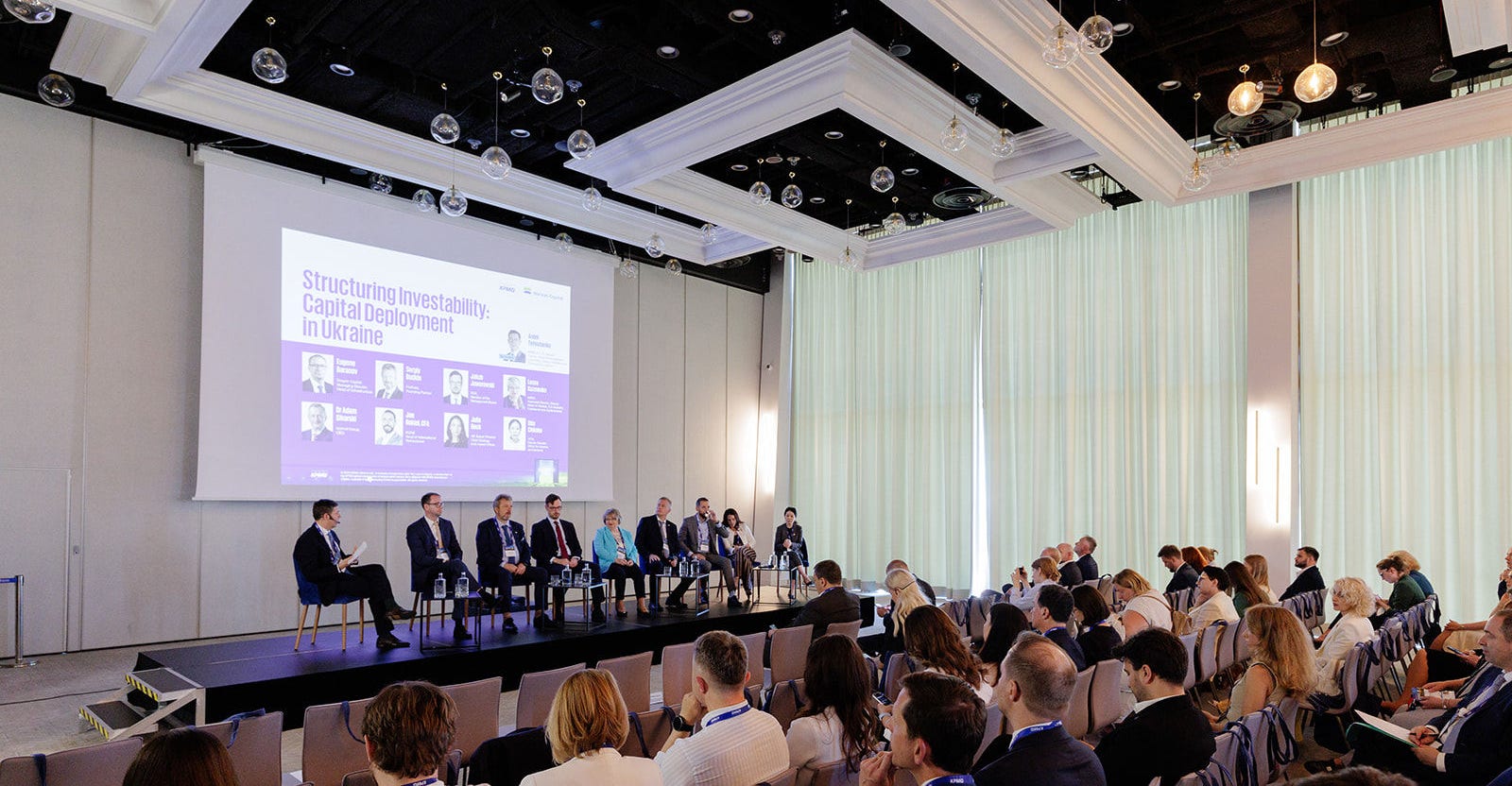
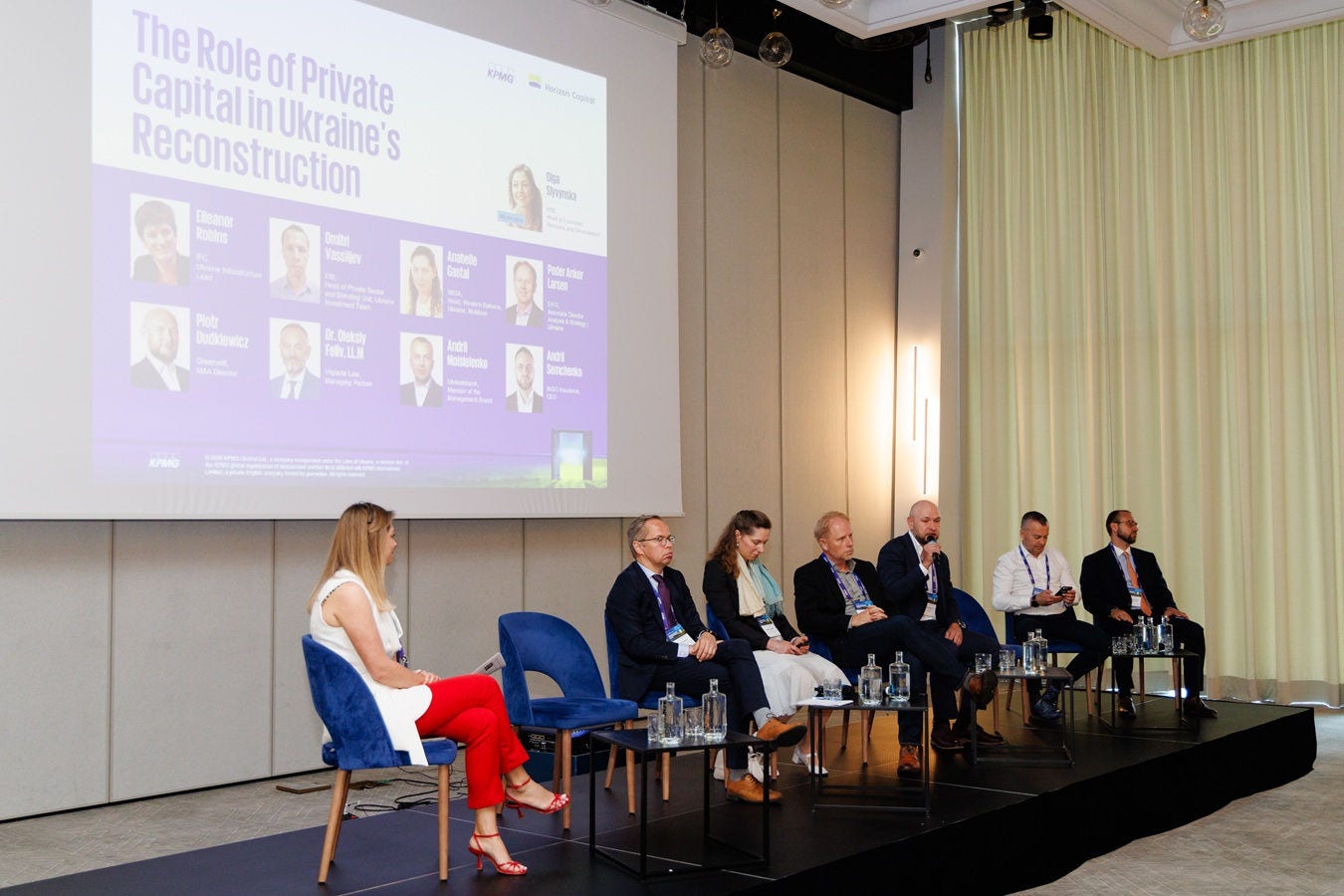
As highlighted during the panel, investment activity continues despite the full-scale invasion. However, the primary barrier is not the lack of opportunities, but rather the quality of project preparation and structuring. Particular emphasis was placed on the need for effective risk allocation among stakeholders to enable private capital participation even in a complex environment.
In practice, investors are actively leveraging instruments provided by export credit agencies and international financial institutions, including guarantees, war and political risk insurance, and blended finance solutions. These mechanisms increasingly allow for substantial risk mitigation and support deal execution across sectors.
Participants identified energy—particularly generation recovery and decentralization—as a leading investment area, alongside logistics and infrastructure projects, as well as resilient segments of the private sector that continue to adapt and grow under wartime conditions.
At the same time, investors emphasized that key investability criteria include clear risk allocation, a transparent revenue model, strong execution track record, investor commitment to the project (skin in the game), and alignment with ESG standards.
It was also noted that transactions are already taking place both through direct investments and M&A, including deals in the financial sector and infrastructure, where international partners play a key role in de-risking market entry.