
      For an increasing number of German companies, Central and Eastern Europe (CEE) is becoming a fully-fledged component of their European strategy – simultaneously a dynamic sales market, a key sourcing hub, and an operational base capable of meeting global challenges.

      The annual survey conducted by KPMG in Germany and the German Eastern Business Association at the turn of 2025 and 2026 among 115 companies clearly indicates a direction: confidence in the region is growing, investment plans are strengthening, and CEE – with projected GDP growth of 2.9% in 2026 – is outpacing almost the entire rest of the continent. Against this backdrop, Poland emerges as the undisputed leader of the region: the largest economy, Germany’s most important trading partner in CEE, and the number one destination for investors.

      The following overview presents the key findings of the report, with particular emphasis on the Polish perspective.


      Key findings from the report


      • CEE is gaining strategic importance

        As many as 63% of surveyed German companies expect the CEE region to become more important for their business over the next five years (up from 55% in the previous survey). CEE is no longer seen merely as a production base – it is becoming a key pillar of European corporate strategies, combining the role of a sales market, production base, and sourcing hub.


      • Poland as the regional investment leader

        56% of companies planning investments in CEE indicate Poland as their target destination – an increase of 11 p.p. y/y and the highest result in the region. Poland is already Germany’s fourth-largest export market, ahead of China, while bilateral trade reached EUR 180.4 billion in 2025, representing around one third of Germany’s total trade with CEE.


      • CEE is the fastest-growing region in Europe

        Forecast GDP growth for the region stands at 2.9% in 2026, compared with only 0.9% for Germany. The combined GDP of the 20 CEE countries is estimated at approximately USD 3.2 trillion, equivalent to around 64% of the size of the German economy.


      • Business sentiment remains stable and positive

        47% of companies assess their current situation in CEE as good or very good. Looking ahead, 75% expect an improvement within five years, while none of the surveyed companies anticipate a significant deterioration in the long term.


      • Growing investment plans

        55% of companies intend to invest in CEE within the next five years, including 32% planning investments exceeding EUR 5 million. The main investment areas include services (31%) and expansion of production capacity (29%), while about 22% of firms plan to strengthen export and distribution structures.


      • CEE as a strategic sourcing hub

        Currently, 67% of German companies source goods and services from the region as part of their supply chains, and this share is expected to increase to 73% within five years. Notably, nearly one in three companies (30%) expects CEE to become one of its top five sourcing locations, an increase of 13 p.p. compared with the current situation.

      • Ukraine surprises with growing investor interest

        Despite the ongoing war, 19% of companies declare readiness to invest in Ukraine within the next 12 months (+11 p.p. vs. 2025), and 43% of those planning investments in CEE are considering expansion into Ukraine. Overall, 48% of companies express some form of investment intention towards Ukraine. The country’s reconstruction, supported by an EU EUR 50 billion fund, is generating real demand in construction, logistics, and supply chains.


      • Cost pressure in Germany is pushing production eastward

        26% of companies are considering relocating part of their production from Germany to CEE, driven by rising labor costs, workforce shortages, and structural challenges in the German market. Although only 4% have concrete relocation plans within the next 12 months, the trend is worth monitoring.

      • Local purchasing power overtakes low costs as the key advantage

        For the first time in years, local demand (53%, +13 p.p.) has overtaken low labor costs as the most important location factor in the region. This reflects the maturing CEE markets – with 155 million inhabitants and projected GDP growth of 2.9% in 2026, the region is no longer perceived solely as a low-cost operational base.


      • Challenges: politics, corruption, and rising competition

        The largest barrier remains political risk and security concerns (60%), although this perception has decreased y/y (-7 p.p.). At the same time, concerns about corruption (47%, +9 p.p.) and intensifying competition (26%, +10 p.p.) are growing – particularly from Chinese companies expanding their presence in the region. 16% of firms expect stronger competition from Chinese players in CEE.

      • Trade between Germany and CEE is breaking records and surpassing trade with the US and China

        In 2025, total trade reached EUR 529.3 billion, exceeding the combined trade value with the United States (EUR 240.5 billion) and China (EUR 251.8 billion). Trade grew 4.4% y/y, while cumulative German FDI in the region reached EUR 148.1 billion in 2023.


      • Future sectors point to energy and technological transformation

        Companies identify renewable energy (45%), electromobility and battery technologies (40%), and raw material processing and recycling (36%) as the most promising sales markets. In the R&D area, AI and automation (38%) lead the ranking, confirming the growing technological maturity of selected CEE markets, including Poland and the Czech Republic.


      Key strategic sectors for the future in Central and Eastern Europe


      Source: KPMG in Germany and German Eastern Business Association, 2026 (n=89), multiple responses possible.


      Transformation and development of the region

      The rapid transformation of Central and Eastern Europe is driven by a population of around 155 million, growing purchasing power, projected economic growth of nearly 2.9% in 2026, and continued integration with the EU single market and the euro area. Within the region, Poland stands out as a key economic pillar. At the same time, despite the ongoing war, German companies also recognize significant potential in the Ukrainian market.

      The region’s growing attractiveness also brings stronger competition. 16% of surveyed companies point to increasing pressure from Chinese enterprises expanding their investment and export activities in CEE, partly in response to tariffs imposed in the United States.


      The survey results show a clear shift in the perception of the region – from a cost-based production base towards an integrated growth market. For Poland, as well as for other CEE countries, this represents an opportunity to attract more advanced investment projects, particularly in the context of the nearshoring trend and the growing importance of supply chain security. It is worth noting that an increasing number of German companies perceive CEE not only as a manufacturing location, but also as a place for conducting research and development activities and implementing innovations. Tax incentives available in the region, such as special economic zones, R&D tax relief and the IP Box regime, as well as EU and national grant programs, can further support the implementation of investments and new projects. At the same time, data on political risks, corruption and bureaucracy serve as a reminder that maintaining competitiveness requires continuous improvement in the quality of the regulatory environment and institutional stability.
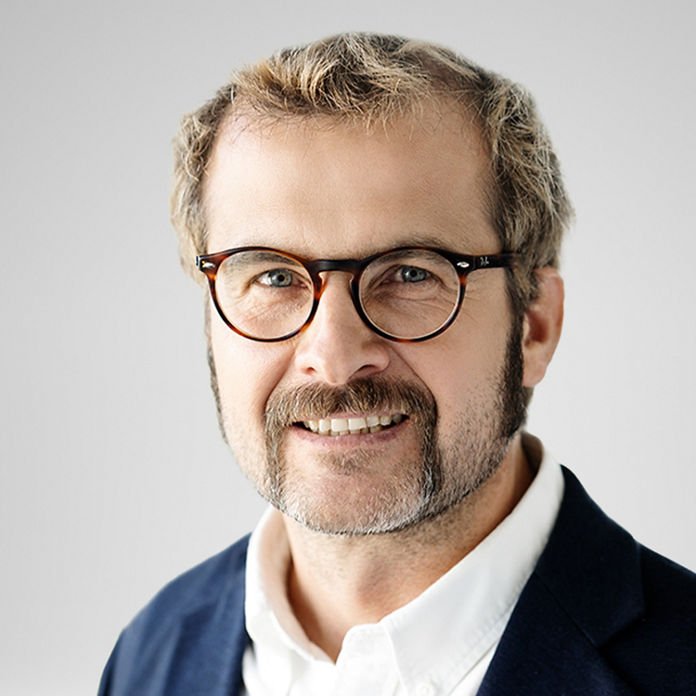
      Kiejstut Żagun
      Kiejstut Żagun

      Partner, Tax, Innovation, Grants & Incentives

      KPMG in Poland


      hub

      CEE as an innovation and R&D hub

      In the survey, AI and automation rank first among R&D priorities in the region (38%), ahead of digital infrastructure (23%) and the defense sector (20%). For companies considering locating R&D functions in Poland, this means increasing availability of technological competencies and an innovation ecosystem that can be effectively combined with Polish tax incentives and European funding programs. 

      screen_rotation_alt

      Investment in CEE is growing and its structure is changing

      55% of companies plan to invest in the region within the next five years, with 32% declaring investments exceeding EUR 5 million. The rising share of service and R&D projects – alongside traditional manufacturing – means that support instruments such as R&D tax relief, IP Box, and EU funding programs are becoming increasingly relevant tools for investors entering or expanding in the region.

      biotech

      Future sectors favor high R&D intensity

      Renewable energy (45%), electromobility and battery technologies (40%), and raw material processing (36%) are indicated as the most promising markets in CEE. All three belong to sectors with high R&D intensity, making them natural areas for utilizing available innovation incentives and funding mechanisms.


      Employment plans

      German companies largely assess their current situation in CEE countries positively – 47% describe it as “good” or “very good,” 39% as “stable,” and only 14% as “weak” or “very weak.” Over a five-year horizon, 75% expect business conditions in the region to improve, while only 5% foresee deterioration.

      Regarding employment, the situation appears relatively stable with a growth tendency.

      In the coming year, employment levels in German organizations in Central and Eastern Europe are expected to be:

      • stable in most companies – 56% of organizations indicated this,
      • increasing in around one quarter of firms (23%),
      • reduced in only one out of ten surveyed organizations,
      • 61% of respondents plan to create additional jobs, while only 3% expect reductions in employment over a five-year horizon.

      A particularly noteworthy point is that organizations not only plan investments but also expect employment growth in the longer term. This indicates that investment decisions are strategic in nature and linked to building a lasting operational presence. In the Polish context, this is particularly visible in the dynamic development of the services sector. Poland remains one of the most attractive locations in Europe for Shared Services Centers (SSC) and Business Process Outsourcing (BPO). Growing interest from German companies in higher-value functions such as finance, HR, IT, and even advanced business processes (including supply chain management, working capital management, and direct sales support) further strengthens this position. The survey confirms that the region – and Poland in particular – remains one of the main beneficiaries of the reorganization of European value chains, also in the services dimension.
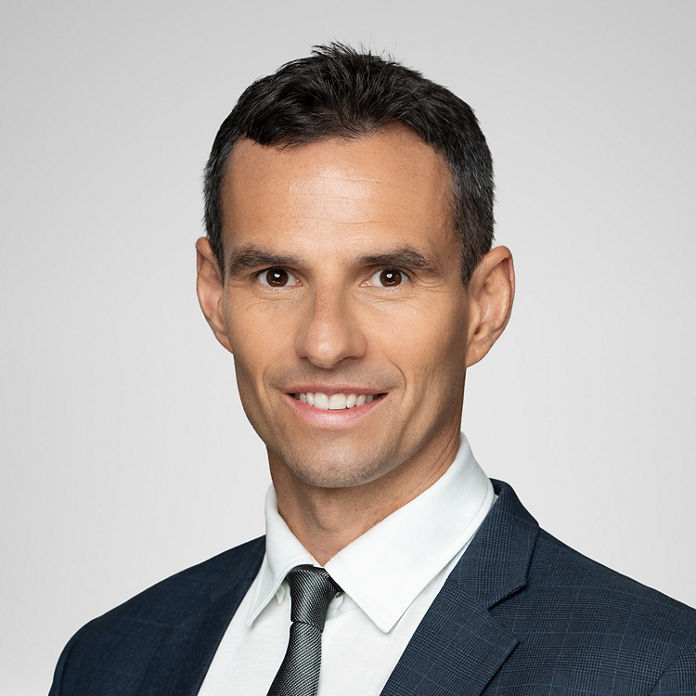
      Radosław Jankie
      Radosław Jankie

      Partner, Advisory, Head of the Shared Services and Outsourcing Team

      KPMG in Poland


      precision_manufacturing

      Shared service centers dominate as an operating model in CEE

      Among all location categories, SSC/BPO achieved the highest score as a priority operational model in the region – 74% of responses. This clearly indicates that CEE – and Poland in particular – is perceived by German businesses not only through the lens of factories but primarily as an operational hub for increasingly complex business processes. 

      group_add

      Employment will grow – and in the long term

      Over a five-year horizon, 61% of companies plan to increase their workforce in the region (up from 52% the previous year), while only 3% expect reductions. For the SSC/BPO sector, this means not only growing demand for employees but also pressure to develop competencies – particularly in digital, analytical, and language skills, which form the foundation of modern service centers. 

      alt_route

      Digitalization and AI are transforming the profile of service centers in the region

      Digital infrastructure and ICT services ranked among the five key operational sectors (53%), while AI and automation lead the R&D priorities ranking (38%). For SSC/BPO centers located in Poland, this represents both a challenge – the need to transform operating models – and an opportunity to deliver higher value-added services that are more difficult to relocate elsewhere.


      Business relocation and investment plans

      More than one quarter of companies (26%) are considering relocating production from Germany to Central and Eastern European countries.


      Preferred investment destinations from Germany’s perspective

      1. Poland remains the most attractive investment destination in 2026 – 56% of German companies planning investments in CEE indicate Poland as their target.
      2. Ukraine ranks second – 43% of companies planning investments in CEE are considering expansion into Ukraine. 19% plan to invest even if the war continues, and another 19% are already present in the Ukrainian market.
      3. Romania and the Czech Republic share third place – each country was indicated by 35% of respondents as a planned investment destination for 2026.

      Compared with the previous year, Poland recorded the largest increase in investment interest, followed by the Czech Republic and Ukraine. At the same time, Serbia, Hungary, and Romania experienced a decline.


      About the study

      “German-CEE Business Outlook 2026” is an annual survey prepared jointly by KPMG in Germany and the German Eastern Business Association (Ost-Ausschuss der Deutschen Wirtschaft).

      The report is based on surveys conducted between November 2025 and January 2026 among 115 companies – German enterprises and local subsidiaries of German groups operating in Central and Eastern Europe.

      The study covers 20 CEE countries and focuses on the assessment of the current business environment, investment plans, as well as opportunities and challenges for German companies in the region. The survey results are complemented by a cross-sectional macroeconomic analysis of the region, based on data from the IMF, Eurostat, the Bundesbank, and Transparency International.


      Download report


      Contact us


      Learn more about how KPMG's knowledge and technology can help you and your business.


      How can we help?


      Professional support in obtaining tax relief and subsidies for development, innovation, and investment.

      Manage tax risk and seize global business opportunities with the full support of KPMG experts.

      Comprehensive support at every stage of establishment and growth of SSC, GBS and CoE.

      Our experts

      Kiejstut Żagun

      Partner, Tax, Innovation, Grants & Incentives

      KPMG in Poland

      Radosław Jankie

      Partner, Advisory, Head of the Shared Services and Outsourcing Team

      KPMG in Poland


      See also


      The publication presents key economic indicators, describes the M&A market and legal and tax issues of key importance for investing in Poland.