Why context makes a big difference can be demonstrated with the following example:
A company consumes an x amount tons of water for the production of a certain product. The next year it reduces its consumption by 5%. This might seem like a positive trend. Now consider the situation where the company operates in a water-scarce area, where desertification is happening at a rapid speed. In the first year, the company uses 25% of the available water, in the second year it uses 30%, due to there being less water available . This indicates that the actual environmental situation deteriorated and thus taking the context into account paints a different picture.
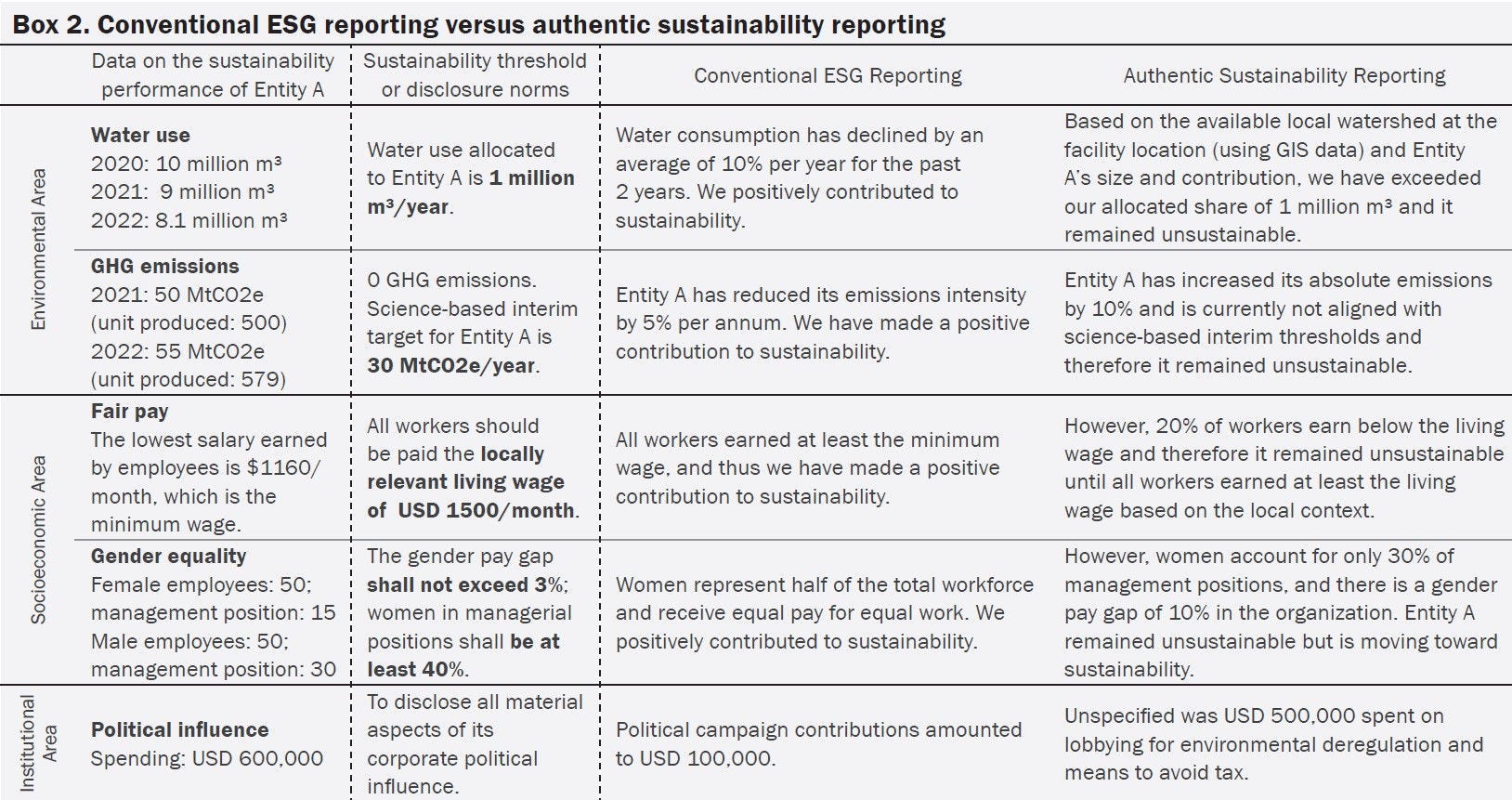
Additional examples of the importance of context are demonstrated in the table below14. In this table, the difference between conventional reporting and what the United Nations Research Institute for Social Development (hereafter UNRISD) calls ‘Authentic Sustainability Reporting’ is shown. This difference gives a clear picture of the relevance of adding context into the sustainability reporting and how it will increase the quality of reporting.
How can you then add context to your DMA and what tools/information are currently available?