Our path to decarbonisation
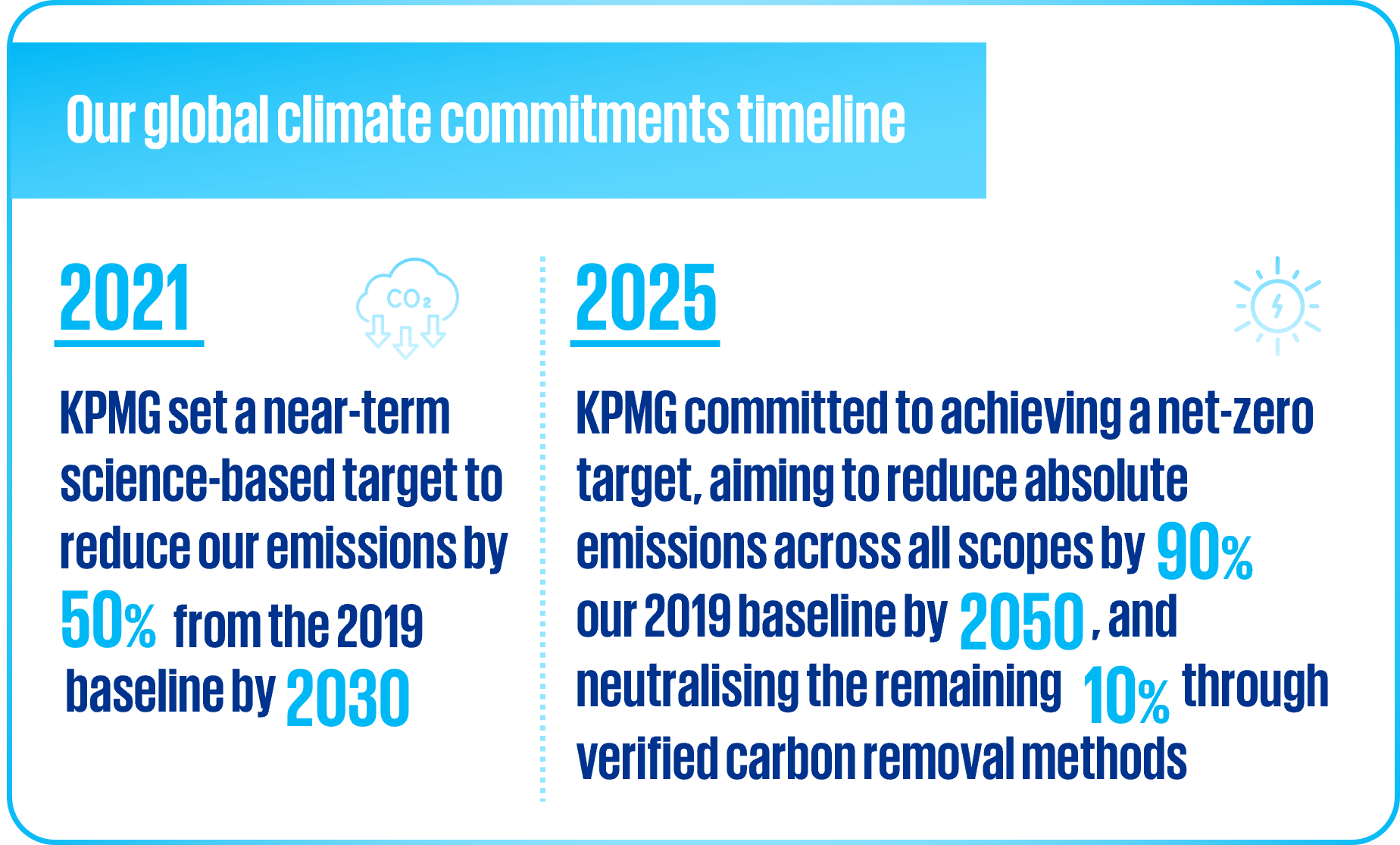
Our commitments: Become a net-zero business by 2050 (KPMG global's target)
Climate change presents both risks and opportunities for business and society. In 2025, KPMG committed to becoming a net-zero business by 2050, in line with the goal of limiting global warming to 1.5°C.
Our commitments:
- Report our climate performance
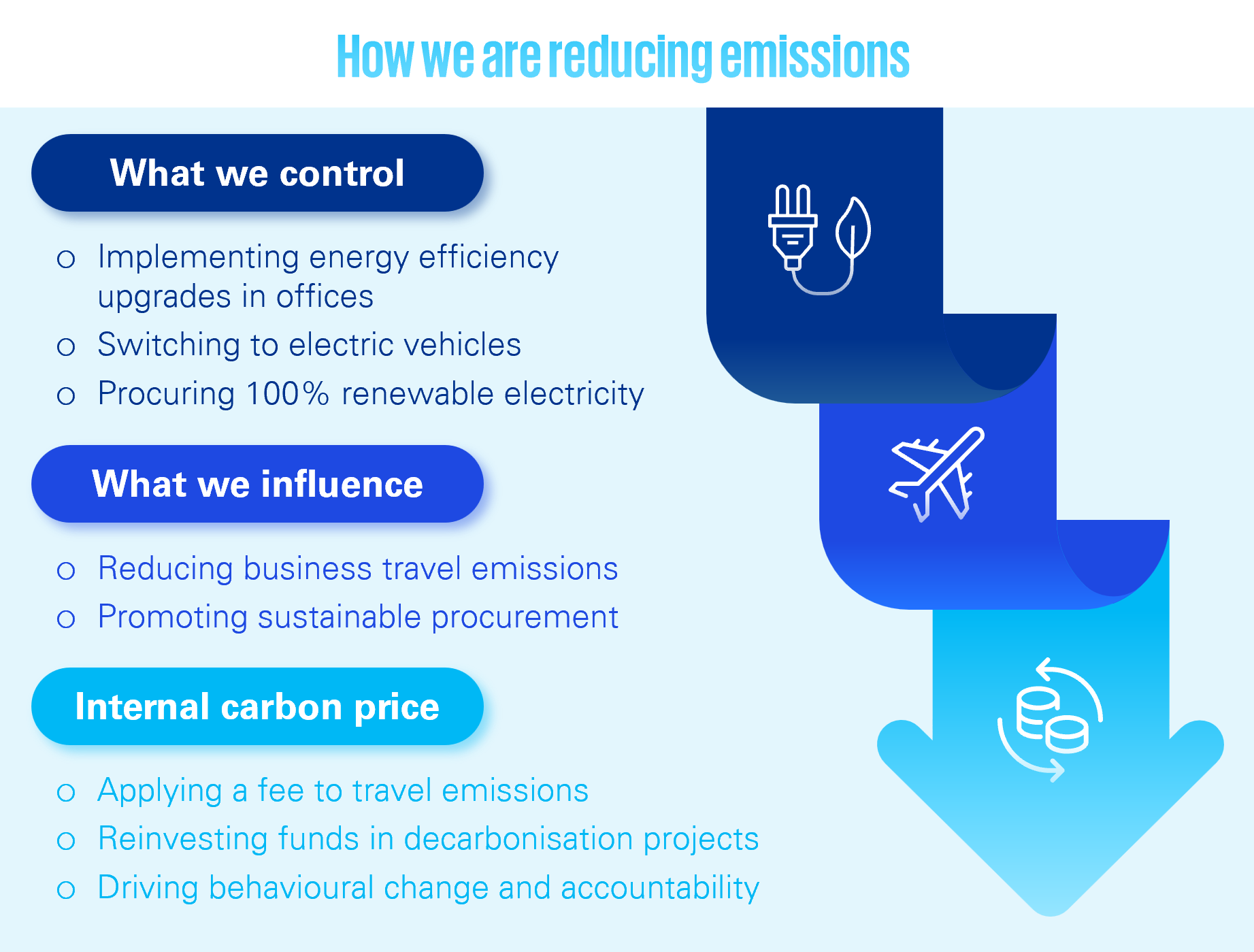
- Source 100% renewable electricity through Green Electricity Certificates and renewable energy supply
- Drive behavioural change to improve environmental practices in our workplace
Our global commitment to become a net-zero business and our near-term and long-term science-based targets (SBTs) guide our decarbonisation efforts, including our decision-making and operational planning towards sustainability.
At KPMG China, we report our climate performance and conduct an annual review, supported by our ESG Advisory team, which allows us to refine our strategies and align with evolving climate goals on an ongoing basis.
We recognise that this is an evolving process and are committed to continuous improvement.
Our climate performance
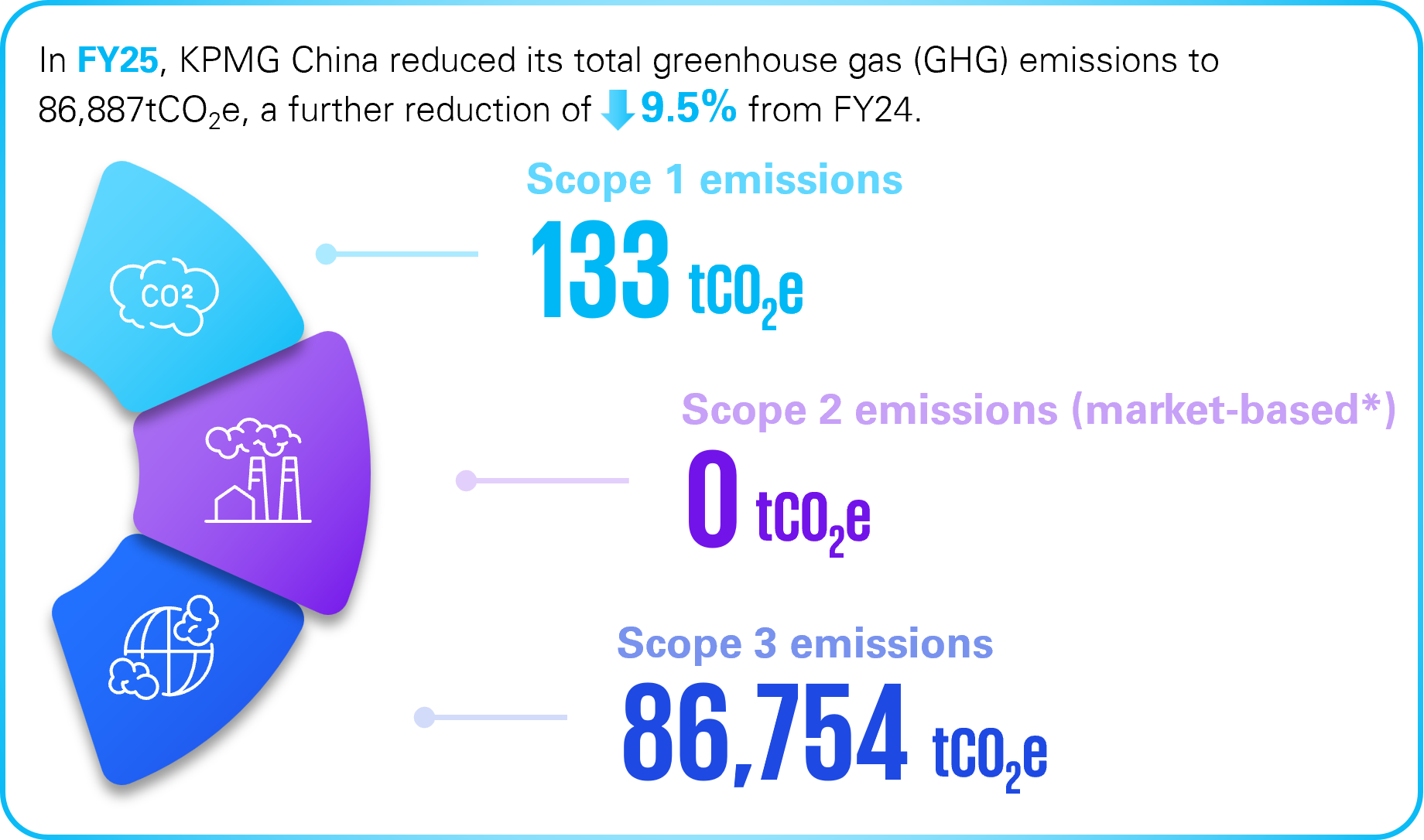
Our annual Global Climate Response (GCR), a standardised data collection process aligned with the GHG Protocol, enables us to track and manage our progress towards our climate targets. It also demonstrates our commitments under the Science Based Targets Initiative (SBTi), the UN SDGs and the Paris Agreement.
*The market-based accounting approach primarily reflects an entity’s emission reductions from proactive renewable electricity procurement via market-based instruments such as power purchase agreements and renewable energy certificates, applicable to Scope 2 emissions. In FY25, we sourced 100% renewable electricity through Green Electricity Certificates and renewable energy supply, and accordingly, our net Scope 2 emissions amounted to zero.
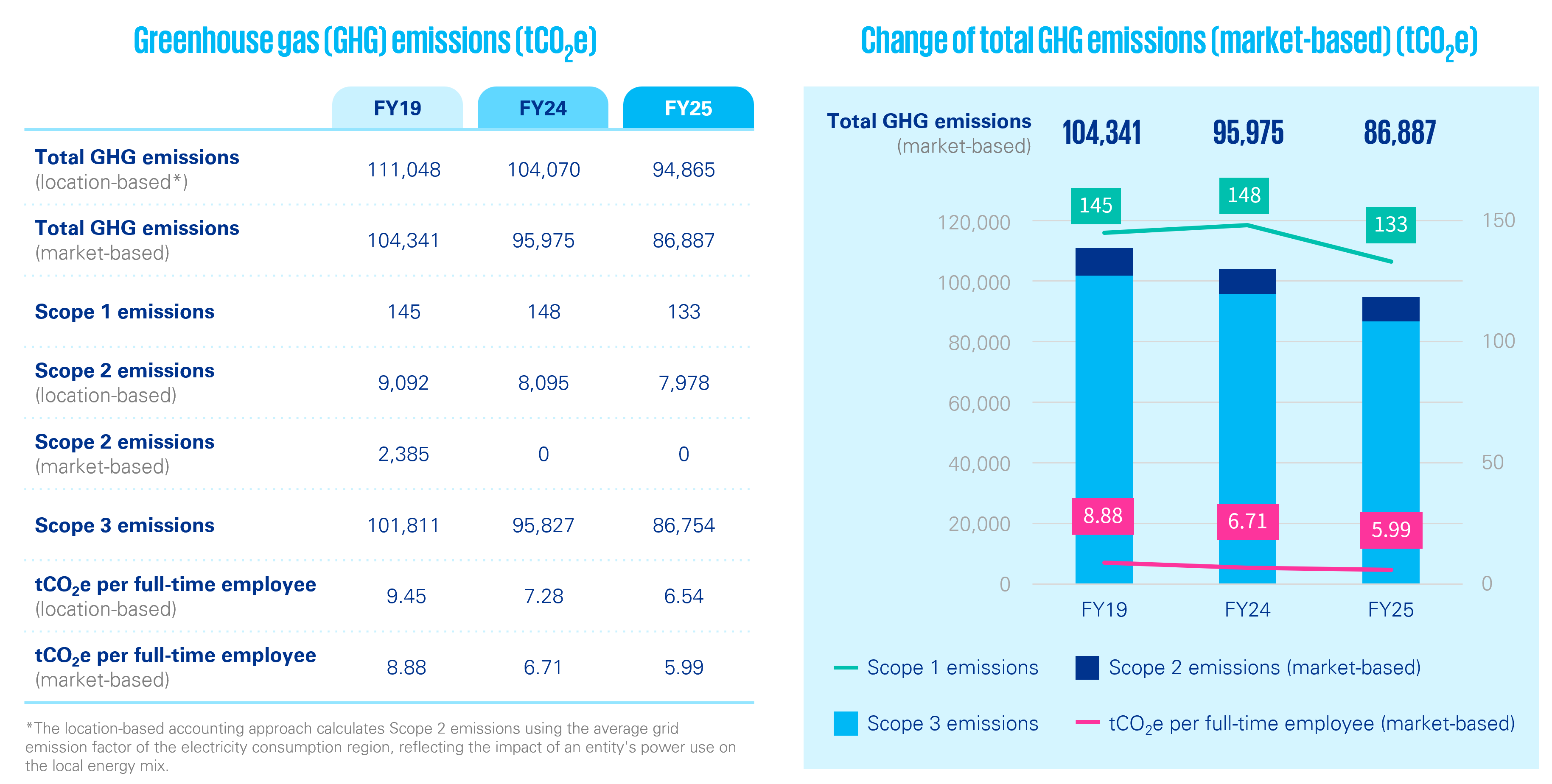

Since FY21, we have sourced 100% renewable electricity through renewable energy certificates (RECs).
Progress in FY25
- Transitioned from I-RECs to China’s Green Electricity Certificates (GECs)
- Accessed renewable energy for one Shanghai office through Power Purchase Agreements secured by property management
- Reduced energy consumption by upgrading lighting in newly renovated offices, including the installation of timers and sensors
- Implemented measures to reduce lighting usage in large offices after business hours, supported by frequent monitoring

Our internal carbon price (ICP), launched in October 2022, is a key driver of our decarbonisation efforts.
As part of KPMG’s broader sustainability strategy, a global network supplier engagement ambition was introduced in FY25 to enhance our existing efforts.
Our global approach
To drive carbon reduction in the Purchased Goods and Services (PGS) category, we have set a global supplier engagement ambition to encourage suppliers to set their own SBTs or commit to credible decarbonisation.
We have developed global guidance to support emissions reductions across the PGS category, focusing on supplier engagement, sustainable procurement and stronger governance.
KPMG’s global ESG Procurement Working Group sets KPIs, manages strategic roadmaps, and leads our responses to the CDP Supply Chain survey to promote transparency and accountability.
KPMG China’s actions
In FY25, KPMG China reported on 100% of its PGS category for the first time and assessed the percentage of suppliers with SBTs or equivalent targets.
Beyond participating in the global initiatives, we also developed sustainable supply chain training for procurement professionals to support supplier decarbonisation efforts.
Our supplier onboarding process incorporates ESG requirements, such as commitments to carbon reduction and environmental sustainability. Supplier qualification questionnaires have also been updated with specific ESG questions to identify and address potential issues.
To enhance our procurement processes, we have recently launched the new Ariba system, which increases electronic documentation and streamlines supplier management.
Circularity sits at the heart of how we reduce our environmental footprint. Some focus areas include:
Supporting clothing circularity with Redress
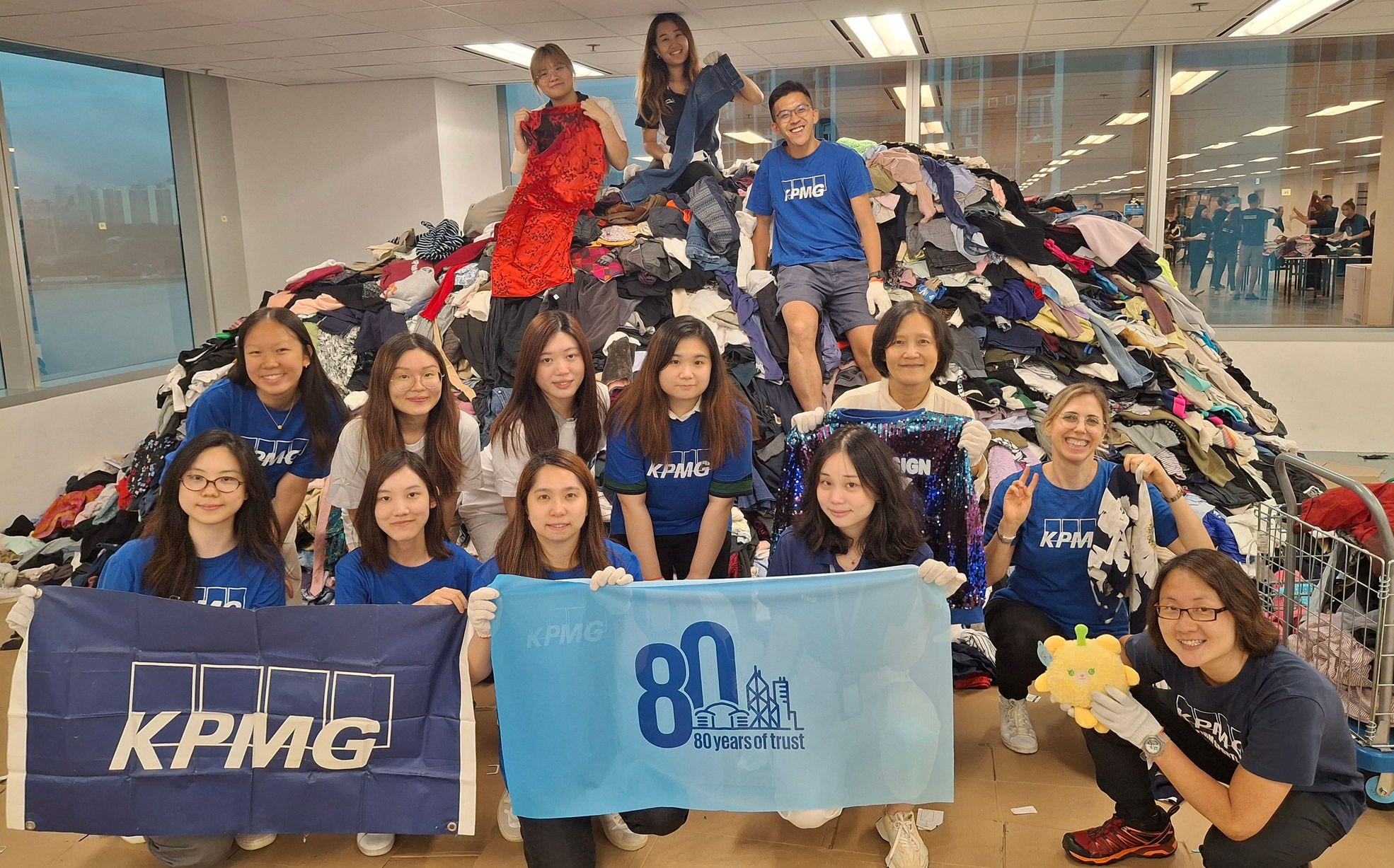
- We have been a sponsor of environmental NGO Redress’ ‘Get Redressed Month’ for several years.
- The initiative helps reduce textile waste and promotes sustainable fashion habits.
- It allows our people to donate unwanted clothes.
- The focus is on the importance of buying less and buying good quality.
- In 2025, 26 KPMG employees volunteered at our two Sort-a-Thon sessions.
Sustainable spaces: How we are renovating with purpose
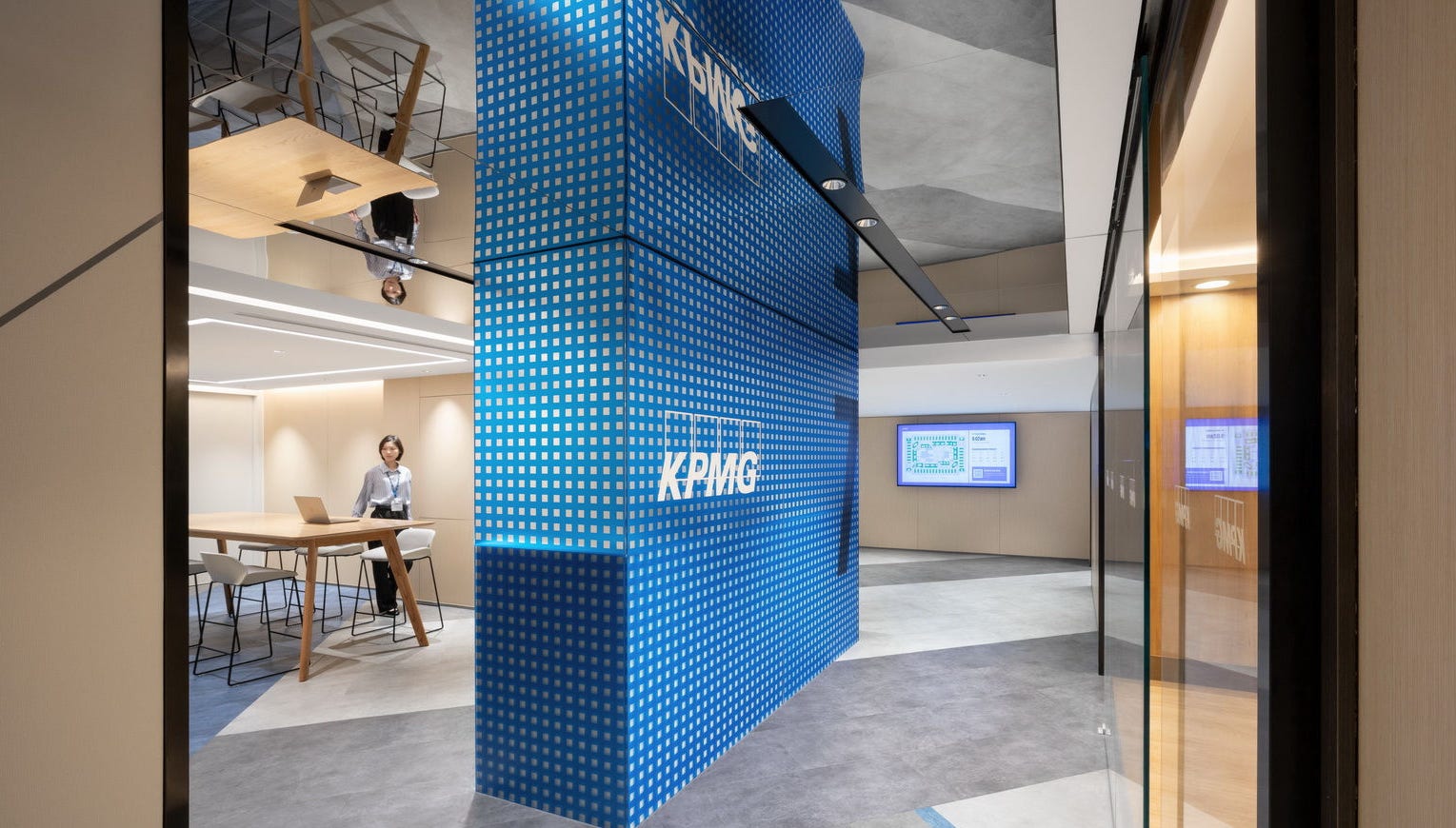
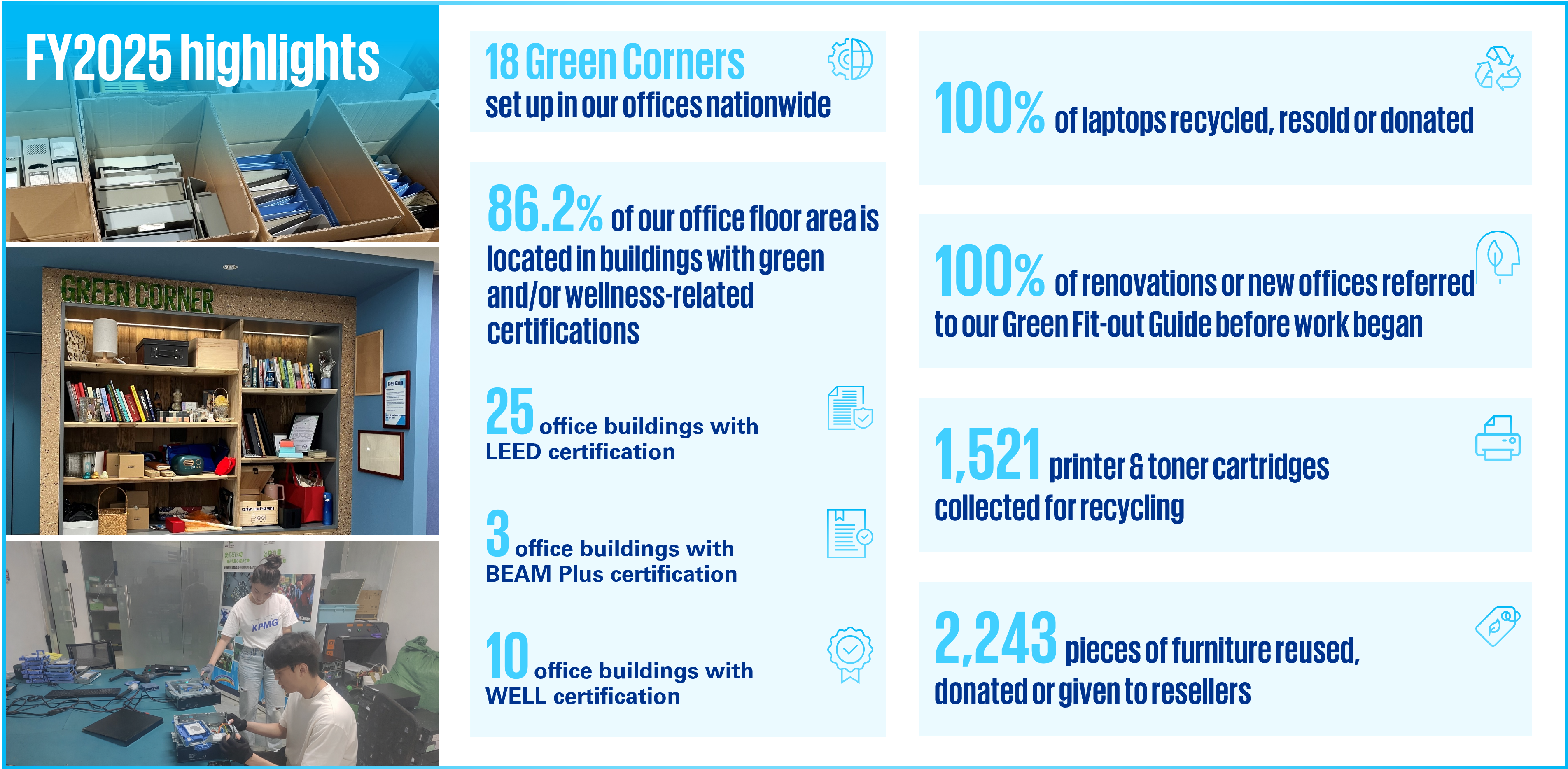
We have completed the first four phases of our Hong Kong office renovation as part of our One KPMG dual-office integration project for our 80th anniversary. The refurbished office now features agile workstations, smart environments and sustainable design – with energy efficiency, material selection and waste management guiding the design process.
To reduce landfill waste, significant efforts were dedicated to collecting usable items, such as stationery, appliances and household goods, which were redirected to charities in need.
Our Workplace team has collaborated with a furniture reseller to ensure that furniture is reused, recycled or donated where feasible.
Hong Kong office renovation
Navigating climate risk
Our commitments: Give our clients and other stakeholders clear,
comprehensive information on the impact of climate change
Climate change creates risks that shift quickly — but it also opens up significant opportunities for businesses prepared to act. We are committed to helping our clients and stakeholders understand both sides of that equation, providing the clarity they need to make well-informed decisions.
In 2022-2023, KPMG completed global physical and transitional risk and scenario assessments. We are now preparing to refresh these assessments by incorporating new scenario analysis and deeper stakeholder engagement.
KPMG has evaluated its disclosures against the Task Force on Climate-Related Financial Disclosures (TCFD) recommendations and International Sustainability Standards Board (ISSB) standards. We assessed risks across short-, medium- and long-term horizons, using scenario analysis based on data from 10 reporting KPMG firms (including KPMG China).
Our assessment identified seven major climate risks, including physical and transitional risks to operations, reputational risk, failure to decarbonise, and regulatory risk. We mitigate these risks through a diversified business model, continuous upskilling of our workforce, and integrated ESG risk management. Key opportunities include protecting and enhancing client value and strengthening trust.
KPMG has implemented governance systems to continuously monitor these risks and opportunities, with detailed information available in our Climate Risk Report.
Turning ESG insight into client impact
KPMG leverages end-to-end capabilities spanning strategic planning, risk management, data system development, and transactions to help clients transform ESG from compliance into a core driver of business growth and long-term value creation. Guided by regulatory trends and capital market expectations, we assist businesses in embedding ESG goals into their overall strategy and operation. Through high-quality disclosure and audit assurance, we help businesses enhance transparency and credibility.
In key scenarios including investment decisions, green asset deployment, international operations and supply chain restructuring, we support clients to optimise tax planning while maintaining compliance. This approach unlocks tax efficiency and capital gains opportunities through green transformation and sustainable investments, ensuring the financial sustainability of ESG strategies.
* LEAP consists of four stages: Locate, Evaluate, Assess and Prepare.

Nature and biodiversity
Our commitments: Understand and improve our impact on nature and biodiversity
In FY24, KPMG became an adopter of the Taskforce on Nature-related Financial Disclosures (TNFD). We have completed an initial impacts and dependencies assessment and are conducting further analysis to report in alignment with TNFD guidance. The assessment covered 11 KPMG member firms (including China), selected for their regional biodiversity profiles and alignment with our previous climate risk work.
Our commitment to becoming a net-zero business goes hand in hand with supporting a nature-positive future – both through the services we provide to clients and the way we run our operations.
Looking ahead, KPMG will continue to engage in nature and biodiversity initiatives – demonstrating our commitment to fostering harmonious coexistence between humans and nature.
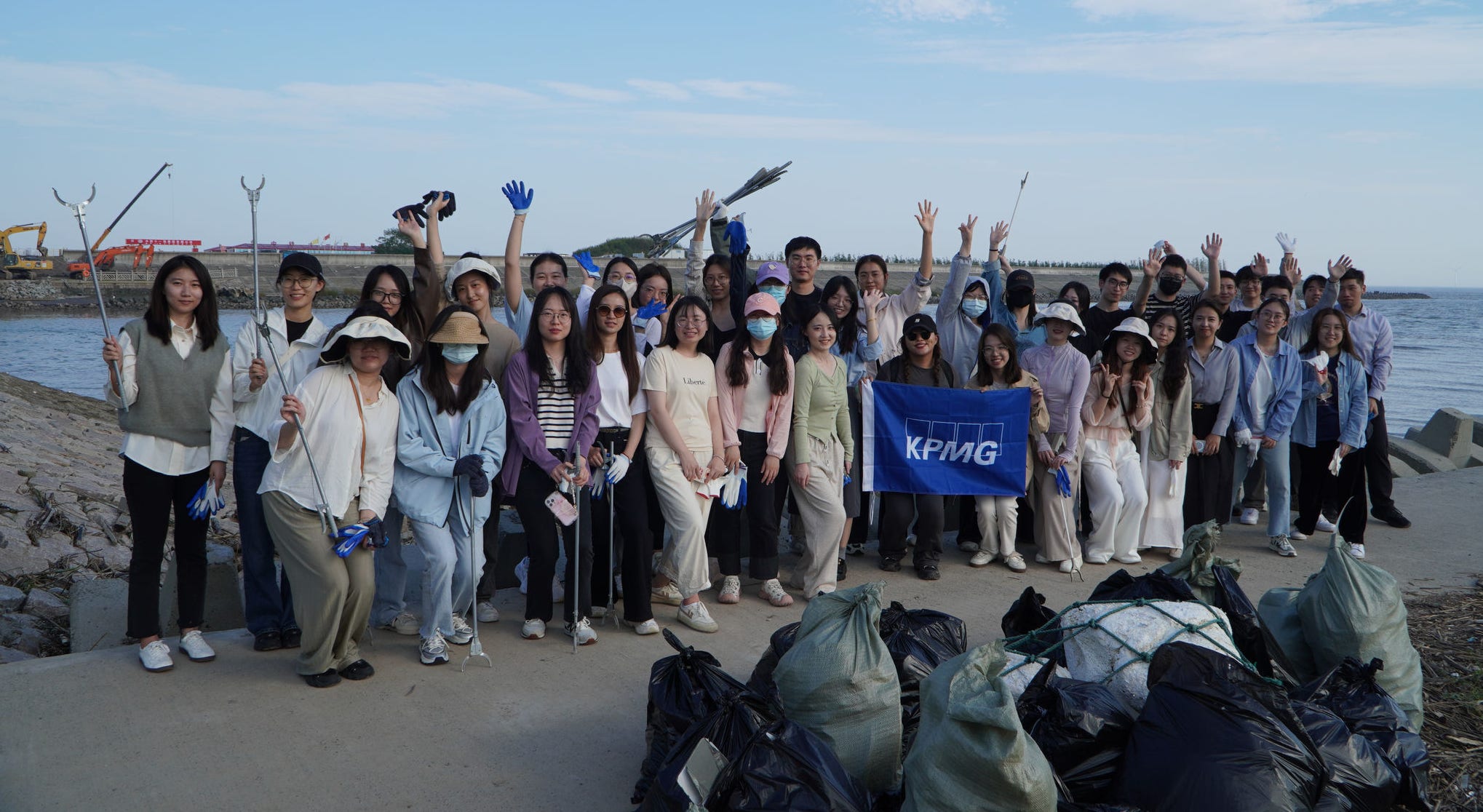


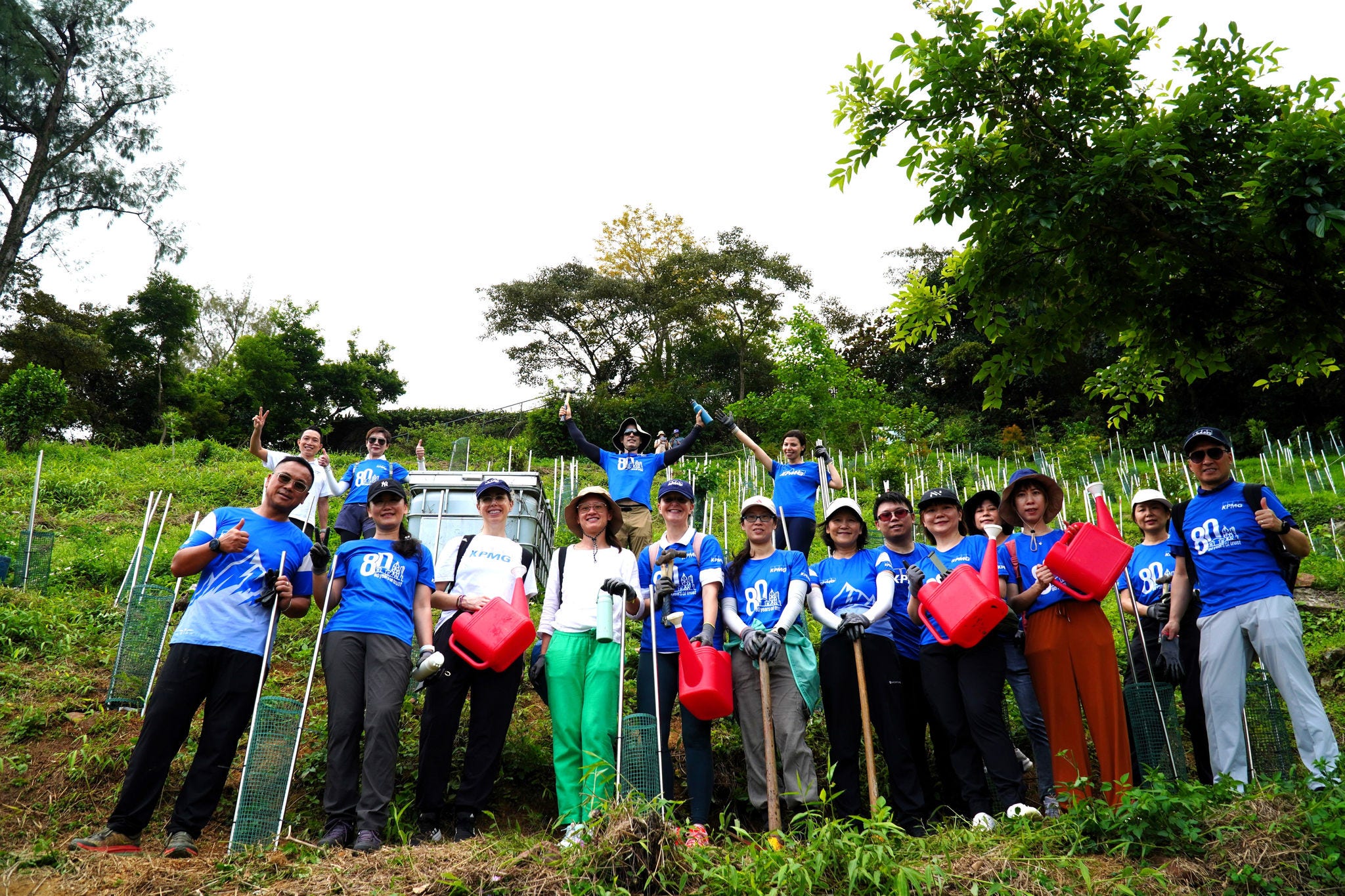
In partnership with Kadoorie Farm and Botanic Garden (KFBG), we launched our new habitat restoration project to celebrate our 80th anniversary in Hong Kong in 2025. This three-year initiative aims to restore local habitats and boost biodiversity. On Earth Day 2025, we kicked off the project with a tree planting event, led by Ivy Cheung, our Senior Partner in Hong Kong, alongside our volunteers.

Project highlights
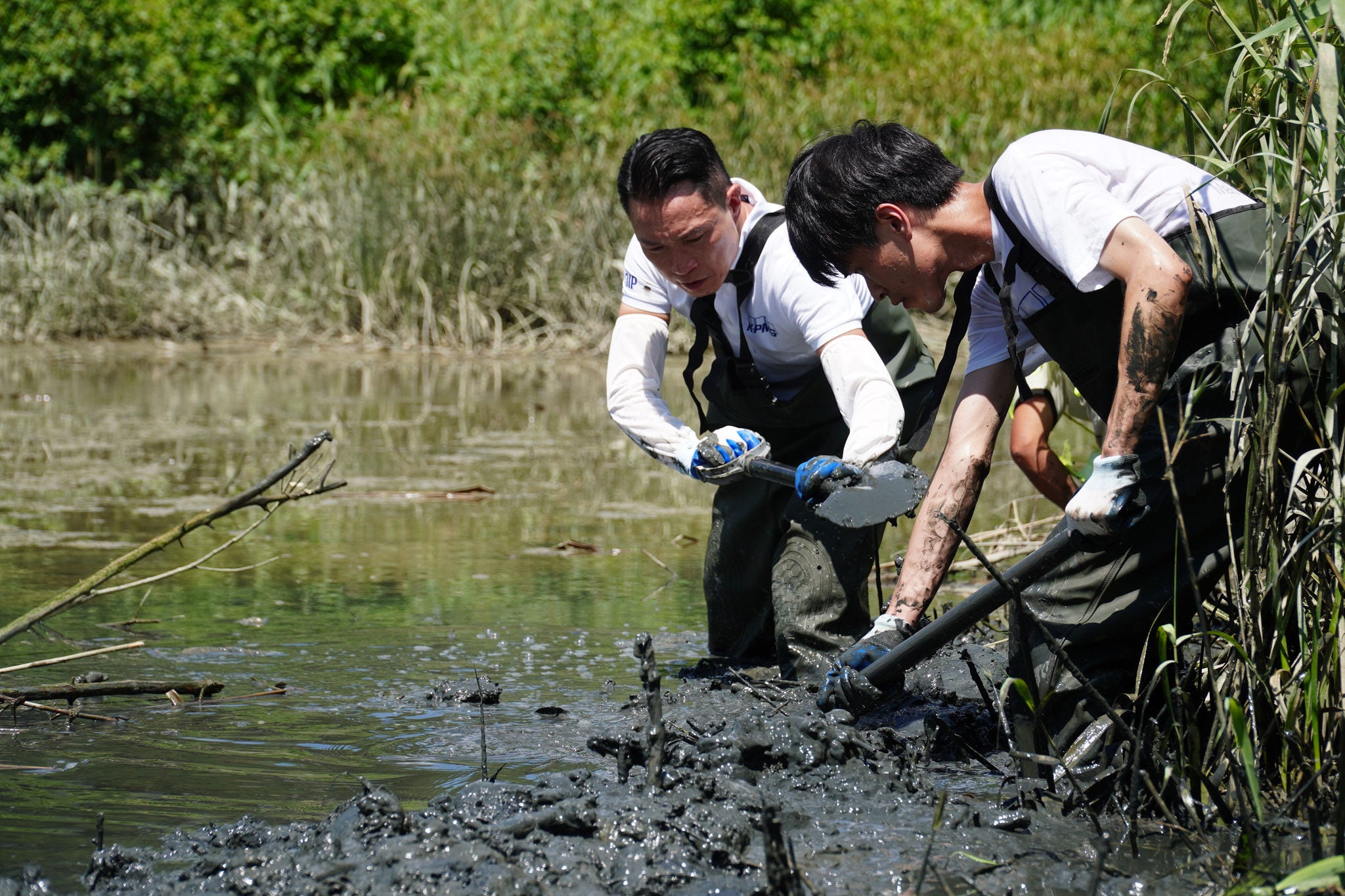
In September 2024, KPMG China and MCF launched the ‘Green Bay Area Pioneer Action – Habitat Enhancement of Futian Mangrove Ecological Park’ project, building on our previous successful partnership. This project aims to address tidal wetland degradation caused by sedimentation and invasive species.
Project highlights
- 20,000m² of degraded wetland habitats enhanced
- 500m² of invasive plant species cleared
- 720m³ of sediment removed
- A record high of 43 endangered Black-faced Spoonbills observed on 1 January 2026
- Showcased best practices for coastal wetland restoration