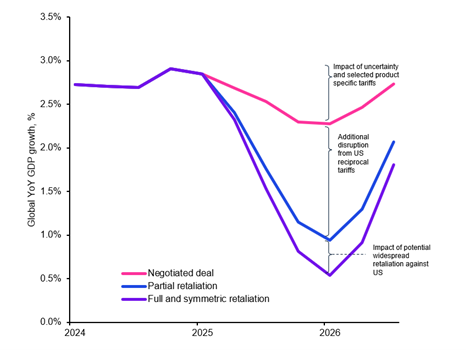
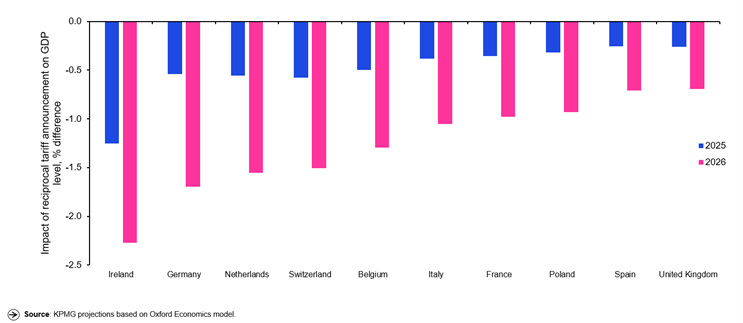
The panel moved on to explore how European nations might respond to the US’s protectionist stance.
At the time of the discussion, the EU faced 20% tariffs on goods exported to the US, while a rate of 10% had been applied to the UK.
As 10% was the lowest level imposed on any country, Yael felt there was little to be achieved by retaliating, which would only hurt the domestic economy.
From an EU perspective, however, “all options are on the table”, Raluca Enache pointed out it – including resorting to its Anti-Coercion Instrument. While retaliatory tariffs are on hold, moves are underway to strengthen trade ties with other markets, notably China, India and African nations.
That said, it will take a few years to carry out the research and development, and establish the new supply chains, required to enter new markets. By then, Angela Savin noted, the US administration and trade policy may have changed.
Alastair Pepper highlighted the possibility of targeting US services, as the tariffs only apply to goods (when services are taken into account, the balance of trade between the EU is fairly even). For instance, a Digital Services Tax (DST) could be used to target the US tech giants.
That would likely draw a sharp response from the US, however. Both Trump and Biden have staunchly opposed a DST being charged by foreign countries, which they consider discriminatory in its effect on US firms. A recent memo from the Trump administration on the subject describes it as ‘extortion’.
There’s an argument that this would make the threat of a DST a useful negotiation lever in the months ahead. But unlike import tariffs, such taxes aren’t imposed at a European level: they’re part of individual member states’ tax policies. Changes to national policies – either removing or imposing DSTs – seem unlikely.
In the final analysis, Yael suggested, governments must decide whether the current direction of travel is a blip or a long-term trend. If they believe it’s here to stay, then they’ll need to establish new international trade flows. That means providing certainty, and incentivising businesses to make the necessary investments.