

In this episode, John Robertson is joined by Iain Prince, Supply Chain Partner at KPMG UK to discuss what modern supply chain resilience really looks like, beyond just holding more inventory.
Together they talk about recent events and the knock-on effect it’s having on supply chains, building resilience and agility, while keeping a tight focus on cost. They cover board-level oversight, cross-functional scenario planning and how AI is being adopted to augment planning and decision-making.
What you need to know:
Resilience today goes beyond holding more inventory. Flexibility needs to be built into sourcing decisions and supply networks
Scenario planning works best when it’s cross-functional and continuous, not a one-off exercise
Network optimisation can help organisations design supply chain footprints that balance resilience, agility and cost
AI is increasingly augmenting planning by automating routine tasks and accelerating ‘what if’ analysis
Providing the insights on this episode:

Iain Prince
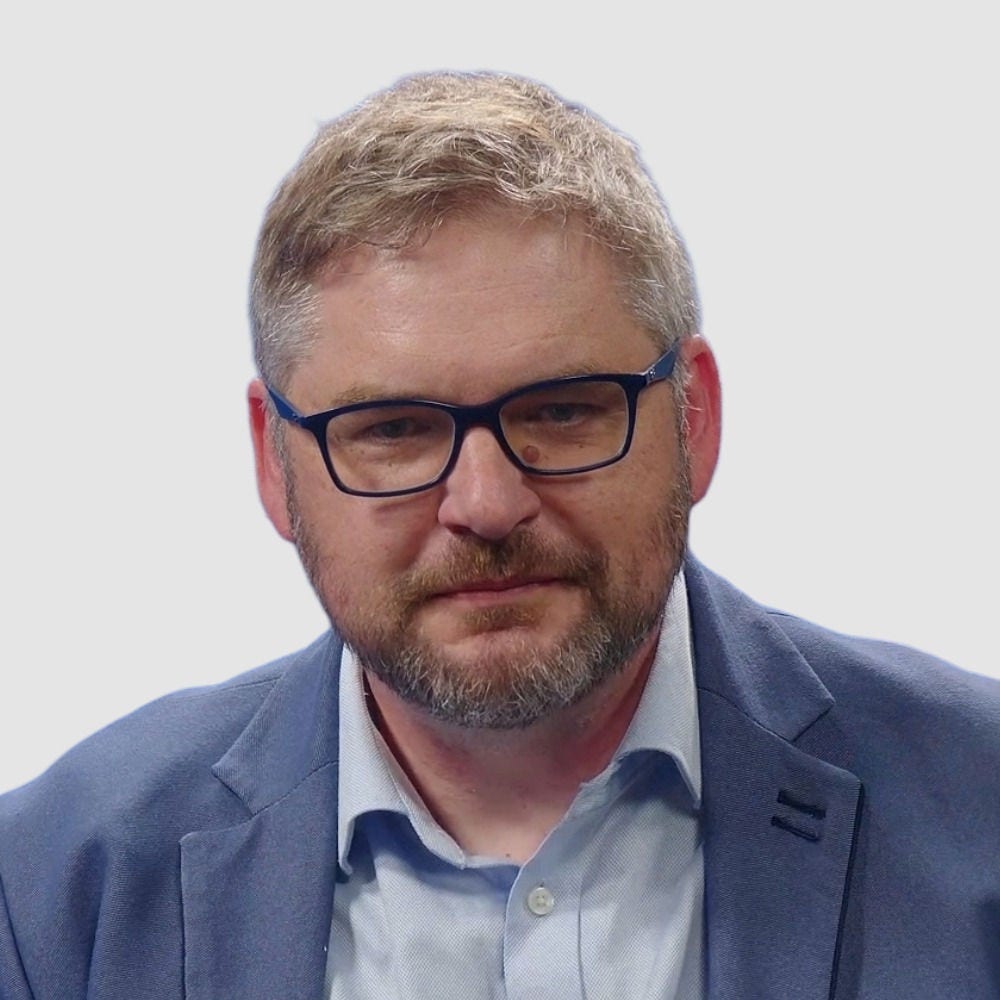
John Robertson
All in just 15 minutes.
The Insight in 15 is KPMG UK's flagship podcast for business leaders and decision makers.
Join us every fortnight for a fresh perspective on the issues shaping the future for your business, people and communities.
No filler. We cut to the chase, setting out the risks and opportunities, and providing insights you can put into action straight away.
Episode transcript
John: Welcome to The Insight in 15. I'm John Robertson and I'm joined today by Iain Prince who's a Partner in our Supply Chain Practice here at KPMG UK, and no surprises today we're going to be talking about supply chain. Iain great to have you with us today.
We've only got 15 minutes. So let's crack on. Got to start with the conflict in Iran, obviously, as we're recording this the Strait of Hormuz is still closed.
What does that mean for supply chain?
Iain: I think the first thing is everybody knows, and I think John a little bit like supply chain, the topic today, we’ve found everybody has become a supply chain expert. But it's still on the board agenda all the time. It is disrupting supply chains. It's different in each sector from that side but what we are finding is simply British businesses have been through lots of turbulence and they've actually been able to say, okay I've got the visibility across my supply chains now, and I need to start thinking about the what ifs. But there is disruption. Clients are looking at it on a daily, on a weekly basis, at a board level.
John: Okay. So this is different across different sectors. But are there sectors that are particularly impacted?
Iain: Yeah. So from a sector side obviously energy, oil and gas is the main impact because of the LNG. Could be the oil coming through the Strait of Hormuz. There are some indirect, some other industries and sectors that are impacted. Agriculture, so there's a fertiliser product that comes through that area as well. But we've got to think as well as the Straits of Hormuz, there are other areas that we will look at. We'll look at the Red Sea. Container ships go through the Red Sea all the time. It's not in the conflict there, but we've got to make sure we keep aware of all things that might happen. We don't want another ‘Evergreen’ doing a three point turn on the Suez Canal again.
John: Okay. So if I'm a Supply Chain Manager at the moment, how am I reacting to this? What will I be doing?
Iain: I think from a Supply Chain Manager, you're being invited to board meetings first, this is on the board topic. So what we found with supply chains but more specifically at board level is they're looking at all of the what ifs from it. And the boards that we've been working with and we're recommending is put somebody on point at the board level to look at all of the what ifs, the different scenarios, to help develop your strategy. And also make sure you're looking at the budgeting re-forecasting, re-planning throughout the year. You know, three plus nine, six plus sixes are becoming evident now as people are looking at it. But as again they'll come back to it, make sure it's on the board agenda and you've got all of the elements and capabilities aligned, because what you've got to do is create a resilient supply chain that can weather these shocks to it.
John: I remember talking to you during Covid and it was very much a we had supply chains moving from sort of, the most cost efficient path to resilience. But what does that mean?
Iain: John, you mentioned it, we've been here before haven't we? If we think about all the Brexit challenges, the Covid challenges the Ukraine conflict. And initially resilience just meant let's have more inventory. Let's make more product, let's stock it around the world. Because what we can't do is let our customers down. So resilience initially meant put more stock everywhere and inventory went up. The finance directors, CFOs were interested because working capital was going up. But what we're seeing now is a different type of resilience, where clients are now, and in the various sectors are actually putting some strategies in place.
Resilience could be instead of being reliant on one or two countries, I'm actually going to go to three or four. I might make or produce or store product in a different country. Another area might well be I might change my suppliers or my work in progress or my building materials, as they call it, to change some of the packaging. So I'm not resilient to a certain product code.
And then thirdly, and this is quite fascinating now with clients, is when we'll be working with clients on tenders and looking at suppliers on who they should use. Resilience is part of the scoring template now. So actually how resilient is my supplier? Because as well as the cost, the efficiency, the availability of the product, they'll also want to make sure that that supplier is resilient, which could mean a lot of things. What factories do they make the product in and where is the warehousing? But also what are the countries that it’s all from? So resilience has been used in lots of areas in the supply chain now.
John: Iain you mentioned that you kind of have to look at the countries because obviously you could have one country that's in an area where there's conflict, okay. But you could have another country that's facing large tariffs to do business out of it. So how, and that's changing all the time it seems to me anyway, so how as a business do you determine, what tools are there to determine your best supply chain?
Iain: So there's some great tools around them. We're using two or three with clients at the moment. But the main thing, what we call it is network optimisation. So it's been around for years. Like it's doing the maths of where you make a product and how it sort of flows through as well, and looking at the countries and looking at the demand patterns. But now what's happened there is you can take it from a theory and just do the supply chain and come up with the answer. But now what you've got to do is add all the extra blocks onto it.
So you need to look at the resilience of that supply chain. You need to look at the customs value, the tariffs, the VAT, the corporation tax, and making sure that that total cost of the network is taken into account. But the most important bit there is run lots of different scenarios on it.
So and what we found there with clients, it's one we've seen a lot of interest in the last sort of six months and year in this is, we've made sure during all of these times of disruption, we've served our customers, but people have delivered high levels of what we call an OTIF, on time, in full, how you deliver to a client. But what we found is that all parts of the network have become slightly inefficient.
So what we're doing there is throwing it up and then making sure A) we've got the right dots on the maps where we've got every, for where our suppliers are, where our manufacturing, and where our logistics are. But then optimising it both from a supply chain, but from a business level. The answer is often different than if you just do it from a supply chain.
John: It would seem on the face of it, the costs are going up. So but you're talking about optimising that. So what's going on?
Iain: Yeah. So what we're looking at there is making sure you get the right balance between cost, resilience. And there's another buzzword: agility, in supply chain at the moment. So agility could mean that I might be able to serve my customer from two warehouses. And I might be able to move it between one or two. So decision making tools and intelligence, supply chain intelligence is now on the agenda there. So making sure I haven't got a fixed train track, it must work this way, I can make it agile as well. On that side. But quite often your cost efficient supply chain network is often very resilient in how you design it. Some of the world's most cost effective supply chains are literally there because they are flexible and they can move product around in different ways as well.
John: Iain, let's stick with this idea of cost and resilience. Are there any techniques organisations can use to balance the two?
Iain: Yes, and we've been using one recently with a retailer here in the UK. It's zero basing the operations. It's a concept, so a lot of people do zero budgeting from finance, but this is zero basing an operation in logistics or in manufacturing across the supply chain. And what we found there is with all of the disruption that we've had, some bad processes have got into place, some rules, some business rules haven't been challenged for years.
When you set up a bit of tech, you've not gone in and looked at the parameters. So what we've gone back to is zero basing principles and said right, I run a warehouse, I look at goods in, why do you do that process? Do you have to do that process? If you don't do that process, does it impact on delivering to a store or delivering to a customer? And actually just taking all the processes back levels and actually if you touch a product, you've got to make sure you add value to it across the supply chain.
With one client, we saw nearly a 10% cost saving in their operation by zero basing, by doing what they do today, but just a lot more efficiently and eradicating things.
John: Okay. So you mentioned a bit earlier the importance of kind of running scenarios at the board level. How do I actually go about doing that, how to actually go about running the scenarios and working out what the different possibilities are?
Iain: Firstly, never run a scenario in a silo, because then you come up with an answer that might be great for logistics, might be great for manufacturing, but it won't take the end to end business aspect to it.
But what you've got to do is you've got to build up what I'm going to use another phrase, a digital twin. A digital twin is a model of your business that you can then run scenarios without making any physical changes, without moving a line in a manufacturing or opening up another route to market. You create a digital twin and in that digital twin you fundamentally replicate how the business works today. And then what you're doing is you're running a scenario and that scenario could be manufacturing.
It could be I've got X amounts of factories, number of lines in each factory, I want to see if I want to change lines. I want to see if I can put a bit more automation in. So I'm going to run a scenario to see my impact. Or you could run a scenario which is much more financially driven or regulatory driven.
A financial one would be we're restricted on capital in the business so therefore I've got to sweat the asset harder, how can I do that? Or if I'm looking at putting automation in, I've got say a £10 million sort of capital allowance, at what point and where should I put that capital? And so we look at it across both from a supply chain and from a finance angle as well, to make that decision.
And also you could argue it's almost the most important is I've got to look at my customers and how they're changing. So we've seen customers might still order the same amount, but how they've ordered is changing. And what you've got to do is create a customer centric supply chain network that's taking into account what your customers want, how they want it, when they want it, and then make sure that's optimal as well.
Lots of businesses game scenarios and do a bit of gaming. One of our clients at the moment is literally having a gaming two days where they go what happens if all of these take place? So on that, used to take 16 weeks, 20 weeks for these to get up and running. Now you can do it anything, four weeks, six weeks, eight weeks, ten weeks.
But the most important bit is when you do it you don't run it as a one off exercise, which is what used to happen. What you do now is you make sure it's built into that supply chain capability because you're going to be running these every week or every month both with how the business is changing or external factors as well.
John: Okay brilliant thanks Iain. We've had a bit of a buzzword bingo. We've had resilience, we've had agility, let's go on to another one we love talking about, AI, how's AI changing supply chain?
Iain: So AI is changing supply chain in lots of ways that we've seen it. We're building agents with clients at the moment. We're doing it within our third party logistics and the contracting. We're building agents with demand planning. And then we're building agents in all areas of the supply chain, both in supply chain planning, demand planning, capacity planning to take some of those mundane tasks but also using that data to run some of those what if scenarios and helping that demand planner, supply chain planner do their job in a much more effective and efficient way.
John: Okay so this is another case of sort of AI augmenting people?
Iain: A hundred percent.
John: We’re almost time up for today but one more question. We always ask all our guests what's your kind of one thing that you want our audience to go away with today?
Iain: Yeah. So one, I'll be cheeky and take three. You know I always do. So the first thing again on supply chain and I've said this all the time, get visibility across your supply chain at board level and put somebody on point in the board to report to the board to help make those decisions.
Second one is optimise your network and your supply chain and your footprint around the world to create a resilient and an agile supply chain.
And the third one is keep your eye on those costs, because you've got to remember that when you do create that supply chain, you want to make sure that you're still efficient and still competitive, to make sure you use your supply chain as a competitive advantage.
John: Fantastic thanks Iain, always a pleasure to talk to you. Our time's up, I hope you've enjoyed this episode. If you have, please subscribe on Spotify, Apple Podcasts, or YouTube, and we'll see you again for The Insight in 15.

Get in touch
Discover why organisations across the UK trust KPMG to make the difference and how we can help you to do the same.