

89% of UK CEOs are concerned about their vulnerability to attacks, according to this year’s KPMG CEO Outlook.
So how can organisations strengthen their cyber defences while making sure they're ready to respond and recover when an incident happens?
Cliodhna Potter, Cybersecurity Strategic Advisor at KPMG UK, returns to the podcast to discuss why prevention and recovery need to go hand in hand.
What you need to know
- The cyber threat continues to grow. Geopolitical threats and cyber criminals targeting organisations with valuable data are contributing to a complex risk environment.
- AI is a threat and an opportunity. Organisations face a threat from AI where it’s misused by employees and where its used by cybercriminals to launch attacks at pace. But it’s also becoming a key element in organisations’ defences.
- Prevention and recovery aren't either/or. Organisations need strong preventative security alongside the ability to recover and continue operating if an incident occurs.
- The first hours matter. Leaders have to make complex decisions quickly in the first hours of an attack, often on the basis of incomplete information. That’s why scenario planning is critical.
- Scenario testing needs to evolve. Organisations should consider the complexity and frequency of testing, including scenarios where multiple crises occur simultaneously.
- Boards should understand their trade-offs. Leaders need a clear picture of how much of the extent of their cyber defences. They also need to know where best to invest, and decide on the level of risk they’re comfortable living with.
- Simplification can support security. Reducing unnecessary complexity across processes and technology can help make an organisation's estate more manageable from a security perspective.
Providing the insights on this episode:

Cliodhna Potter
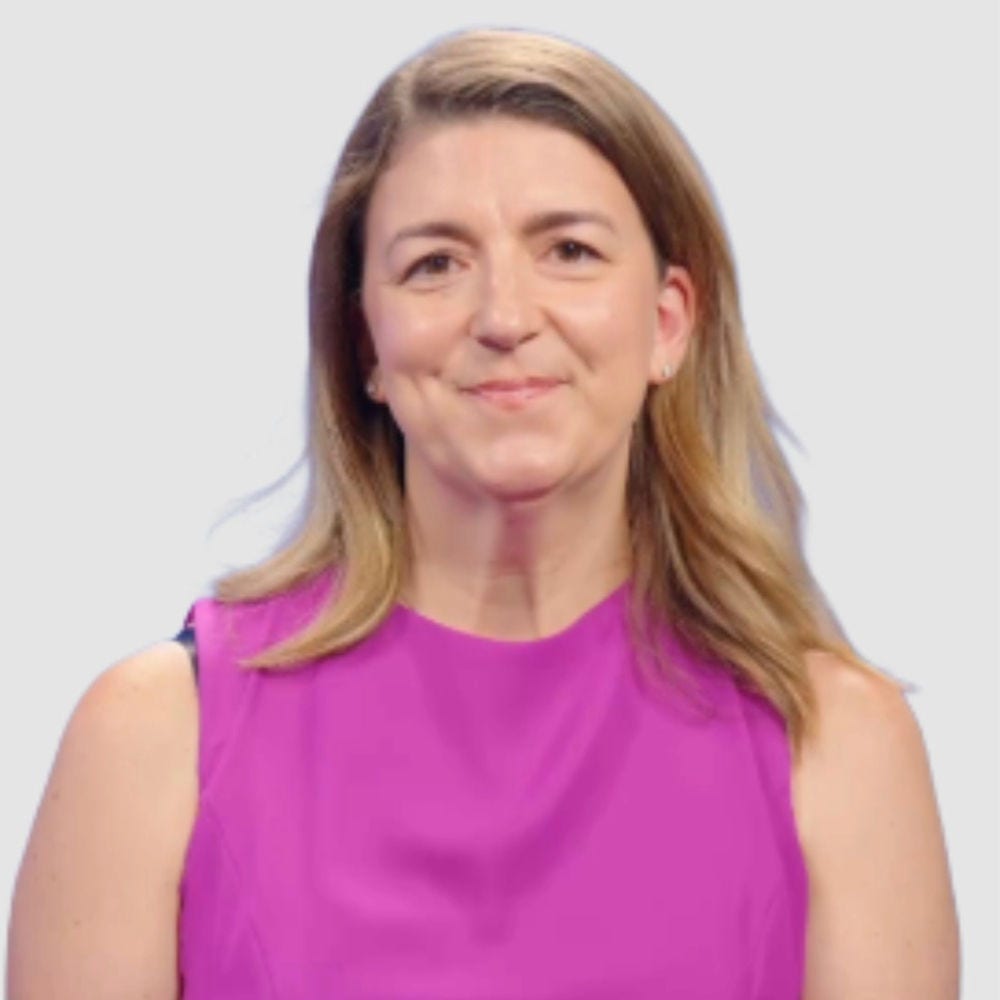
Jenna Glass
All in just 15 minutes.
The Insight in 15 is KPMG UK's flagship podcast for business leaders and decision makers.
Join us every fortnight for a fresh perspective on the issues shaping the future for your business, people and communities.
No filler. We cut to the chase, setting out the risks and opportunities, and providing insights you can put into action straight away.
Episode transcript
Jenna Glass: Welcome to The Insight in 15. I'm your host, Jenna Glass, and I'm joined today with Cliodhna Potter, Cybersecurity Strategic Advisor at KPMG UK. Today, we are going to be talking about cybersecurity essentials. Cliodhna was our second ever guest on The Insight in 15 podcast and we are so happy to have her back today. So welcome back to the podcast. What has changed in the last 12 months?
Cliodhna Potter: I'm afraid to say, I think we are seeing the cyber threat continue to increase. Firstly, in terms of the geopolitical threats are increasing that cyber risk. We continue to see those nation state driven attacks against our critical national infrastructure and increasingly across different aspects of our way of life, be that the food that we buy in the shops, our household amenities.
Secondly, we are seeing a slight change in how cyber criminals are exploiting organisations, really attacking those organisations that have the most valuable data, whether that is consumer organisations that have lots of customer data, whether that's law firms who have lots of client data, or sadly even organisations like nurseries that have lots of children's data.
On the positive, I would say that in the last 12 months, I think we're continuing to see a much greater awareness at the board level of the scale of this threat and the risk and the complexity to deal with it as an organisation and much more advancement in formal preparedness for that across the executive.
Jenna: So earlier this year, we talked to our Head of Cybersecurity, Del Heppenstall, and he mentioned the role of AI in cybersecurity. Can you talk a little bit more about that?
Cliodhna: Yeah, Del discussed the impact of frontier AI on the scale and breadth of cyber attacks that could potentially happen, both from attackers leveraging AI, but also from this AI being introduced into organisations themselves. And we do see that increase the urgency of the threat.
The UK Government itself has recently released an update from the AI Minister and the Cyber Minister discussing this urgent need for our cyber defences to uplift at a national level, and how they are looking at this in a multi-pronged way from themselves testing this frontier AI, through to an AI verification model, which will ensure the AI released aligns with security requirements, through to legislation and themselves remediating vulnerabilities at scale across their own government systems.
This is going to be the big topic of the next 12 months, AI. I think for organisations, they need to be thinking about, one, the AI that they're bringing into the organisation, you know, and how is that being safely configured and tested so that they don't inadvertently create new entry points for attackers? I think, two, is about how employees are introducing AI themselves, maybe downloading free AI to increase their own productivity, which can introduce malware into the organisation, but can also lead to loss of data. And I think thirdly, on the positive side, I think it's about how the security teams can leverage AI to do more security operations at scale.
Jenna: It can be said that, you know, no cyber defence is impenetrable. So with that in mind, should organisations shift their focus maybe from locking everything down to a quick recovery plan and resilience in light of an attack?
Cliodhna: Yeah, I think there definitely has been a shift in that discussion around, from kind of prevention and there's a lot more talk around resilience and recovery. I guess I'm a little bit, maybe have a professional aversion to some of the kind of simplification of these things around kind of just focusing heavily on recovery. I think where this started from was security professionals saying that we need to uplift both.
We need to uplift prevention, but have as the backup that we have recovery in a great place, that we have looking at our processes and how we could continue to operate, even if an incident were to happen. So I think we need to be a little bit careful of it becoming a kind of either/or. I think what we're saying is both in sync need to be uplifted.
Jenna: Okay, both need to be prioritised.
Cliodhna: Unfortunately, yes.
Jenna: So understanding I think is a key element of planning against potential attacks. So can you walk us through what happens with a ransomware attack, for example, like what initially happens in those first hours?
Cliodhna: Yeah, I think the initial hours are so crucial. And I just, as with any crisis in any organisation, those are the ones that make the difference. Typically how the initial hours will go will be it will be identified by someone in the security team. And that will go through escalation measures as they look at that and become concerned about it.
That then will move through into the Chief Information Security Officer. At that point, then you kind of have two parallel streams running. One stream is the technical teams from a security and IT perspective. And they're really trying to work out what is going on here. And as they go through that, they're pulling in more experts. In parallel, you will have more senior individuals usually at the leadership team level who are mobilising, potentially getting out of bed and mobilising to have an initial kind of strategic conversation around the impact of this. Usually in the early hours, there will be a lot of uncertainty and a lot of questions around what has actually happened. And I think that's always the challenge is that you're working with a lot of imperfect information.
So they will be wondering around the advisors that you want to bring in, our communication strategy, our legal, how do we keep this privileged, given how many people are now in the fold? Do we need regulatory advice around this? So it's really, again, bringing in that group of strategic advisors. And as it escalates through those hours, it's really about speed of decision-making. And there are few other instances, I think, where you will need to make so many big decisions with so little information. And I think that, and in such a multifaceted way, on comms, on regulation, on legal decisions, on cybersecurity, all within quite a short space of time. And that's why we really, really encourage organisations to have robust planning and testing around that.
Jenna: I was just going to say, so it sounds like scenario planning is a top tip for companies to do.
Cliodhna: Yes, and I think most organisations we work with now are doing that. At some level, I think Boards are meaning to do that. I think we probably need to push that on a bit now, I think, in terms of complexity of that testing, in terms of frequency of it happening, different crises happening at similar times.
You know, when you looked at, even during the Middle East conflict, you had that happening whilst a data server went down, I had another client at the same time who had a cyber incident somewhere else. I think it's testing these multifaceted crises happening at the same time and trying to really reduce that single point of failure on different individuals.
Jenna: So who would you say is ultimately responsible for cybersecurity? Is it ultimately the Chief Information Security Officer, or what role do folks have to play in the organisation?
Cliodhna: Yeah, I think it's very easy to say everyone has a role. We can kind of say that about anything. Ultimately, people have to be held accountable for certain things within their remit. I think, where do I think the bounds are from a Chief Information Security Officer perspective?
I think their role is to identify security risks in the organisation, to identify the security controls, the processes, the technology, the people that can help to manage those risks, to maintain that roadmap of initiatives that are prioritised and make sure that investment is allocated in the right way against those priorities to manage the threat. And it's their job where investment isn't available to clearly articulate the risk associated with that.
So for example, there's particular servers that are out of support and can't be patched. It's their job to explain the security risk associated with that and the trade off so that management can make an informed decision. I think if all of that has been done and there's an incident occurs on that because that investment couldn't be made, then I think it's fair to say that their role has been discharged. I think it's a different conversation if we're talking about maybe a lack of clarity being given to senior management with the Board around the level of security risk that the organisation is holding and a lack of clarity in terms of where investment and trade offs are being made.
Jenna: So that brings up a good point with the Board and the CEO. What questions do you recommend the board and CEO ask of their Chief Information Security Officer to make sure that they have all of their areas covered?
Cliodhna: Yeah, I think one of the things that we increasingly see is that, particularly historically, Chief Information Security Officers have needed to work to quite a tight budget. And that has meant that they have inherently made risk decisions in order to meet that budget. And that means there hasn't been the space to have the conversation around, what else? And so I think if, for those CEOs, it's about asking if you were to have more investment, and it's just a question, where would you spend that? Where would that go into? And I think they may often be surprised by the answer. I think it may be into other functions. They may say, actually, I don't need funding in my own security team. I need you to put it into uplifting those servers, more people into patching, into recovery that's run by the IT team.
So I think there's that piece. And I think the second is coverage. And it's coverage of controls. So the question is never in security, do you have X? Do you have monitoring? Do you have privileged access management? It's do you have it everywhere on the estate? And if you don't have it somewhere across the processes and estate, then is that the right risk decision? Are we managing that appropriately? So I would really encourage all leaders across to continue asking those questions. This is ultimately a business of trade-offs and you want to be certain of the trade-offs that have been made.
Jenna: So you explained earlier that it's not just a matter of cybersecurity, but cyber resilience. And so what impact is that having on the role of the Chief Information Security Officer?
Cliodhna: We're seeing, I think, that role evolve massively. And I think we will as well, you know, over the next few years. We're increasingly seeing that in order to robustly manage that cybersecurity risk, there actually needs to be more facets in under the control, frankly, of the Chief Information Security Officer, be that crisis management, business continuity, AI governance, these things start to come as a kind of complete package in order to manage the cybersecurity and resilience of the organisation and actually having one individual accountable for all of that is increasingly becoming the direction of travel.
You know, we're seeing this evolve into a kind of Chief Resilience role, a Chief Trust Officer role as organisations want to be clear and as the CEO to be able to look at one person who has a more complete view rather than, you know, four different individuals because the responsibilities are split.
Jenna: So time is almost up, unfortunately. So I'm going to ask one last question. What is the one key takeaway you want to leave our listeners with as it pertains to everything we've discussed today?
Cliodhna: All business leaders within the executive have a role in this and I think it's about looking within your own function and what can you do personally to improve the cybersecurity of the organisation? And that typically comes with simplification. How do you simplify the processes that you're performing if you're in HR or finance or operations? How do you simplify the technology that you're using? You know, use one CRM rather than three. And how do you make sure then that there's an estate that the CISO is actually able to control from a security perspective by preventing that type of sprawl? And I think if every individual leader did that within their own function, I think that the role of the Chief Information Security Officer would become much more manageable.
Jenna: Well, that's our 15 minutes. Thanks so much, Cliodhna. If you've enjoyed this episode, please like and subscribe and you can catch us on Apple Podcasts, Spotify and YouTube. We'll see you next time on The Insight in 15.

Get in touch
Discover why organisations across the UK trust KPMG to make the difference and how we can help you to do the same.