The Energy Institute Statistical Review of World Energy findings reveal a year in which energy demand continues to surge, low-carbon electricity reaches a historic milestone and transition pathways diverge sharply across regions - all against a backdrop of rising geopolitical risks.

      The Energy Institute, in partnership with Ember and in collaboration with Kearney and KPMG, released the 75th edition of the Statistical Review of World Energy, offering the first complete look at global energy data for 2025.

      2026 Statistical Review of World Energy

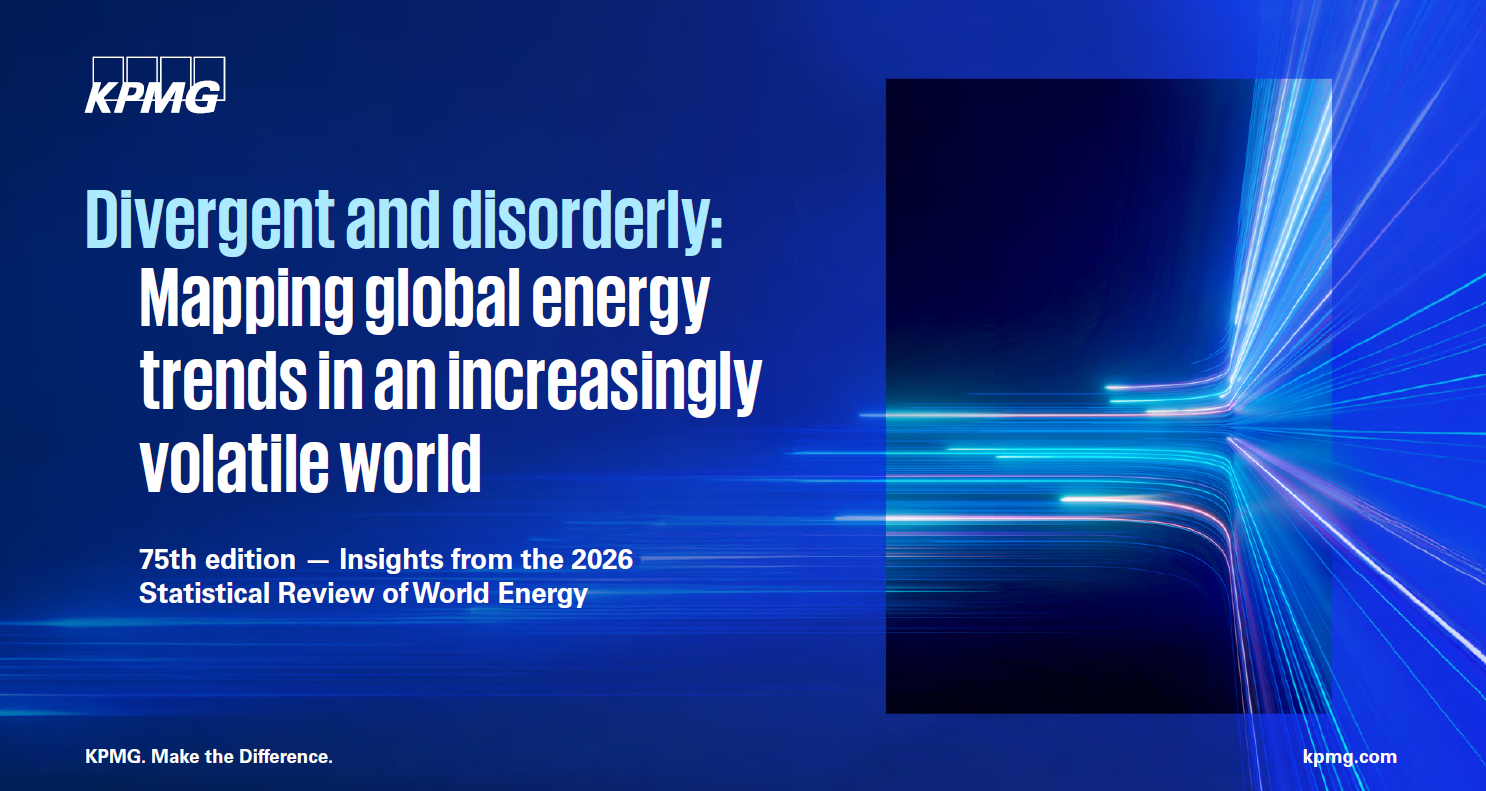
      Divergent and disorderly: Mapping global energy trends in an increasingly volatile world

      75th edition — Insights from the 2026 Statistical Review of World Energy

      Key findings

      • Record energy demand

        Total energy supply (TES) rose 1.7%, with all major energy sources rising to all-time highs for the second consecutive year

      • Low-carbon breakthrough

        Renewables were the largest source of TES growth for the first time outside of a recession, with solar power accounting for 72% of this increase

      • US emissions rise faster than China

        US emissions grew 3.2%, driven by a 13% surge in coal-fired power - in absolute terms, four times the growth of China

      • Solar and storage surge

        Solar generation expanded by 30% worldwide, while battery capacity grew at 66%, reinforcing their role as the fastest-scaling clean technologies


      A year of record demand and widening divergence

      Global energy demand rose 1.7%, with efficiency gains (relative to GDP growth) remaining at 2%, far short of the 4% annual improvement targeted at COP28.

      Global emissions rose 1.1%, though regional trends diverged sharply. China’s emissions grew only 0.3%, while India’s rose 0.9%, both below the global average. By contrast, the US recorded a 3.2% increase, the largest among major economies.

      Electrification accelerates as low-carbon power reaches a turning point

      Electricity is growing in prominence in the energy system, with electricity demand continuing to grow faster than TES, rising 3% year-on-year. New drivers of electricity demand, from electric vehicles to data centres and AI, continued to centralise the role of electricity in 2025.

      In 2025, rising electricity demand was met entirely by low-carbon sources, with renewables and hydro overtaking coal as the largest source of generation. Fossil generation fell overall, resulting in fossil fuels being substituted rather than supplemented.

      Global electricity consumption rose 3%, with China recording the fastest growth of any major economy at over 5%, adding electricity demand equivalent to the entire consumption of Germany in a single year.

      US electricity demand grew 3%, broadly in line with the global average - in a data first for the Statistical Review, global electricity consumption for data centres was reported at 788 TWh, with 40% of this in the US.


      Regional patterns reveal a fragmented transition

      • China delivered another record year for wind and solar - more than the rest of the world combined - with coal generation declining.
      • India saw coal, oil and gas generation all fall, while renewable generation increased nearly 24%.
      • Europe saw renewables grow 7%, largely offset by weaker hydro; wind generation fell slightly. UK solar was a standout, rising 37%.
      • The US saw solar surge 28%, but wind just 3%, while coal generation rose 13%, driving the country’s emissions increase.
      • In a continuing rebalancing of global oil production, the Americas now produce 20% more oil than the Middle East, with a 4% increase in US oil and gas production in 2025 – a flip from two decades ago when the Middle East produced 20% more.

      This year's Statistical Review shows that the global energy transition is becoming increasingly shaped by concerns regarding energy security, economic resilience, and regional priorities. For Ukraine, this situation poses a unique challenge to ‘build back better’. The reconstruction of the country’s energy sector is therefore not only about restoring damaged infrastructure, but about building a more flexible and resilient energy system integrated into the European energy market. Investments in renewables, energy storage solutions, and grid modernisation can strengthen national and international energy security today while supporting Ukraine's long-term competitiveness and deepening ties with Europe.
      Andrii Tymoshenko

      Partner, Head of Infrastructure, Transport and Logistics Sector

      KPMG in Ukraine

      Andrii Tymoshenko

      The EI Statistical Review of World Energy analyses data on world energy markets from the prior year. It has been providing timely, comprehensive and objective data to the energy community since 1952, originally from bp and, since 2023, under the custodianship of the EI. The Review is produced in partnership with Ember, and in collaboration with KPMG and Kearney. Data compilation is undertaken by our Knowledge Partner, Wattage.

      This year's Statistical Review features a new table tracking behind-the-meter and off-grid solar PV installed capacity (MW), sustainable aviation fuels prices, data centre power demand, as well as global battery capacity. There is also enhanced data capturing global hydrogen production.

      The Energy Institute (EI) is the chartered professional membership body for people who work across the world of energy. Our purpose is to accelerate a just, secure, and low carbon energy transition.


      cover-of -the-statictical-review-of-world-energy-2026

      Insights from the 2026 Statistical Review of World Energy

      Divergent and disorderly: Mapping global energy trends in an increasingly volatile world

      Andriі Tymoshenko

      Partner, Head of Management Consulting, Head of Infrastructure, Transport & Logistics

      KPMG in Ukraine

      Find out how KPMG specialist collaborate with top companies in the energy, utility, renewable, mining, and chemicals industries to help uncover new and sustainable opportunities.

      Developing responsible and sustainable strategies, business and operating models, and investments.