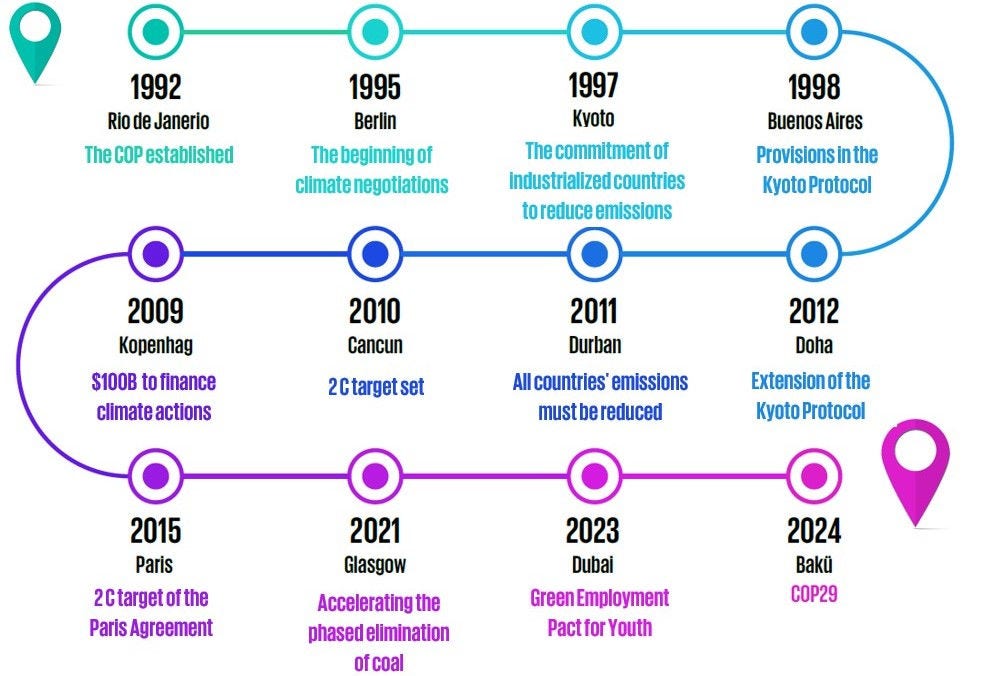
The Conference of the Parties (COP) is the highest decision-making body of the United Nations Framework Convention on Climate Change (UNFCCC). The meetings are held to review the implementation of the convention, assess the impacts of the measures taken, and examine the national contributions (NDCs) and emissions inventories of the party countries.
The Kyoto Protocol, established at COP3 in 1997 and entered into force in 2005, and the Paris Agreement, signed at COP21 in 2015, are some of the major international agreements created at COP meetings to combat climate change. COP negotiations provide an important platform not only for monitoring decisions made in the fight against climate change but also for governments, civil society, the private sector, and other stakeholders to come together and generate concrete solutions. Each COP serves to create sustainable action plans that support the goals of the Paris Agreement.
COP30, to be held in Belém, Brazil, on the banks of the Amazon River in 2025, presents a significant opportunity for the preservation of the Amazon ecosystem and strengthening regional solidarity. As for COP31, which will take place in 2026, Türkiye and Australia are the leading candidate countries to host the event. Türkiye emphasizes its geographical location and its potential to act as a bridge between developed and developing countries, while Australia is highlighting regional solidarity by supporting a joint bid with Pacific Island nations. This competition once again underscores the strategic importance of COP meetings in the global climate agenda.