DSA focuses on improving user safety and enabling provider accountability for digital services and attempts to update the legal environment for online services.
DSA adds a number of requirements for online intermediaries, including:
- Due Diligence Obligations: Online platforms are required to take precautions to identify and delete illegal information, such as hate speech, fake goods, and copyrighted material.
- Transparency and User Control: Platforms need to be more transparent about how they manage personal data, filter content, and employ algorithms. More user control over the content they view and receive is necessary.
- Independent Dispute Resolution: Platforms should set up procedures for handling user complaints and resolving disputes independently.
- Enhanced Liability Regime: Platforms may be held more accountable for failing to comply with DSA, with major violations subject to fines of up to 6% of their annual global revenue.
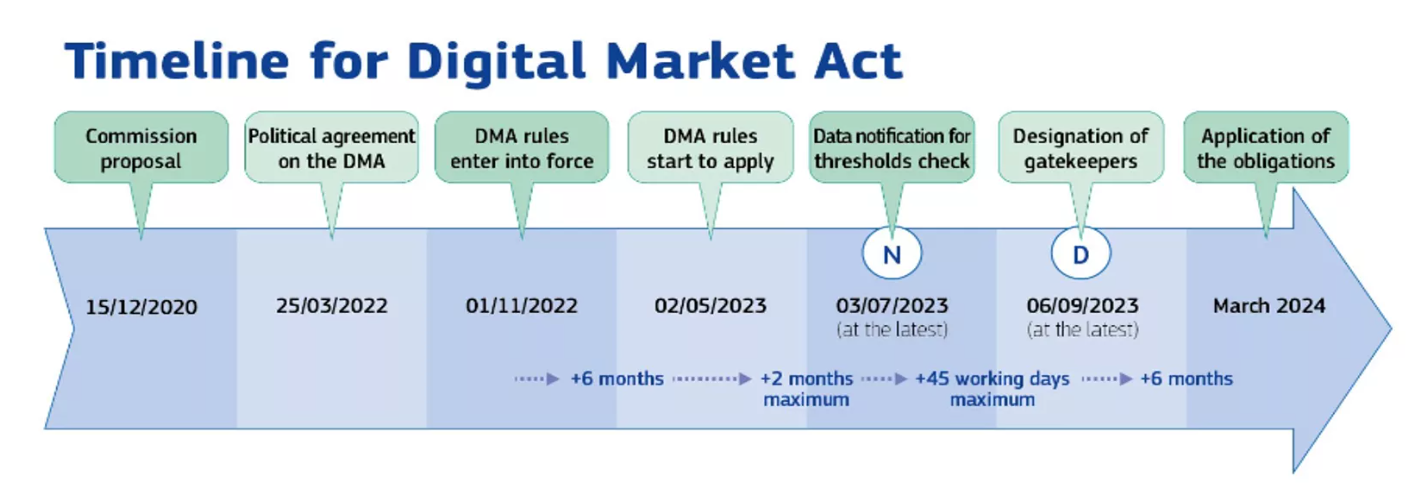
DMA was published in the Official Journal of the European Union as of October 12, 2022, and it became effective on November 1, 2022. Companies must tell the Commission of how many users they have by July 3, 2023 in order for the Commission to identify the "gatekeepers" before 6th of September 2023. Gatekeepers will then have until March 2024 to make sure they comply to DMA's requirements.
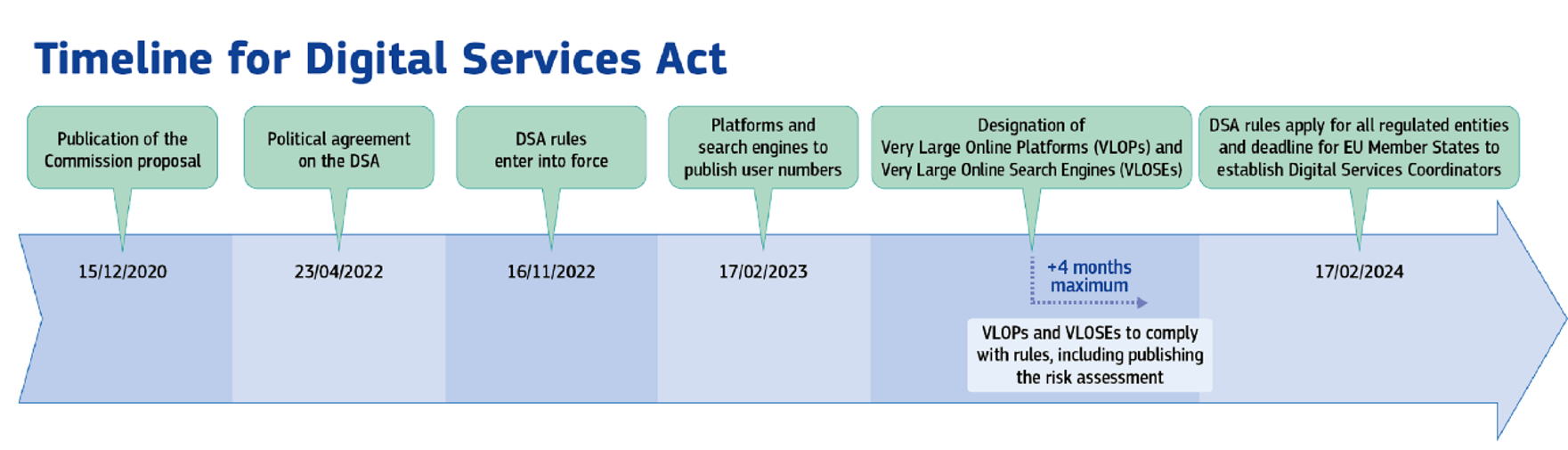
By February 17, 2023, online platforms must have disclosed the number of active users. The Commission will designate a platform or search engine as a very large online platform or a very large online search engine if it has more than 45 million users (or 10% of the population in Europe). These services will have four months to fulfill DSA's requirements, which include doing their first annual risk assessment and presenting it to the Commission. By the deadline of February 17, 2024, all EU Member States must name Digital Services Coordinators, and platforms with less than 45 million active users must adhere to all DSA regulations.