

      A global study on trust in Artificial Intelligence (AI) released today reveals more than half of people globally are unwilling to trust AI, reflecting an underlying tension between its obvious benefits and perceived risks.

      Malta is proactively addressing AI adoption and its applicable use through a multi-faceted approach that includes strategic planning, regulatory frameworks, and initiatives aimed at fostering trust. Malta’s national AI strategy, "Strategy and Vision for Artificial Intelligence in Malta 2030," published in 2019 -which is currently being realigned in terms of strategy and vision- outlines a vision to become a leader in the AI field, emphasising investment, innovation, and adoption across both the public and private sectors, underpinned by ethical considerations and the development of a trustworthy AI ecosystem.

      Complementing this, Malta is actively implementing the EU AI Act through the technology regulator, by taking a leading role in ensuring the safe, trustworthy, and human-centric use of AI, including the establishment of national AI certification and regulatory frameworks to build confidence in ethically aligned AI systems.

      Key findings

      psychology

      The intelligent age has arrived

      66% of people use AI regularly, and 83% believe the use of AI will result in a wide range of benefits.

      shield

      Trust remains a critical challenge

      Yet, trust, which is central to AI acceptance, remains a critical challenge. Only 46% of people globally are willing to trust AI systems which correlates with low levels of AI literacy - only two in five (39%) report some form of AI training and only 40% say their workplace has a policy or guidance on generative AI use.

      gavel

      AI regulation

      There is a public mandate for national and international AI regulation with only 43% of respondents believing current regulations are adequate.

      work_outline

      AI at work

      Data suggests that just under half of organisations may be using AI without adequate support and governance.


      Trust in AI KPMG Study

      Keith Cortis, AI Lead, discusses main findings from this study.


      The Trust, attitudes and use of Artificial Intelligence: A global study 2025 led by Professor Nicole Gillespie, Chair of Trust at Melbourne Business School at the University of Melbourne and Dr Steve Lockey, Research Fellow at Melbourne Business School, in collaboration with KPMG, is the most comprehensive global study into the public’s trust, use and attitudes towards AI.

      The study surveyed over 48,000 people across 47 countries between November 2024 and January 2025.

      It found that although 66% of people are already intentionally using AI with some regularity, less than half of global respondents are willing to trust it (46%).

      When compared to a previous study conducted prior to the release of ChatGPT in 2022, it reveals that people have become less trusting and more worried about AI as adoption has increased.

      Individuals and organisations are more likely to trust AI systems when they understand how AI works, yet the study finds that only two in five (39%) report some form of AI training. In line with these low levels of AI training, almost half (48%) report limited knowledge about AI, indicating that they do not feel they understand AI nor when or how it is used.

       “The public’s trust of AI technologies and their safe and secure use is central to sustained acceptance and adoption,” says Professor Gillespie.

      “Given the transformative effects of AI on society, work, education, and the economy - bringing the public voice into the conversation has never been more critical.”

      AI at work and in education

      The age of working with AI is here, with three in five (58%) employees intentionally using AI – and a third (31%) using it weekly or daily.

      This high use is delivering a range of benefits with most employees reporting increased efficiency, access to information and innovation. Almost half of those surveyed report that AI has increased revenue-generating activity.

      However, only 60% of organisations provide responsible AI training and only 34% report an organisational policy or guidance on the use of generative AI tools.


      The use of AI at work is creating complex risks for organisations, and a ‘governance gap’ is emerging. The study reveals almost half of employees admit to using AI in ways that contravene company policies, including uploading sensitive company information into free public AI tools like ChatGPT.

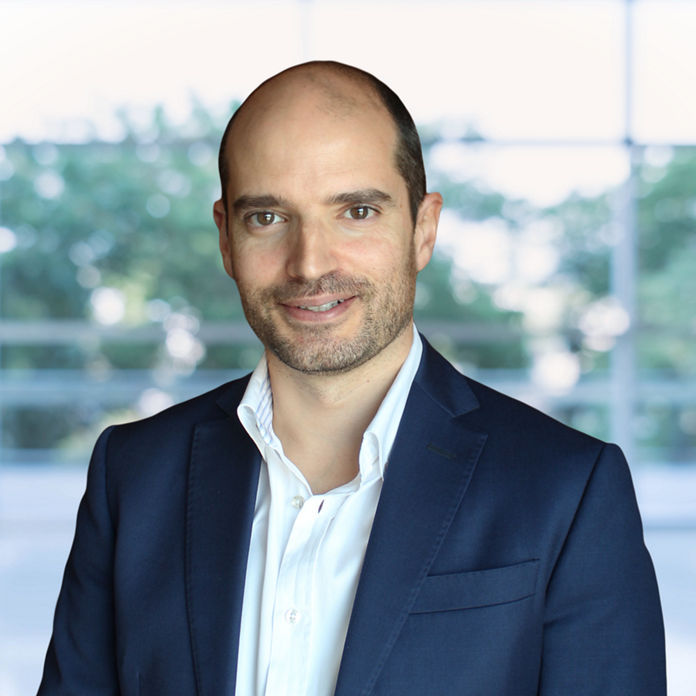
      Keith Cortis

      AI Lead, Digital Solutions

      KPMG in Malta


      Complacent use could be due to governance of responsible AI trailing behind. In advanced economies, just over half of employees (55%) report that their organisation has mechanisms in place to support AI adoption and responsible use, including a strategy and culture conducive to responsible AI adoption, adequate employee training, and governance processes.

      “According to the study, many users rely on AI output without evaluating accuracy (66%) and are making mistakes in their work due to AI (56%), and what makes these risks challenging to manage is over half (57%) of employees say they hide their use of AI and present AI-generated work as their own", Keith continues to explain.

      This lack of AI governance is also seen in educational institutions, only half of which have policies, resources and training for responsible AI use in place.

      AI in society

      73% of people report personally experiencing or observing benefits of AI, including reduced time spent on mundane tasks, enhanced personalisation, reduced costs and improved accessibility. 

      However, four in five are also concerned about risks, and two in five report experiencing negative impacts of AI. These range from a loss of human interaction and cybersecurity risks through to the proliferation of misinformation and disinformation, inaccurate outcomes, and deskilling.

      70% believe AI regulation is required, yet only 43% believe existing laws and regulation are adequate.

      There is a clear public demand for international law and regulation and for industry to partner with governments to mitigate these risks. 87% of respondents also want stronger laws to combat AI-generated misinformation and expect media and social media companies to implement stronger fact-checking processes.


      AI is surely the greatest technological innovation of our generation. Given its rapid advancement, it is imperative that AI systems are established on a foundation of a good governance which will help to drive trust. Users want assurance regarding the AI systems they interact with. Therefore, the complete potential of AI can only be realised if the public has confidence in the systems making decisions or assisting in them. For this reason, KPMG developed the Trusted AI approach to make the concept of trust both tangible and quantifiable for our clients.

      David Pace

      Senior Partner

      KPMG in Malta


      For interviews and media opportunities, please contact:

      Keith Cortis

      AI Lead, Digital Solutions

      KPMG in Malta

      David Pace

      Senior Partner

      KPMG in Malta


      About this report

      The University of Melbourne research team, led by Professor Nicole Gillespie and Dr Steve Lockey, independently designed and conducted the survey, data collection, analysis, and reporting of this research.

      This study is the fourth in a research program examining public trust in AI. The first focused on Australians’ trust in AI in 2020, the second expanded to study trust in five countries in 2021, and the third surveyed people in 17 countries in 2022.

      This research was supported by the Chair in Trust research partnership between the University of Melbourne and KPMG Australia, with funding from KPMG International, KPMG Australia, and the University of Melbourne. 

      About KPMG International

      KPMG is a global organization of independent professional services firms providing Audit, Tax and Advisory services. KPMG is the brand under which the member firms of KPMG International Limited (“KPMG International”) operate and provide professional services. “KPMG” is used to refer to individual member firms within the KPMG organization or to one or more member firms collectively.

      KPMG firms operate in 143 countries and territories with more than 275,000 partners and employees working in member firms around the world. Each KPMG firm is a legally distinct and separate entity and describes itself as such. Each KPMG member firm is responsible for its own obligations and liabilities.

      KPMG International Limited is a private English company limited by guarantee. KPMG International Limited and its related entities do not provide services to clients.

      For more detail about our structure, please visit kpmg.com/governance.