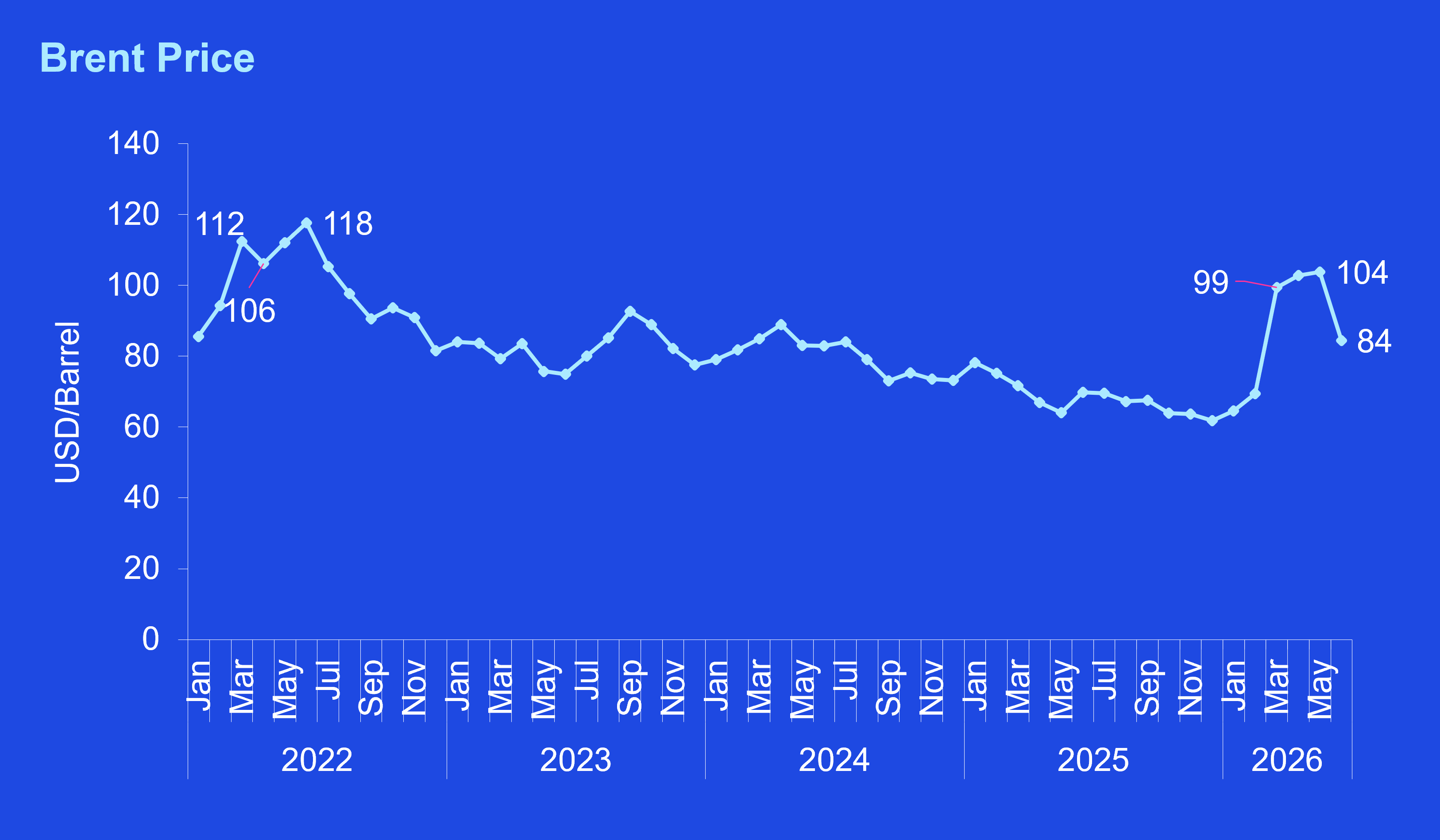
The OECD outlines two potential scenarios for the evolution of energy production and supply chains:
Spotlight: Uncertainty in energy
Time-Limited Disruption Scenario1
- Energy production in Gulf economies and shipping routes recover as from Q2 2026.
- Prices peak in Q2 and Q3 2026 but stabilise thereafter.
Prolonged Disruption Scenario2
- Disruption in energy production in Gulf economies persists up to Q3 2027.
- Prices in Q3 2027 assumed to be 50% higher than those in Q3 2026.
Malta's position
- Malta’s exposure predominantly comes from its dependence on EU energy via the interconnector with Sicily, and is vulnerable to price increases of imported electricity3.
- Malta should diversify energy supply via renewable energy and energy storage projects, so that it limits its exposure to EU price shocks4.
Spotlight: Uncertainty in food
Supply Chain
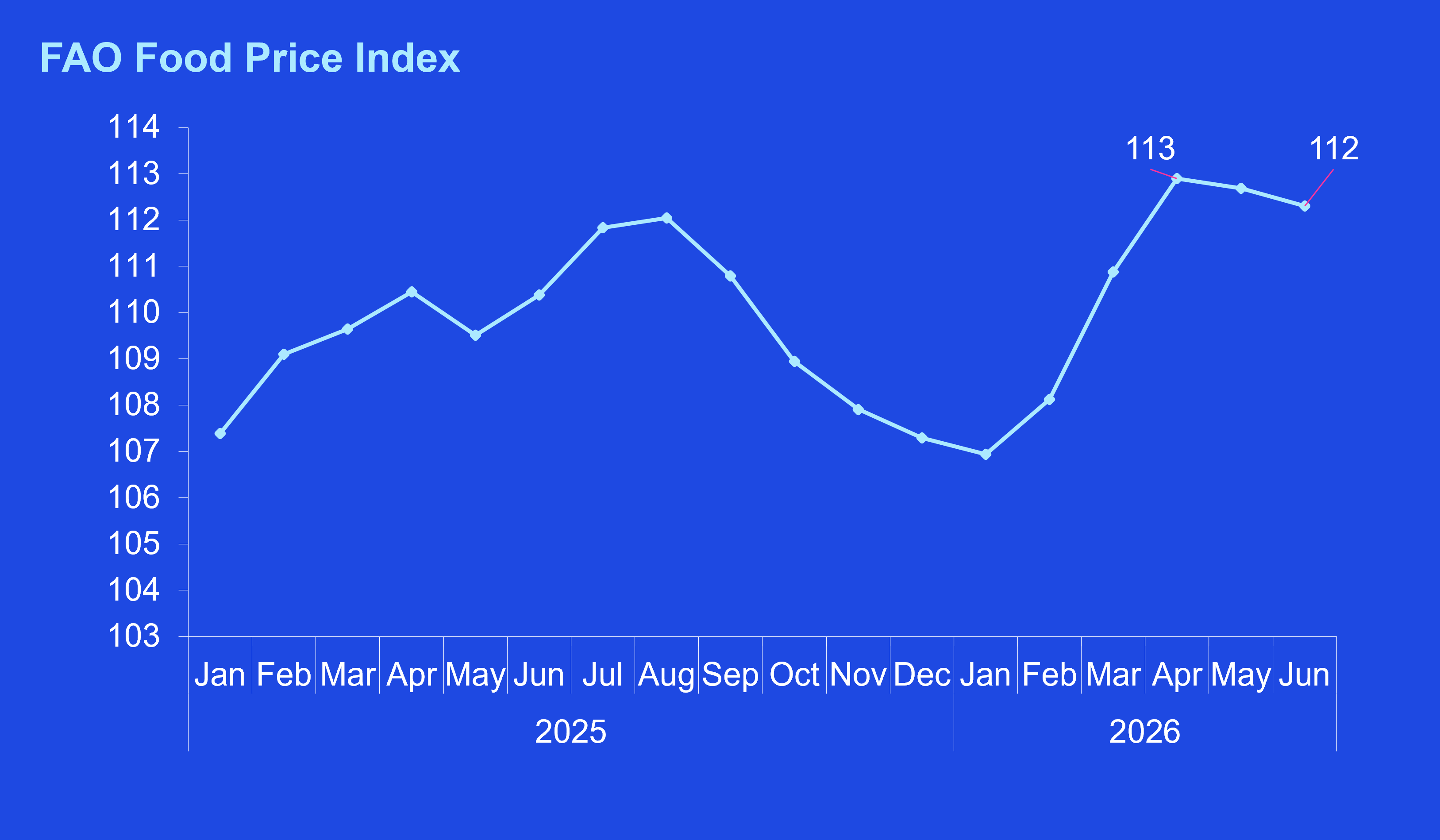
Traffic disruptions in the Persian Gulf affect around 30% - 35% of global urea exports, and 20% - 30% of global ammonia exports. 510M to 530M people may still be enduring hunger in 2030 due to the conflict in the Middle East5.
Where Malta Stands
Malta should develop a national food supply risk assessment and contingency plan so that key factors which contribute to food insecurity are identified6.
Spotlight: Uncertainty in metals
Supply Constraints
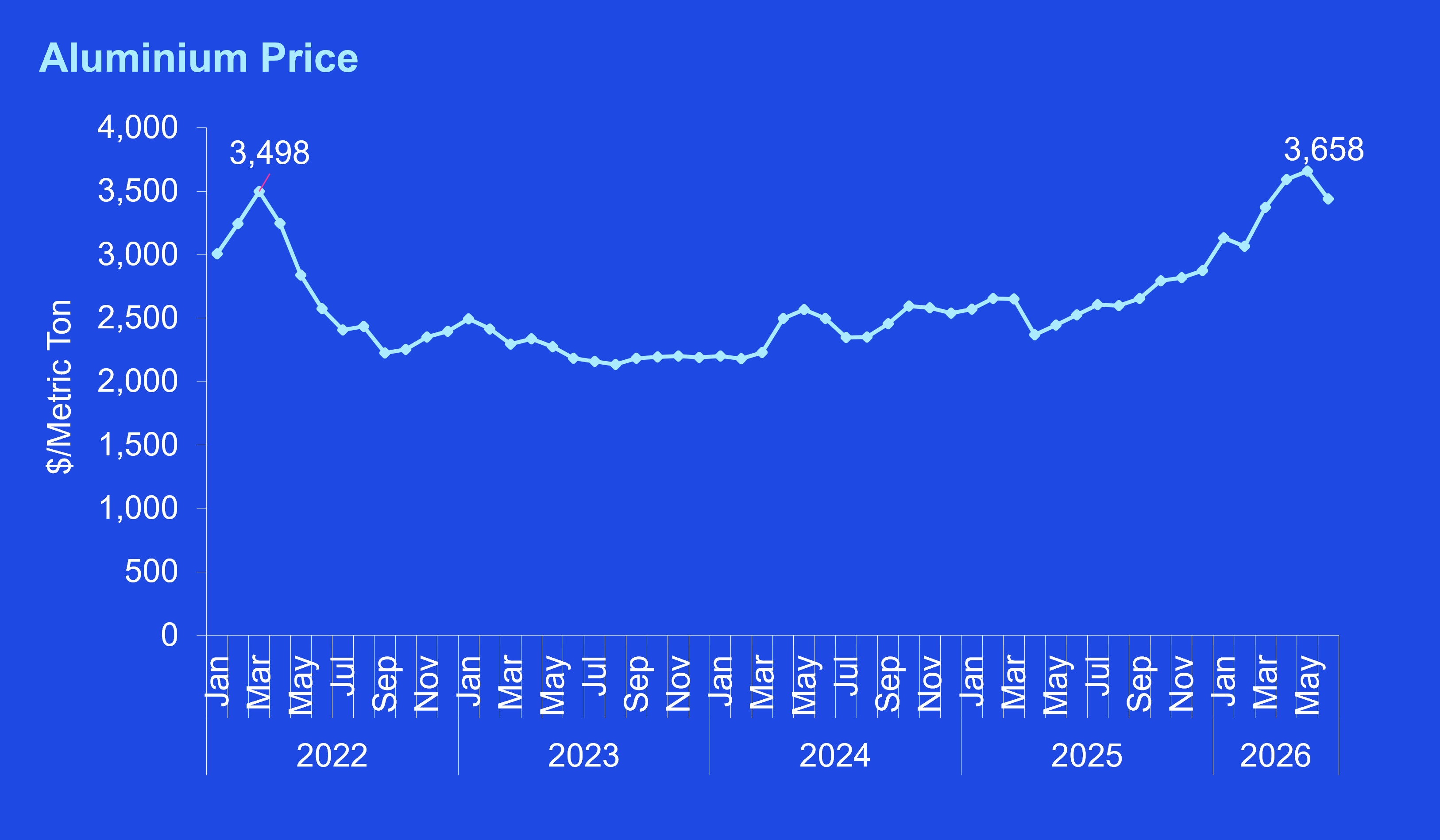
Aluminium has been affected the most since the Middle East accounts for 7% of aluminium trade7.
China accounts for 60% of global output and approaches its self-imposed annual limit of 45 million tonnes8.
Copper supply growth has been affected by disruptions at major mines in Indonesia9.
Where Malta stands
Diversify sources of critical metal imports and expand recycling of strategic materials to reduce Malta's exposure to export restrictions and global supply chain disruptions10.
Main Macroeconomic Trends
GDP per Capita
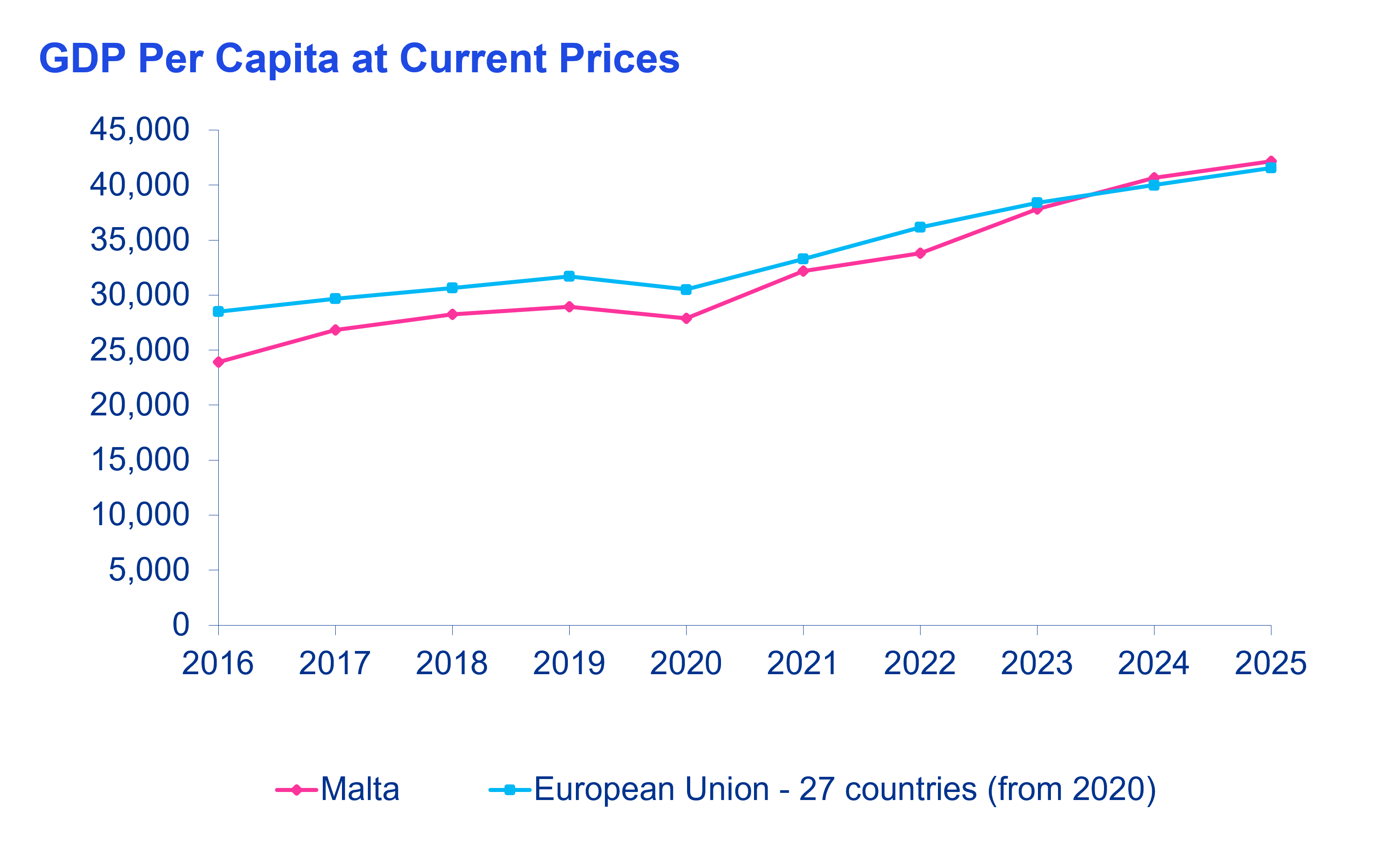
GDP per capita at current prices in Malta has gradually converged to the EU average over the past ten years.
Main Macroeconomic Trends
Inflation
GDP per capita at current prices in Malta has gradually converged to the EU average over the past ten years.
Malta’s HICP inflation is forecasted to be 2.5% - 2.6% across baseline and alternative scenarios11.
Global inflation is expected to increase to 4% in 2026 due to increases in energy costs12.
Lower inflation rates in Malta reflect the impact of government energy support measures in effect since 2021.
The largest annual inflation rates were observed in ‘Restaurants and accommodation services’ (3.4%) followed by ‘Education services’ (3.6%).
Main Macroeconomic Trends
Unemployment
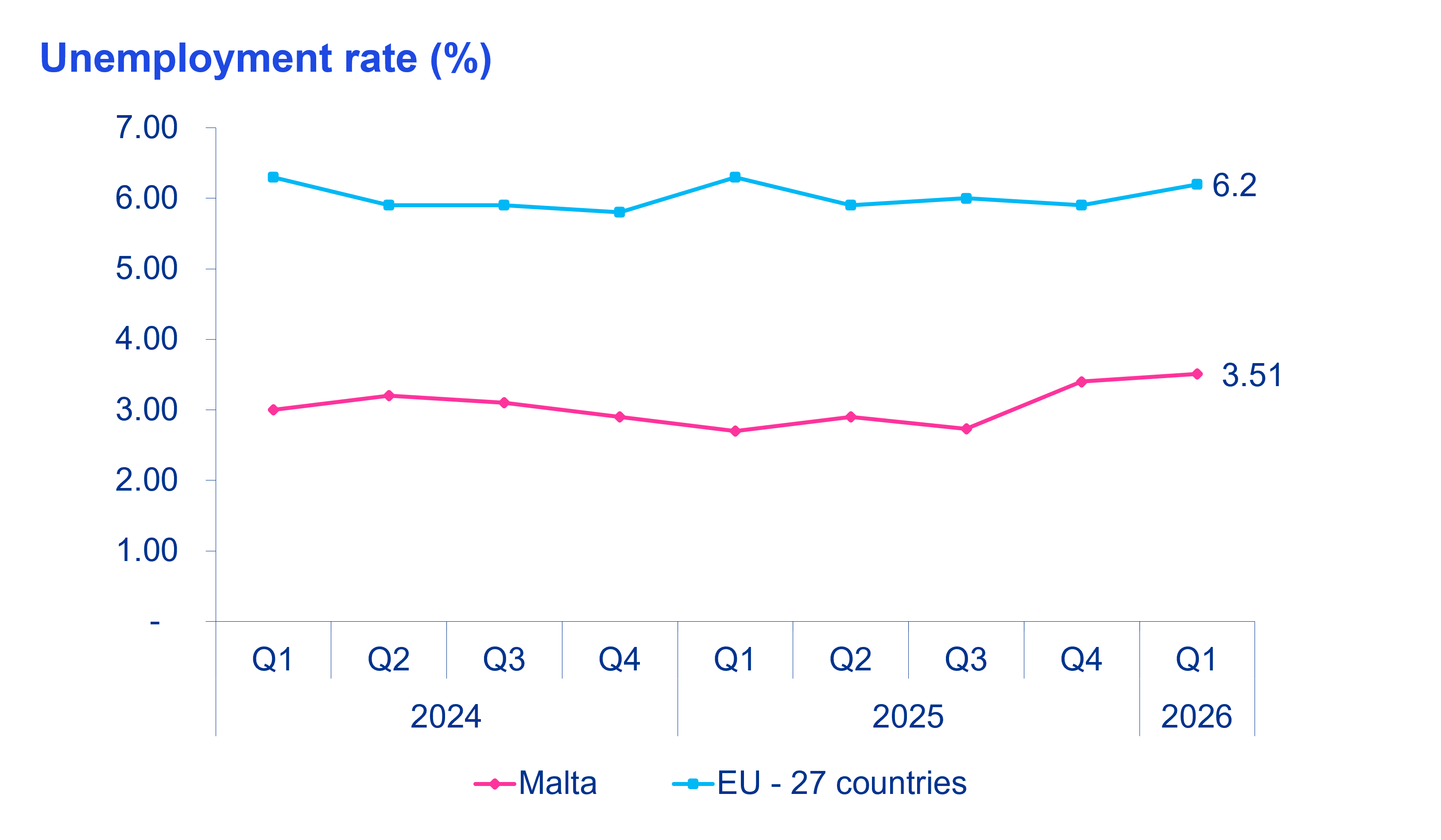
Malta’s unemployment rate has been consistently lower than the EU average since 2024.