AI spotlight

      1. AI will increase demand for “human” skills1

      These include professional judgement, critical thinking and other skills which complement AI generated material.1

      2. Efficiency
      • AI adoption increases labour productivity by 4%.2
      • A key finding of the KPMG European Outlook is that 37% of European firms already use AI - on par with the US.3
      3. Job automation

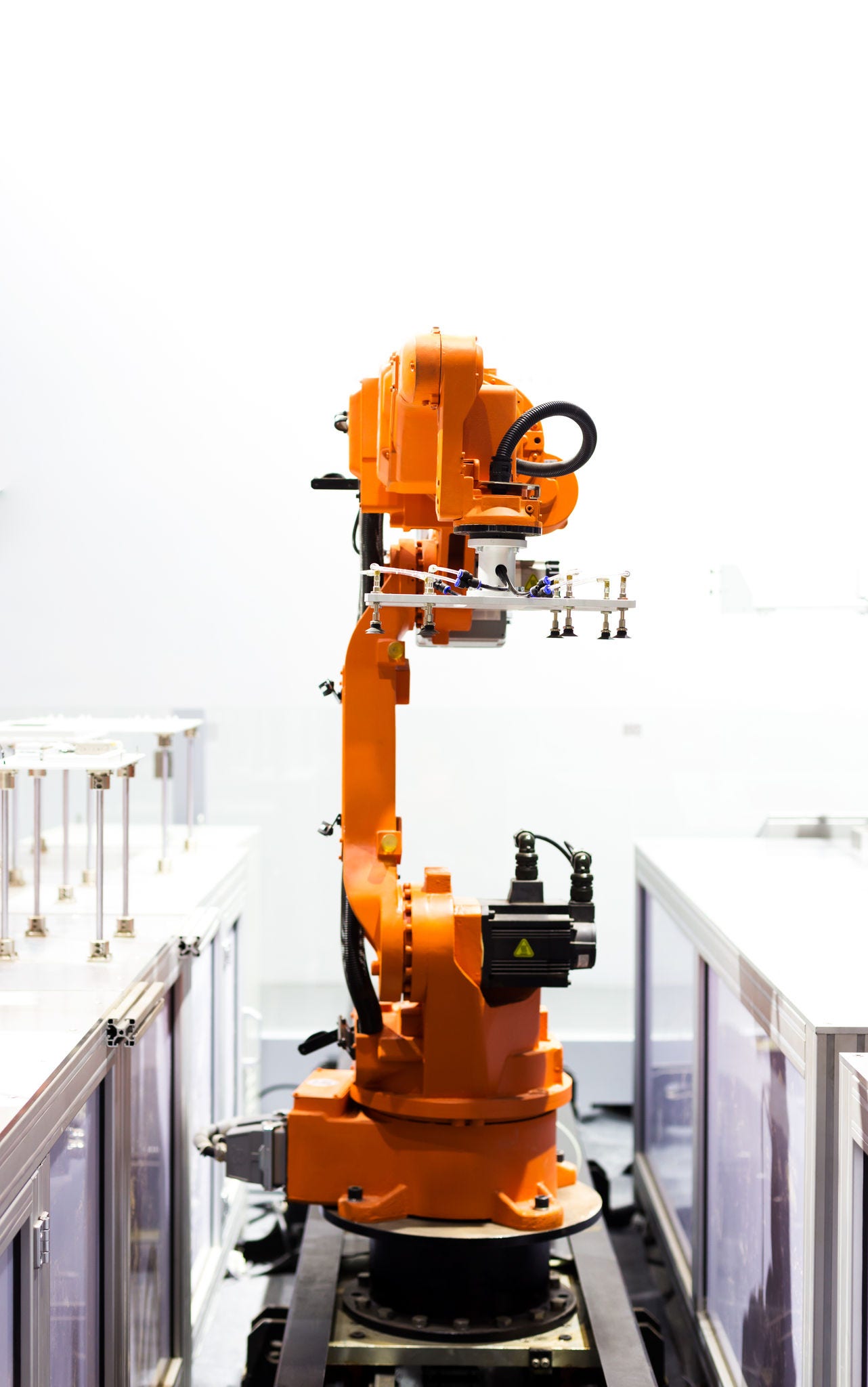
      One argument is that automation of specific tasks leads to reallocation of labour, not replacement. This has been observed with the adoption of robots in industry to automate manual labour.4

      4. Job losses

      26% of Chief economists expect significant job losses within the next decade globally.5 This could be due to automation reducing the number of workers needed for certain jobs.

      5. Job creation

      On the other hand, there is an expectation of job creation in occupations that did not exist prior to AI becoming publicly available.6 This may offset job losses in industries where automation reduces labour demand.

      6. AI can create inequality

      Medium and large firms tend to invest more in AI than smaller firms and subsequently exhibit stronger gains from AI implementation than smaller ones.7


      GDP and GVA

      Malta’s Gross Domestic Product increased by 6.4% in Q4 2025 since Q4 2024 in volume terms.


      These areas have shown the largest increase in output (GVA) since Q4 2024:

      • Wholesale and retail trade - Motor vehicles and motorcycles

        Grew by 19.86% since Q4 2024

      • Agriculture, forestry and fishing

        Grew by 19.13% since Q4 2024

      • Accomodation and food services

        Grew by 11.25% since Q4 2024


      Sources: NSO, KPMG Analysis


      Inflation

      Inflation in Malta (HICP) is 2.3% as at March 2026

      This is close to the EU target of 2%

      Inflation in Malta (HICP) is 2.3% as at March 2026

      War in Iran

      Eurozone inflation expected to rise by 0.3-0.5 percentage points up to 2.3% due to increasing energy prices throughout 2026.

      War in Iran

      Government Interventions

      Lower inflation rates in Malta reflect the impact of government energy support measures in effect since 2021.

      Government Interventions

      Drivers of Inflation in Malta

      The largest contributors to inflation are ‘Food and non-alcoholic beverages’ and ‘Restaurants and accommodation services’.

      Drivers of Inflation in Malta

      Sources: NSO, Oxford Economics


      Interest rates

      In Malta, the effects of the ECB’s rate adjustments remain limited, as local banks fund loans using deposits, and do not rely heavily on borrowing.

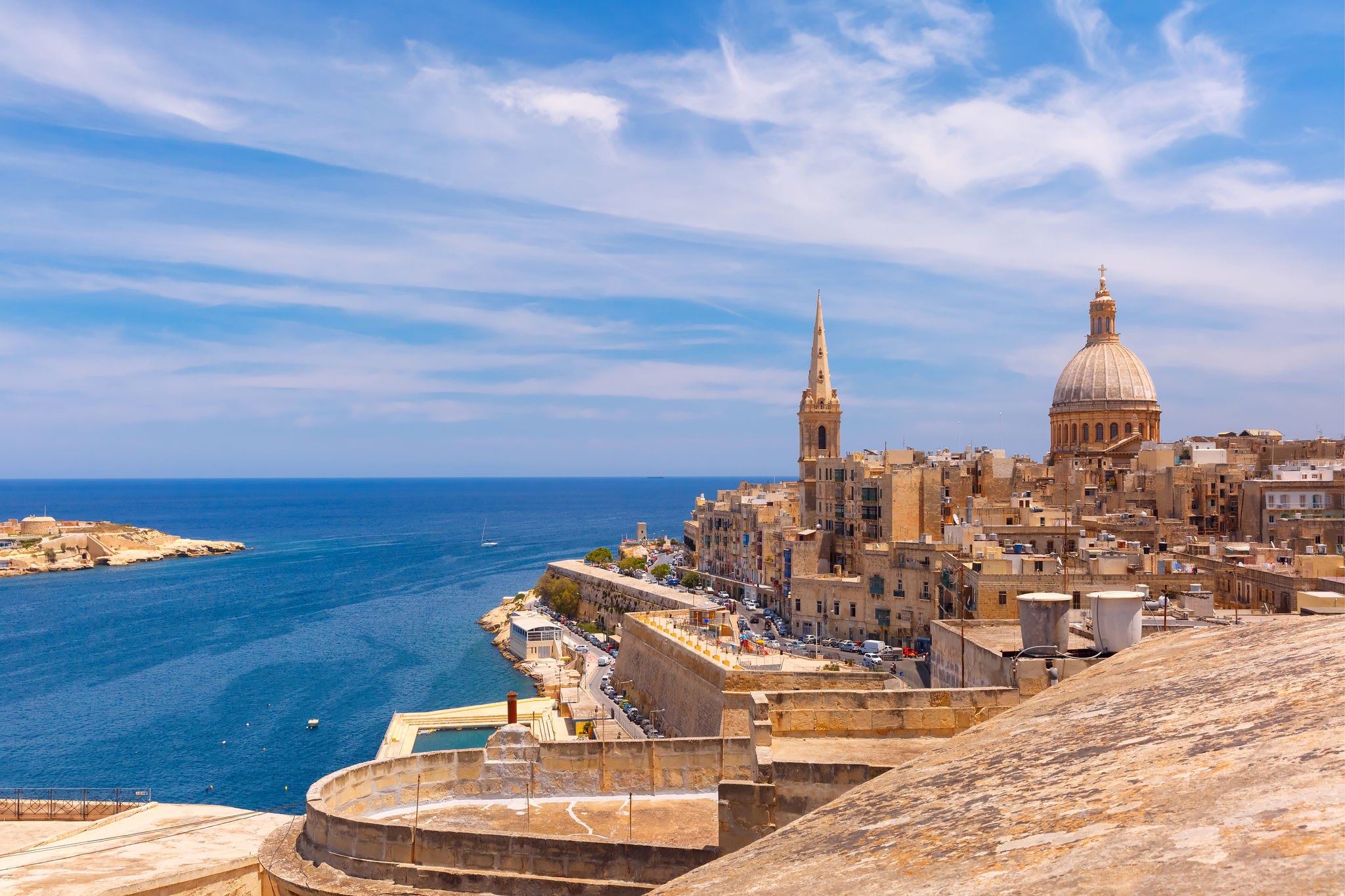
      View from above of the domes of churches and roofs with church of Our Lady of Mount Carmel and St. Paul's Anglican Pro-Cathedral, Valletta, Capital city of Malta
      • ECB: Rates unchanged since June
        • Deposit Facility: 2% (2.25% in April)
        • Main Refinancing Operations: 2.15% (2.40% in April)
        • Marginal Lending Facility: 2.4% (2.65% in April)
      • The United Kingdom
        • Bank rate: 3.75% as of March (3.75% in December)
      • The United States
        • Federal Funds Rate: 3.64% as of March (3.72% in December) 

      Sources: ECB, Bank of England, Fed, KPMG


      Property: Permits issued

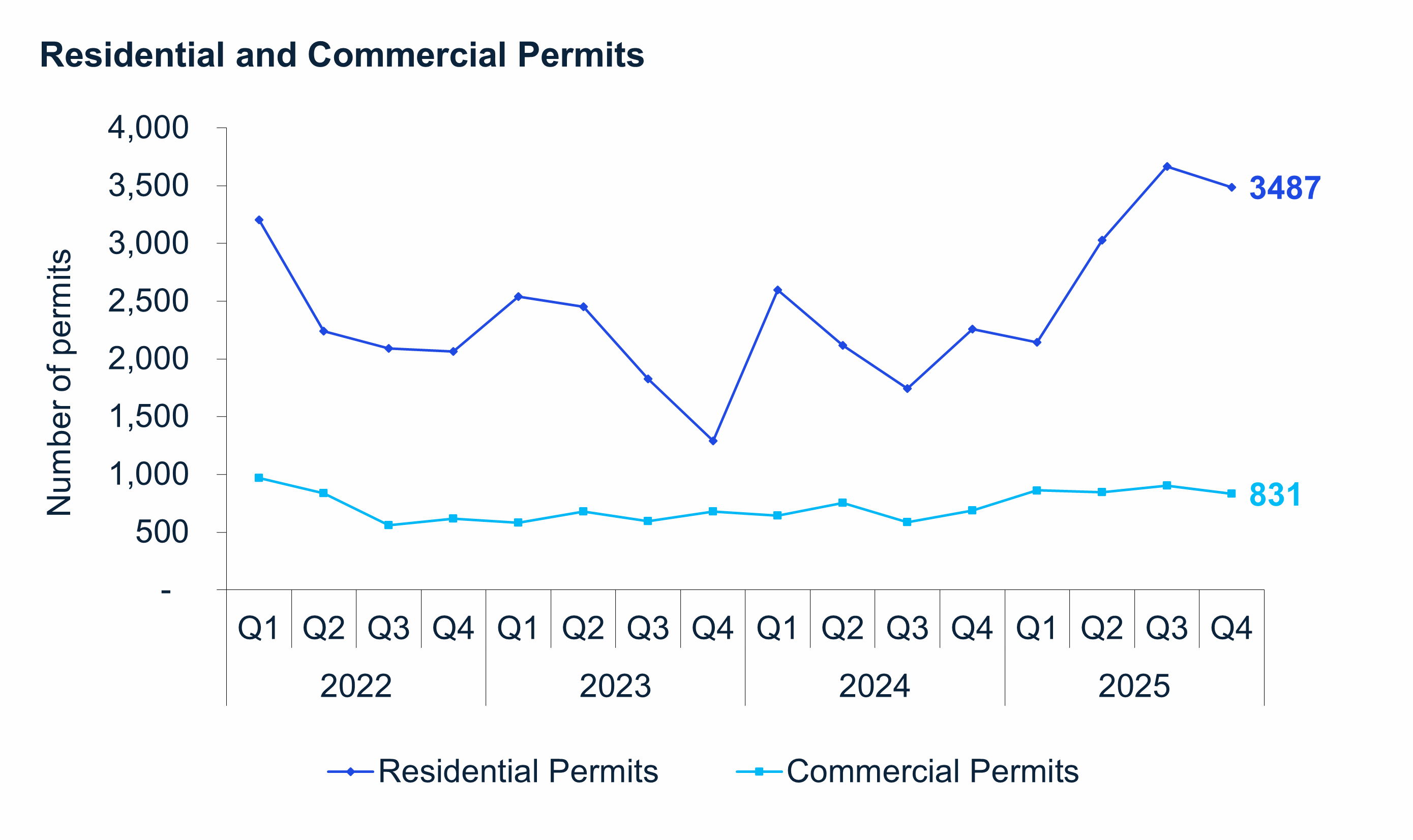
      Commercial and residential permits increased by 21% and 54% respectively in Q4 2025 from Q4 2024. 71.8% of approved dwellings were apartments, followed by penthouses (15.8%) and Maisonettes (8.3%).

      Sources: NSO, Central Bank of Malta, KPMG Analysis


      Property prices

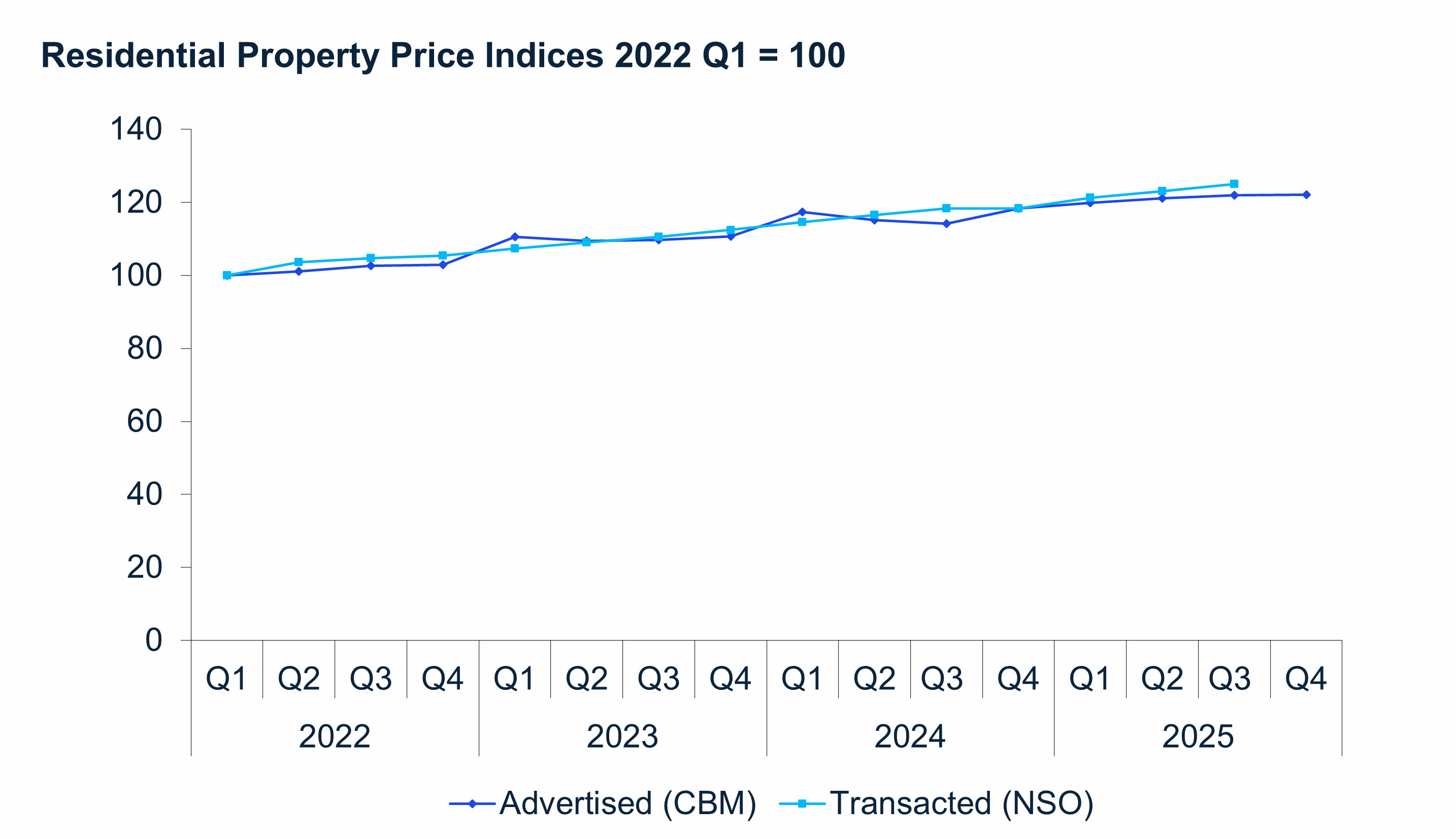
      In 2025 Q4, transacted apartment and maisonette prices increased by 6.2% and 5.3% respectively since 2024 Q4. Overall, transacted prices have risen by 27% and advertised prices have risen by 22% since 2022 Q1.

      Sources: NSO, Central Bank of Malta, KPMG Analysis


      Our services

      Infrastructure, Public Policy and Strategy

      KPMG brings together a team of economists and specialists in strategy and public policy to provide you with tailored policy solutions and business advice.
      Infrastructure, Public Policy and Strategy

      Contact us

      Steve Stivala

      Director, Advisory - Infrastructure, Public Policy and Strategy

      KPMG in Malta

      Orlanda Grech

      Manager, Advisory - Infrastructure, Public Policy and Strategy

      KPMG in Malta