On 23 April 2026, the German Ministry of Finance (BMF) published its final evaluation of the reformed German Investment Tax Act. The report notes that numerous investment funds have filed refund claims for periods from 2018 onward and refers expressly to the test case pending before the Cologne Fiscal Court (case 6 K 1227/24).
The claims draw on EU-law principles set out by the Court of Justice of the European Union (CJEU) in Austria v Germany (C-591/17), commonly known as the “car toll” case. The judgment confirms that a formally neutral measure may still infringe the fundamental freedoms where, in practice, domestic participants are compensated through another element of the national legal or tax system, leaving non-residents to bear most or all of the economic burden. The assessment must therefore consider the combined economic effect of the relevant measures and whether comparable domestic and foreign participants ultimately bear the same effective burden.
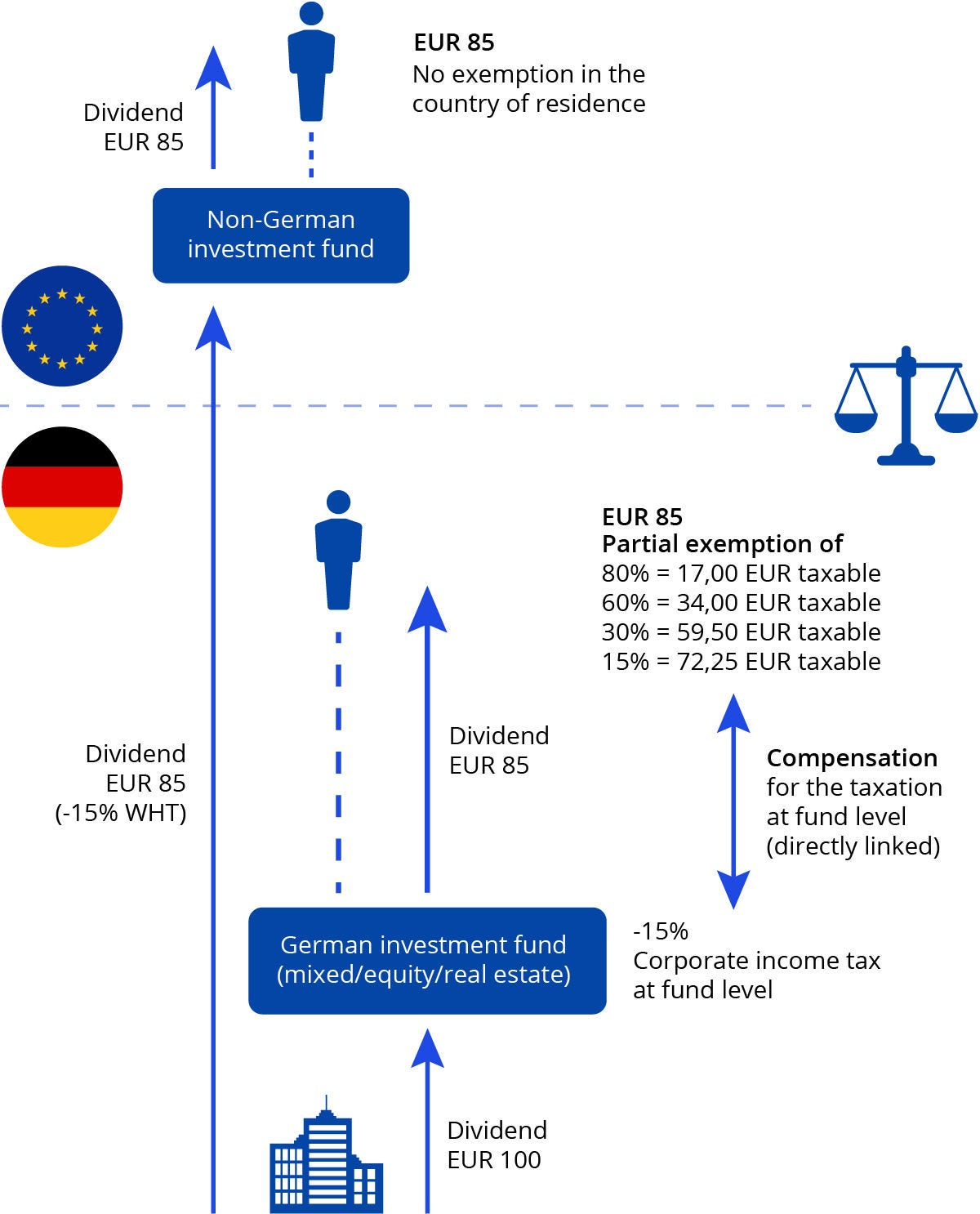
In the German investment fund context, German investors may benefit from partial tax exemptions or other domestic reliefs that reduce the effective tax burden on investment income, while foreign investors generally receive no equivalent relief. Although the rules do not expressly distinguish between resident and non-resident investors, their combined effect may shield domestic investors from part of the tax burden while foreign investors bear it in full. If foreign investors cannot obtain economically equivalent relief, the regime may disadvantage cross-border investments and restrict the free movement of capital under EU law.
The BMF rejects the claimant’s analysis and considers the action unfounded. The Cologne Fiscal Court has not yet decided on the post-2017 issue.