
      In this episode of KPMG RealTalk, our experts, alongside high-profile guests, explore the next stage in the development of artificial intelligence: Physical AI. The focus is on intelligent machines and robots that not only analyse, but also act autonomously, learn and take on increasingly complex tasks in real-world environments. 

      All videos for the episode "Physical AI" (in German)


      Insights from experts – these are our guests:

      rof. Dr. Thomas Bauernhansl

      Prof. Dr. Thomas Bauernhansl
      Geschäftsführender Institutsleiter Fraunhofer IPA

      Dr. Alexander Ebering
      Regional Vorstand Südwest, KPMG
      Benedikt Herles
      Chief Economist, KPMG

      Serjoscha Keck
      Head of Industrial Manufacturing, KPMG
      Dr. Christian Liedtke

      Dr. Christian Liedtke
       Principal Consultant, KUKA

      Alexander Müller

      Alexander Müller
      Head of Innovationsmanagement und Kooperationen Supply Chain, AUDI
      Dr. Jens Neuhüttle

      Dr. Jens Neuhüttler
       Division Director, Leiter Forschungs- und Innovationzentrum KODIS, Fraunhofer IAO
      Julia Ruf
      Expertin für Unternehmenstransformation, KPMG
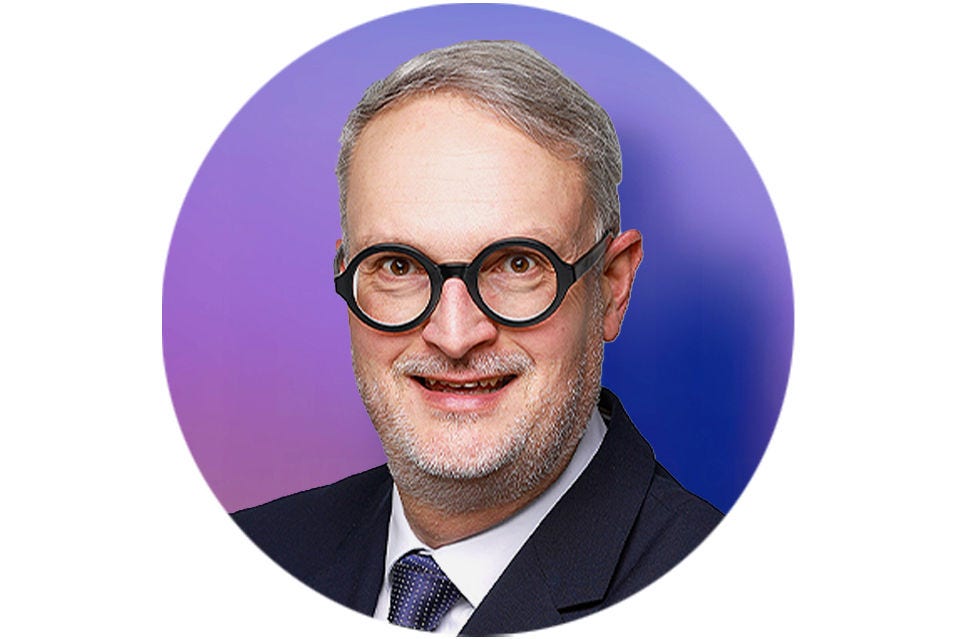
      Christian Stapel

      Christian Stapel
      Experte für KI-gestützte Unternehmenstransformation, KPMG


      Inspiration, insights, ideas – these are the topics covered in this issue: 

      Reality Check: What physical AI makes possible

      Physical AI combines artificial intelligence with robotics to create systems that can perceive their environment, learn from it and act autonomously – yet there remains a significant gap between spectacular demonstrations and productive real-world applications.

      This session will highlight what distinguishes Physical AI from generative AI and traditional automation, which applications are already working today, and where the technological or economic limitations lie. It will also focus on business-related issues surrounding entry into the field of Physical AI, use cases and scaling.

      Dome

      Made in Europe? The global competition for Physical AI

      With Physical AI, the global AI race is shifting to factories, logistics centres and industrial value creation. The US is investing heavily, China is scaling up rapidly, whilst Europe brings a strong industrial base, engineering expertise and in-depth process knowledge to the table.

      This session assesses just how robust Europe’s starting position actually is, what role platforms and ecosystems play, and to what extent new dependencies may arise. It will also focus on how guest speaker David Reger, CEO of Neura Robotics, views the future of a universal Physical AI operating model.

      Bridge

      Man meets machine: How Physical AI is transforming work

      Whether Physical AI creates added value is not decided in the laboratory, but in real-world work and production processes. It is there that the technology interacts with existing systems, established workflows and the practical knowledge of staff.

      Using an industrial real-world laboratory as an example, this session demonstrates how humans and machines can work together in the future and what hurdles need to be overcome. It focuses on concrete experiences from production and research, as well as the organisational prerequisites for robust, cost-effective and widely accepted applications.

      Illuminated buildings

      More Insights on the topic of AI

      Studie

      Physical AI

      Smart automation for businesses: Here’s how we help you efficiently integrate AI, robotics and autonomous systems.
      Robotic arm