

Die internationalen Handelsbeziehungen zwischen den USA und der EU sind erneut angespannt. In den vergangenen Wochen hat die US-Regierung mehrere weitreichende Zollmaßnahmen angekündigt und teilweise umgesetzt, die insbesondere europäische – und damit auch deutsche – Unternehmen potenziell erheblich betreffen.
Handelspolitische Spannungen mit Auswirkungen auf Lieferketten und Investitionen
Jüngste Ankündigungen durch Präsident Donald J. Trump zu möglichen weiteren Zusatzzöllen auf die einst vereinbarte All-Inclusive-Zollobergrenze von 15 Prozent auf EU-Importe bedrohen den erfolgreichen Abschluss des im Sommer 2025 erstmals ausgearbeiteten Handelsabkommens zwischen den USA und der EU.
Diese Zollmaßnahmen und die in diesem Zusammenhang ergriffenen Gegenmaßnahmen anderer Staaten erfordern ein hohes Maß an Aufmerksamkeit und wirken sich nicht nur auf die Höhe der Abgaben in den USA aus, sondern haben auch Auswirkungen auf internationale Lieferketten.
Relevanz der US-amerikanischen Zusatzzölle für deutsche Unternehmen
Für deutsche Unternehmen ist die Thematik nach wie vor von hoher Relevanz. Deutschland gehört weltweit zu den größten Exportnationen – insbesondere in den Bereichen Kraftfahrzeuge, Maschinen, chemische Erzeugnisse und Elektrotechnik. Viele dieser Exporte gehen traditionell in die USA. Aufgrund dieser exportorientierten Wirtschaft und des erheblichen Handelsbilanzüberschusses gegenüber den USA ist Deutschland besonders anfällig für die gegenwärtigen Zollveränderungen.
Die von Präsident Donald J. Trump unterzeichnete Executive Order, die zumindest einen generellen Mindestimportzoll von 10 Prozent auf alle Einfuhren in die USA vorsieht, erhöhte die Unsicherheiten weiter. Zusätzlich sieht die US-amerikanische Administration erhöhte Zollsätze für Länder mit hohen Handelsüberschüssen – wie Deutschland bzw. die EU – vor. Ziel dieser Maßnahmen ist es, bestehende Handelsdefizite zu adressieren, fairere Wettbewerbsbedingungen im US-Markt zu schaffen und die Abhängigkeit von ausländischer Produktion zu reduzieren.
Diese Maßnahmen und deren teilweise und temporäre Aussetzung sowie Wiederinkraftsetzung erzeugten in den vergangenen Monaten große Unsicherheiten für deutsche Unternehmen – sowohl in der Lieferkette als auch bei Investitionen.
Wir fassen den aktuellen Stand zusammen und zeigen Schritte auf, die Unternehmen bei der Risikobewertung und dem Risikomanagement im derzeitigen Umfeld berücksichtigen sollten.


Aktuelle Entwicklungen
- Februar 2026
- August 2025
- Juli 2025
- Juni 2025
- Mai 2025
- April 2025
- März 2025
20.02.2026: USA kündigen Zusatzzölle über die vereinbarten Obergrenzen hinaus an, nachdem der Oberste Gerichtshof der USA die IEEPA-Zölle für unrechtmäßig erklärt hat
Jüngste Ankündigungen von US-Präsident Donald Trump zu weiteren Zusatzzöllen, die über die einst vereinbarte All-Inclusive-Zollobergrenze von 15 Prozent auf EU-Importe hinausgehen, gefährden den erfolgreichen Abschluss des im Sommer 2025 erstmals ausgearbeiteten Handelsabkommens zwischen den USA und der EU.
Erst am 20.02.2026 hatte das oberste US-Gericht einen Teil der vom Präsidenten erlassenen Zölle als unrechtmäßig erklärt. Der Präsident selbst hatte argumentiert, die Zölle seien entscheidend für die wirtschaftliche Sicherheit der USA – dieser Argumentation folgte das Gericht jedoch nicht.
In einer ersten Reaktion kündigte Donald Trump Zusatzzölle in Höhe von 10 Prozent an, wie aus offiziellen Angaben des Weißen Hauses hervorgeht. In der öffentlichen Diskussion fordert der US-Präsident inzwischen einen Aufschlag von 15 Prozent.
Sollten weitere Gespräche zwischen den USA und der EU zu keiner weiteren Einigung führen, ist es denkbar, dass die EU mit einer Strategie der verhältnismäßigen Vergeltung antwortet und bisher ausgesetzte Zölle (ca. 21 Milliarden Euro) reaktiviert sowie verschiedene US-Produkte gezielt mit Zusatzzöllen belegt (ca. 72 Milliarden Euro). Auf diese Weise könnte ein politischer Druck gegenüber den USA aufgebaut werden, ohne die eigene Wirtschaft übermäßig zu belasten.
21.08.2025 - EU und USA veröffentlichen gemeinsame Erklärung zu transatlantischem Handel und Investitionen
Die EU und die USA veröffentlichten am 21.08.2025 eine gemeinsame Erklärung, die weitere Details der bereits getroffenen politischen Einigung vom 27.07.2025 beinhaltet. Die Erklärung bestätigt die bereits vereinbarte Zollobergrenze von 15 % für EU-Erzeugnisse und liefert wichtige Konkretisierungen. Dazu zählt die Verpflichtung der USA, ab dem ersten Tag des Monats, in dem die EU die Verfahren zur Umsetzung der im Abkommen vereinbarten Zollsenkungen einleitet, die All-Inclusive-Zollobergrenze von 15 % auch auf Pkw und Kfz-Teile anzuwenden. Bislang werden weiterhin US-Zölle in Höhe von 27,5 % auf Pkw und Kfz-Teile erhoben.
18.08.2025 – Erweiterung von Stahl- und Aluminiumzöllen auf weitere Warenkategorien
Das Bureau of Industry and Security (BIS) kündigte in einer Mitteilung vom 18.08.2025 an, dass die Liste der Produkte, die als Stahl- oder Aluminiumderivate gelten, um 407 Codes aus dem Harmonized Tariff Schedule of the United States (HTSUS) erweitert wird. Für diese Produkte werden die Stahl- und Aluminiumzölle gemäß Abschnitt 232 des Trade Expansion Act auf den jeweiligen Stahl- oder Aluminiumanteil angewendet. Anteile, die weder aus Stahl noch aus Aluminium bestehen, unterliegen weiterhin den reziproken und anderen relevanten Zöllen. Zu den betroffenen Warengruppen zählen u.a Motorräder, Eisenbahnwaggons, Kranfahrzeuge und Pumpen. Die vollständige Liste der betroffenen HTSUS-Codes ist dem Annex I der Mitteilung zu entnehmen.
Die neuen Zölle der in Annex I aufgeführten Stahl- und Aluminiumderivate gelten für Waren, die ab dem 18.08.2025 in den Handel gebracht oder aus dem Lager entnommen werden.
11.08.2025 – USA und China verlängern Zollaussetzung
US-Präsident Trump unterzeichnete am 11.08.2025 eine Executive Order, welche die Aussetzung der erhöhten Zölle auf chinesische Waren um weitere 90 Tage verlängert. Dadurch wurde ein Inkrafttreten der Zollaufschläge ab dem 12.08. 2025 verhindert, nachdem an diesem Datum die Aussetzungsfrist der Executive Order vom 12.05.2025 regulär geendet hätte (siehe Ticker Meldung vom 12.05.2025). Daraufhin kündigte das Handelsministerium der Volksrepublik China an, ihre Aussetzungsfrist ebenfalls um 90 Tage zu verlängern. Sofern bis zum 10.11.2025 keine Lösung im Zollstreit der beiden Staaten gefunden wird, treten Zölle in Höhe von bis zu 145 % in Kraft.
07.08.2025 – Inkrafttreten der geänderten reziproken Zölle
Die angekündigten Anpassungen der reziproken Zollsätze gemäß der Executive Order vom 31.07.2025 (siehe Ticker Meldung vom 31.07.2025) treten in Kraft. Neben der EU sind zusätzlich knapp 70 Staaten von den veränderten Zollsätzen betroffen.
31.07.2025 – US-Regierung veröffentlicht Liste mit angepassten reziproken Zollsätzen für einige Handelspartner
US-Präsident Trump kündigt in einer Executive Order vom 31.07.2025 an, die bisher geltenden länderspezifischen reziproken Zollsätze anzupassen. Die angepassten länderspezifischen Zollsätze können dem Annex I der Executive Order entnommen werden. Für alle Länder, die nicht in Annex I genannt werden, gilt weiterhin der Basis-Zollsatz von 10 %.
Die Änderungen der reziproken Zusatzzölle sollen am 07.08. 2025 in Kraft treten.
30.07.2025 – Aussetzung der De-minimis Regelung und Ankündigung von Zusatzzöllen auf Kupfer in Höhe von 50 %
Im Rahmen einer Executive Order setzt US-Präsident Trump die De-minimis Regel aus und streicht somit die Zollausnahme für kommerzielle Sendungen mit geringem Wert (weniger als 800 US-Dollar) weltweit. Bisher galt die Aussetzung der Ausnahmeregelung nur für Kleinsendungen aus China. Die Aussetzung der De-minimis Regelung tritt ab dem 29.08.2025 in Kraft.
Während der ersten sechs Monate ab dem Inkrafttreten dieser Verordnung können Unternehmen entscheiden, ob sie eine Pauschalgebühr pro Paket zahlen oder den Zoll in Höhe des für das Ursprungsland der Ware geltenden IEEPA-Zollsatzes anwenden. Anschließend sollen alle Sendungen mit dem landesspezifisch geltenden IEEPA-Zollsatz belegt werden.
Zusätzlich gab das Weiße Haus per Proklamation bekannt, dass ab dem 01.08.2025 Zusatzzölle in Höhe von 50 % auf Einfuhren von halbfertigen Kupferprodukten und intensiven Kupferderivaten in die USA in Kraft treten sollen. Die Kupferzölle gemäß Abschnitt 232 des Trade Expansion Act gelten ausschließlich für den Kupferanteil, der unter diese Proklamation fallenden Waren. Der Nichtkupferanteil unterliegt dagegen den reziproken Zollsätzen sowie allen darüberhinausgehend geltenden Zollregelungen (einschließlich IEEPA-Zusatzzölle gegenüber Kanada, Mexiko und China). Raffinierte Vormaterialien wie Kupferkathoden, Kupfererze und ‑konzentrate sind vom neuen Zusatzzoll ausgenommen.
27.07.2025 – Politische Einigung über Abkommen zwischen der EU und USA – Gemeinsame politische Willenserklärung fehlt
Am 27.07.2025 einigte sich die EU und USA auf ein Handelsabkommen, das für die Europäische Union einen Maximalbasiszollsatz in Höhe von 15 % für EU-Ausfuhren vorsieht. Dieser soll ab 01.08. 2025 in Kraft treten und eine Obergrenze darstellen, die auch den US-Meistbegünstigungszoll umfasst. Ausnahmen gelten für bestimmte strategische Produkte u.a. aus den Bereichen Chemikalien, Luftfahrt und natürliche Ressourcen. Für Waren aus diesen Bereichen sollen die Zölle auf das Niveau von Januar zurückgehen. Zusätzlich kündigte die EU in einem Schreiben vom 29.07.2025 an, dass ein niedriger Zollsatz auf Stahl-, Aluminium- und Kupferwaren geplant ist, verglichen mit dem derzeit geltenden Zollsatz in Höhe von 50 %.
Wichtig: Die EU stuft die politische Einigung als nicht rechtsverbindlich ein. Eine gemeinsame politische Willenserklärung liegt zu diesem Zeitpunkt nicht vor.
07.07.2025 – US-Regierung verlängert Frist für reziproke Zölle bis zum 01.08.2025
Das Weiße Haus gab im Rahmen einer Executive Order am 07.07.2025 bekannt, dass die 90-tägige Aussetzung der reziproken US-Zölle, die ursprünglich am 09.07.2025 auslaufen sollte, auf den 01.08.2025 verlängert wird. Zudem wurden Briefe an 14 Länder versendet, in denen die US-Regierung ihre neuen gegenseitigen Zollsätze beziffert, die am 01. August in Kraft treten sollen.
16.06.2025 – Das Weiße Haus veröffentlicht eine Executive Order zur Umsetzung des Handelsabkommens mit UK
Das Weiße Haus hat am 16.06.2025 eine neue Durchführungsverordnung veröffentlicht, die Anweisungen zur Umsetzung des Handelsabkommens zwischen den USA und dem Vereinigten Königreich gibt, welches am 08.05.2025 angekündigt wurde (siehe Ticker Meldung vom 08.05.2025). Konkret werden Anweisungen für die Bereiche Automobile, Luft- und Raumfahrt sowie Stahl und Aluminium beschreiben. Für Kraftfahrzeuge sieht die Verordnung vor, dass die ersten 100.000 Fahrzeuge, die von britischen Automobilherstellern pro Jahr in die USA eingeführt werden, einem Gesamtzollsatz von 10 % unterliegen und alle weiteren importierten Fahrzeuge einem Zollsatz von 25 %nach Abschnitt 232 des Trade Expansion Act unterliegen. Darüber hinaus gilt für Kfz-Teile, die aus dem Vereinigten Königreich stammen und zur Verwendung in britischen Fahrzeugen bestimmt sind, ein Gesamtzollsatz von 10 %. Für die Luft- und Raumfahrt sieht die Verordnung vor, dass bestimmte Produkte aus dem Vereinigten Königreich nicht mehr mit Zöllen belegt werden. Zur Stahl- und Aluminiumerzeugnisse und deren Derivate liegen noch keine konkreten Anweisungen vor. Für Produkte, die nicht unter diese Kontingente fallen oder bestimmte Anforderungen nicht erfüllen, gelten weiterhin die bestehenden Zölle nach Abschnitt 232.
12.06.2025 – Abschnitt 232 des Trade Expansion Act wird um weitere Produkte erweitert
Am 12. Juni 2025 hat das Department of Commerce bekanntgegeben, dass die Liste der Produkte, die unter den Abschnitt 232 des Trade Expansion Act fallen, erweitert wird. Ab dem 23. Juni 2025 sollen auch Haushaltsgeräte wie Kühlschränke, Waschmaschinen und Kühlschränke, die nach den erweiterten Stahlzölle der US-Regierung als “steel derivative products“ gelten, mit 50 % Strafzöllen belegt werden.
04.06.2025 – US-Regierung hebt Einfuhrzölle auf Stahl und Aluminium auf 50 % an
Am 3. Juni 2025 verkündete das Weiße Haus, dass Präsident Trump eine Proklamation unterzeichnet hat, die die Einfuhrzölle auf Stahl- und Aluminiumprodukte auf 50 % erhöht. Diese Maßnahme, basierend auf Abschnitt 232 des Trade Expansion Act von 1962, trat am 4. Juni 2025 in Kraft.
Die neuen Zölle betreffen ausschließlich den Stahl- und Aluminiumanteil der importierten Waren, während der Nicht-Stahl- und Nicht-Aluminiumanteil anderen Zöllen unterliegt. Die Proklamation enthält zudem Änderungen am Harmonized Tariff Schedule of the United States (HTSUS) und schreibt die strikte Einhaltung der Meldepflichten für den Gehalt an Stahl und Aluminium vor.
Für Importe aus dem Vereinigten Königreich bleiben die Zölle vorerst bei 25 %, bis mögliche Anpassungen im Rahmen des US-UK-Handelsabkommens am 9. Juli 2025 erfolgen.
31.05.2025 – United States Trade Representative (USTR) verlängert Ausnahmen für bestimmte Produkte, die von Zöllen nach Abschnitt 301 für China betroffen sind
Die USTR hat entschieden, dass die Ausnahmeregelungen im Rahmen des Abschnitts 301 - Untersuchung von Chinas Handlungen, Politiken und Praktiken in Bezug auf Technologietransfer, geistiges Eigentum und Innovation - verlängert werden sollen. Die Ausnahmen sollten ursprünglich am 31. Mai 2025 auslaufen. Konkret kam die USTR zu dem Entschluss, dass eine dreimonatige Verlängerung der 164 im Mai 2024 verlängerten Ausnahmen und der 14 im September 2024 gewährten Ausnahmen angemessen ist. Die Verlängerungen gelten für Waren, die vom 1. Juni 2025 bis zum 31. August 2025 in den steuerrechtlich freien Verkehr überführt oder aus dem steuerrechtlich freien Verkehr entnommen werden.
29.05.2025 – Court of International Trade (CIT) erklärt Zölle im Rahmen des International Emergency Economic Powers Act (IEEPA) für rechtswidrig; Berufungsgericht setzt Zölle vorübergehend wieder ein, während das Verfahren weitergeführt wird
Am 29. Mai 2025 hat der US Court of Appeals for the Federal Circuit eine unmittelbar zuvor getroffene Entscheidung des US Court of International Trade (CIT) vorübergehend ausgesetzt. Diese Entscheidung hatte festgestellt, dass die von der Trump-Administration weltweit verhängten Zölle unter Anwendung des International Emergency Economic Powers Act (IEEPA) nicht die rechtlichen Anforderungen einer "ungewöhnlichen und außergewöhnlichen Bedrohung" erfüllen. Zudem zielten die IEEPA-Zölle gegen Kanada, Mexiko und China nicht auf die zugrunde liegenden Notfälle ab. Der CIT hatte auch betont, dass die primäre Befugnis zur Erhebung von Zöllen beim Kongress liegt. Durch die nun erfolgte Aussetzung der CIT-Entscheidung durch das Berufungsgericht werden die IEEPA-Zölle vorübergehend wieder in Kraft gesetzt und bleiben bis zum Abschluss des Berufungsverfahrens bestehen.
20.05.2025 – U.S. Customs and Border Protection führt zolltarifliche Änderungen ein, um gegen “Tariff Stacking“ (Addition verschiedener Zölle) vorzugehen
Die U.S. Customs and Border Protection hat eine Bekanntmachung über die Umsetzung von zolltariflichen Änderungen gemäß der “Executive Order 14289“ veröffentlicht, welche die Abschaffung von sich überschneidenden und in der Vergangenheit zu addierenden Zöllen auf bestimmte importierte Artikel betrifft.
Mit Wirkung vom 16. Mai 2025 wird der “Harmonized Tariff Schedule of the United States“ (HTSUS) für die betroffenen Artikel geändert. Die Änderungen sehen eine Priorisierung der Zollmaßnahmen vor, um eine Überschneidung zu verhindern.
In der Bekanntmachung werden auch die Bedingungen festgelegt, unter denen Waren, die im Rahmen des “United States-Mexico-Canada Agreement“ (USMCA) präferenziell behandelt werden, von bestimmten zusätzlichen Zöllen befreit werden. Zudem können Importeure eine Rückerstattung von gezahlten Zöllen beantragen, die nach der neuen Verordnung nicht erforderlich sind.
12.05.2025 - USA und China kündigen Handelsabkommen an
Die Regierungen der Vereinigten Staaten und Chinas gaben heute eine gemeinsame Erklärung nach der Aushandlung eines Handelsabkommens ab, das darauf abzielt, Zölle zu reduzieren und Vergeltungsmaßnahmen zu beseitigen. Laut einem Informationsblatt des Weißen Hauses sieht das Abkommen vor, dass beide Länder bis zum 14. Mai 2025 ihre im April 2025 angekündigten 34 % Zölle für 90 Tage auszusetzen, während in dieser Zeit ein 10 % Zoll beibehalten wird, und zusätzliche Zölle sowie andere Vergeltungsmaßnahmen, die später im April 2025 verhängt wurden, entfernen. Nach Inkrafttreten dieser Änderungen haben sich beide Länder darauf geeinigt, einen Mechanismus zu schaffen, um wichtige Gespräche über Handel und Wirtschaft fortzusetzen.
08.05.2025 - Das Weiße Haus verkündete ein Handelsabkommen mit UK über Zölle und wirtschaftliche Zusammenarbeit
Das Weiße Haus gab bekannt, dass ein Handelsabkommen zwischen den USA und dem Vereinigten Königreich erreicht wurde, bei dem die ersten 100.000 jährlich importierten Fahrzeuge britischer Hersteller einem Zollsatz von 10 % unterliegen, während weitere Fahrzeuge einem 25 % Zoll unterliegen; zudem werden alternative Regelungen zu den Section 232-Zöllen auf Stahl und Aluminium verhandelt. Im Rahmen des "Economic Prosperity Deal" (EPD) sollen Handelshemmnisse abgebaut, der wirtschaftliche Austausch gestärkt und Zölle, insbesondere auf Rindfleisch und Arzneimittel, reduziert werden, wobei der Fokus auch auf digitalem Handel, wirtschaftlicher Sicherheit und geistigen Eigentumsrechten liegt. Die Vereinbarung tritt sofort in Kraft, ist jedoch nicht rechtsverbindlich und soll im Laufe der Zeit erweitert werden.
29.04.2025 – Das Weiße Haus verkündet eine Zollanpassung in Bezug auf Automobilkomponenten
Am 29. April 2025 veröffentlichte das Weiße Haus eine Proklamation von Präsident Trump, die die Anpassung der Zölle auf Importe von Autoteilen in die Vereinigten Staaten betrifft. Laut einem Informationsblatt des Weißen Hauses bietet die Proklamation Ausgleichszahlungen für einen Teil der Zölle auf in den USA montierte Fahrzeuge an.
Hersteller erhalten einen Zollausgleich in folgender Höhe:
- Vom 3. April 2025 bis zum 30. April 2026: Ein Ausgleich in Höhe von 3,75 % der unverbindlichen Preisempfehlung des Herstellers (MSRP) für die in den USA produzierten Fahrzeuge. Dies entspricht dem gesamten Zollbetrag, der fällig wäre, wenn ein Zoll von 25 % auf Teile angewendet wird, die 15 % des MSRP eines Fahrzeugs ausmachen.
- Vom 1. Mai 2026 bis zum 30. April 2027: Ein Ausgleich in Höhe von 2,5 % des MSRP der US-Produktion, was dem gesamten Zollbetrag entspricht, der fällig wäre, wenn ein Zoll von 25 % auf Teile angewendet wird, die 10 % des MSRP eines Fahrzeugs ausmachen.
Die Proklamation sieht vor, dass der Handelsminister innerhalb von 30 Tagen ein Verfahren einrichtet, durch das Hersteller einen Importanpassungsausgleich beantragen können.
24.04.2025 - Die USA hebt die De-minimis-Ausnahme für Niedrigwertimporte aus China und Hongkong auf
U.S. Customs and Border Protection (CBP) hat neue Zollregelungen für Importe aus China und Hongkong bekanntgegeben. Ab dem 2. Mai 2025 wird die de minimis Regelung für Produkte aus China mit einem Wert von bis zu 800 US-Dollar ausgesetzt. Neue Zölle beinhalten entweder einen 120 % Ad-valorem-Zoll oder einen spezifischen Zoll von 100 US-Dollar pro Postsendung, der ab dem 1. Juni 2025 auf 200 US-Dollar erhöht wird. Betroffen sind alle Waren, die über das internationale Post Netz versendet werden. Diese Maßnahmen folgen auf den nationalen Notstand, der am 20. Januar 2025 aufgrund der Bedrohung durch illegale Drogen und Einwanderung ausgerufen wurde. Der Notstand wurde erweitert, um Chinas Versäumnisse bei der Kontrolle von Lieferanten chemischer Vorprodukte zu berücksichtigen. Unternehmen sollten sich auf erhöhte Importkosten einstellen und ihre Logistikstrategien entsprechend anpassen.
14.04.2025 - EU setzt Gegenmaßnahmen gegen US-Zölle aus
Die Europäische Union (EU) hat, anknüpfend an die Aussetzung der reziproken US-Zölle gegen die EU bzw. der Reduzierung dieser Zölle auf 10 % für die Dauer von 90 Tagen beschlossen, ihre Gegenmaßnahmen gegen die US-Handelszölle ebenfalls für 90 Tage auszusetzen, um Zeit für Verhandlungen zu gewinnen.
12.04.2025 – Aussetzung der Zusatzzölle für bestimmte elektronische Geräte mit Ursprung China
Aussetzung der Zusatzzölle für bestimmte elektronische Geräte mit Ursprung China
10.04.2025 – Reziproke Zölle weitestgehend auf Minimum-Zollsatz von 10 % reduziert
Reziproke Zölle weitestgehend auf Minimum-Zollsatz von 10 % reduziert
09.04.2025 – Höhere Zölle für Länder mit Handelsüberschüssen
Erhöhung des Zollsatzes für Handelsüberschüsse: Für Länder, die einen besonders hohen Handelsbilanzüberschuss gegenüber den Vereinigten Staaten aufweisen, wird ab dem 9. April ein individueller, erhöhter Zollsatz eingeführt. Die spezifische Liste der betroffenen Länder sowie den entsprechenden Zöllen sind in Annex I der Executive Order festgelegt. Der Zusatzzoll für alle Exporte aus der EU in die USA beträgt demnach 20 Prozent.
US-Content Rule und Ausnahmen: Die neue Executive Order sieht Ausnahmen für Waren vor, die vor dem 5. April 2025 verschifft wurden. Zudem wird eine "US-Content Rule" eingeführt, die besagt, dass Zölle nur auf den nicht-US-Anteil eines Produkts erhoben werden, sofern mindestens 20 Prozent des Wertes des Produkts aus den USA stammen. Diese Regelung soll sicherstellen, dass multinationale Lieferketten, die einen substanziellen Anteil an US-Komponenten aufweisen, bevorzugt behandelt werden.
Die oben genannten Maßnahmen sind getrennt von den zuvor durch die USA gegen Kanada, Mexiko und China verhängten Zöllen zu sehen, die dazu führten, dass diese Länder ihrerseits Gegenmaßnahmen ankündigten.
02.04.2025 – Neue Zölle und Erweiterung der US-Maßnahmen
Einführung eines Mindestzollsatz: Eine neue Executive Order der USA vom 2. April 2025 erweitert die vorherigen Maßnahmen erheblich, indem ein allgemeiner Mindestzoll von 10 Prozent auf alle Importe eingeführt wird, unabhängig von der Produktkategorie und dem Versandland. Dies stellt eine signifikante Verschärfung der bisherigen Zölle dar, da eine breitere Anzahl von Produkten betroffen ist.
26.03.2025 – Zölle auf Kraftwagen und Kraftwagenteile
Veröffentlichung einer Executive Order: Präsident Trump veröffentlicht am 26. März 2025 eine neue Executive Order, in welcher ein 25-Prozent-Zollsatz auf US-Einfuhren auf Kraftwagen und Kraftwagenteile verkündet wird.
- Vom 3. April 2025 soll der 25-Prozent-Zollsatz auf in die USA eingeführte Fahrzeuge gelten und
- voraussichtlich zum 3. Mai 2025 auf Fahrzeugbauteile (wie Motoren, Antriebsstränge, elektrische Komponenten) ausgeweitet werden.
In Bezug auf die zuvor verkündeten Zölle von 25 Prozent auf Kraftwagen und Kraftwagenteile sowie Stahl- und Aluminiumprodukte werden durch die jüngste Verordnung keine Änderungen an den Zöllen vorgenommen. Jedoch werden spezifische Ausnahmen und Anpassungen eingeführt, die darauf abzielen, die Auswirkungen auf bestimmte Produktkategorien zu mildern. Insbesondere die Einführung der „US-Content Rule“ bietet Unternehmen, deren Produkte einen signifikanten Anteil an US-Komponenten enthalten, die Möglichkeit, die Zölle nur auf den nicht-US-Ursprungsanteil anzuwenden.
Zudem werden neben diesen Stahl- und Aluminiumprodukten, die bereits den Section-232-Zöllen unterliegen, auch Kraftwagen und -teile, die seit dem 3. April einem Zollsatz von 25 Prozent unterliegen, von den zusätzlichen Zöllen ausgenommen. Weitere Ausnahmen umfassen Arzneimittel, Halbleiter, Energieprodukte und kritische Mineralien sowie humanitärer Hilfsgüter. Die detaillierte Auflistung dieser Ausnahmen ist in Annex II der o.g. Executive Order enthalten.
12.03.2025 – Zusätzliche Zölle auf Stahl und Aluminium
Verhängung von Zöllen: Am 12. März 2025 verhängt die USA zusätzliche Zölle auf die Einfuhr von Stahl und Aluminium aus allen Ländern in die USA, einschließlich Erzeugnisse, die Stahl oder Aluminium enthalten können. Konkret führen die Maßnahmen zur:
- Wiedereinführung eines Zollsatzes von 25 Prozent auf Stahlprodukte und daraus hergestellte Erzeugnisse (z. B. Stahlrohre, Draht und Zinnfolie) sowie zur Beendigung aller bisherigen Ländervereinbarungen.
- Anhebung des Zollsatzes von 10 Prozent auf 25 Prozent für Aluminium und Erhöhung des Zolls für weitere Stahl- und Aluminiumerzeugnisse.
Die Zölle betreffen eine Vielzahl von Produkten, darunter Kochgeschirr, Fensterrahmen, Maschinen, bestimmte Elektrogeräte und Möbel. Diese Maßnahmen wurden erstmals am 12. Februar 2025 von den USA angekündigt und werden sich auf EU-Ausfuhren in die USA im Wert von etwa 26 Milliarden Euro auswirken (5 Prozent der gesamten EU-Warenausfuhren in die USA).
EU-Reaktion: Die EU reagiert darauf mit der Ankündigung, dass die ursprünglich im Jahr 2018 und 2020 gegen die USA eingeführten, dann jedoch ausgesetzten Gegenmaßnahmen mit Wirkung zum 1. April 2025 wieder in Kraft gesetzt werden. Das Datum der Wiedereinsetzung verschiebt die EU jedoch auf Mitte April. Diese Maßnahmen wurden als Reaktion auf die in Donald Trumps erster Amtszeit eingeführten Stahl- und Aluminiumzölle ergriffen, dann jedoch ausgesetzt, als die USA zustimmten, ihre Maßnahmen gegenüber EU-Exporteuren im Rahmen einer bestimmten Quote auszusetzen.
Die EU-Gegenmaßnahmen führen dazu, dass
- die EU Zusatzzölle auf eine Reihe von US-Importe erhebt, darunter Harley-Davidson-Motorräder, Bourbon, Orangensaft, Jeans, Stahl und Aluminium.
- eine zweiwöchige Konsultation eingeleitet wird, um weitere US-Produkte zu ermitteln, die mit neuen EU-Zöllen belegt werden sollen. Es wird erwartet, dass diese neuen Zölle bis Mitte April eingeführt werden.
Zu den vorgeschlagenen betroffenen Produkten gehören eine Kombination aus Industrie- und Agrarprodukten (Stahl- und Aluminiumprodukte, Textilien, Lederwaren, Haushaltsgeräte, Werkzeuge, Kunststoffe, Holzprodukte, Geflügel, Rindfleisch, bestimmte Meeresfrüchte, Nüsse, Eier, Milchprodukte, Zucker und Gemüse).
Demovideo: KPMG Tariff Simulator
Erstellen Sie auf zolldatenbasierten Echtdaten Prognosen und ermitteln Sie die finanziellen Auswirkungen neuer oder geänderter Zolltarife.
Internationale Handelspolitik im Fokus: Zölle, Konflikte und Unternehmensstrategien
Allgemeine Zollsätze in der EU und den USA
Der gewogene durchschnittliche Zollsatz in der EU und den USA beträgt etwa 1 Prozent. Während die meisten Waren mit einem Zollsatz von 0 Prozent belegt sind, gibt es in bestimmten Kategorien erhebliche Zölle:
| Produktkategorie | EU-Zollsatz | USA-Zollsatz |
| Kraftwagen | 10 % | 2,5 % |
| Milchprodukte | 30 % | 17 % |
| Erdölprodukte | 2,5 % | 6,5 % |
Es ist wichtig zu beachten, dass es sich hierbei nur um übergeordnete Beispiele handelt und die genaue Spezifikation eines Produkts erforderlich ist, um den anwendbaren Zollsatz zu ermitteln. Die EU und die USA haben mit vielen Ländern weltweit Freihandelsabkommen geschlossen (z. B. die EU mit dem Vereinigten Königreich, Kanada, Japan und Südkorea; die USA mit Mexiko und Kanada). Allerdings besteht kein solches Abkommen zwischen der EU und den USA.
Daher können Importeure in die EU keine Präferenzzölle (typischerweise 0 Prozent) auf US-Produkte beanspruchen, ebenso wenig wie Importeure in die USA Präferenzzölle auf EU-Produkte geltend machen können.
Zusatzzölle: Nicht alle Waren betroffen
Zusatzzölle gelten nicht automatisch für alle zwischen der EU und den USA gehandelten Waren. Entscheidend ist der Ursprung der Ware – dieser bestimmt, ob ein Zusatzzoll erhoben wird.
Die USA sehen sowohl sektorspezifische Zusatzzölle als auch die sogenannten reziproken Zölle vor, welche jeweils an das Ursprungsland der betroffenen Waren anknüpfen.
Die Ursprungsbestimmung richtet sich danach, wo eine Ware zuletzt wesentlich be- oder verarbeitet wurde. Sie ist oft komplex und sollte sorgfältig geprüft werden.
Auswirkungen auf Deutschland
Der Warenhandel der EU mit den USA machte im Jahr 2024 17 Prozent (865,0 Milliarden Euro) des gesamten EU-Außenhandelsumsatzes (Importe und Exporte) aus.
Davon entfielen
- 161,4 Milliarden Euro auf Exporte aus Deutschland und
- 91,5 Milliarden Euro auf Importe nach Deutschland.
Aufgrund dieses hohen Handelsüberschuss (69,9 Milliarden Euro) bei Waren steht unter anderem Deutschland im Fokus der Regierung von Präsident Trump. Da Deutschlands Exportwirtschaft hauptsächlich von den Produkten Kraftwagen und Kraftwagenteile, Maschinen und chemische Erzeugnisse getragen wird, sind insbesondere - aber nicht ausschließlich - diese Sektoren von möglichen US-Zöllen und nichttarifären Maßnahmen betroffen.
Allerdings betrachtet die US-Regierung die Mehrwertsteuer (Umsatzsteuer - USt) als eine Art Zoll. Dies könnte dazu führen, dass selbst Waren, die bei der Einfuhr in die EU wenig oder gar nicht verzollt werden (z. B. Pharmazeutika und Elektronik), beim Export in die USA mit hohen Zöllen belegt werden könnten.
Zudem führen die Gegenmaßnahmen der EU dazu, dass viele deutsche Unternehmen mit höheren Kosten rechnen müssen. Angesichts der umfassenderen US-Maßnahmen, insbesondere gegen China, Mexiko und Kanada, sowie des Risikos einer weiteren Eskalation des Handelsstreits in naher Zukunft, ist es für Unternehmen entscheidend, die Auswirkungen der Maßnahmen genau zu verstehen und die Entwicklungen aufmerksam zu verfolgen.
Jüngste Ankündigungen durch Präsident Donald J. Trump zu weiteren Zusatzzöllen verursachen Unsicherheit hinsichtlich des geplanten gemeinsamen Handelsabkommens. Die EU übt Kritik an den Drohungen der USA zu weiteren Zusatzzöllen und betont, dass diese nicht geeignet sind, einen für beide Seiten fairen Handel zu gewährleisten. Dies wurde jedoch als Ziel eines gemeinsamen Handelsabkommens fest vereinbart: Zölle dürften nicht über die vereinbarte Obergrenze hinaus angehoben werden. Die EU selbst hat nun erst einmal die Aufgabe, die aktuelle Lage zu sondieren und die Auswirkungen jener Zusatzzölle auf die EU zu untersuchen. So sollen die EU-Importe deutlich höher verzollt werden als mit dem vereinbarten Basistarif in Höhe von 15 Prozent.
Dabei hatte das oberste US-Gericht erst vor wenigen Tagen einen Teil der vom Präsidenten erlassenen Zölle als unrechtmäßig erklärt, weil sich die US-Regierung dabei auf ein Notstandsgesetz beruft. Die Richter entschieden, dass dies keine gültige Rechtsgrundlage für die Erhebung von Zusatz-zöllen darstellen würde. Der Präsident selbst hatte argumentiert, die Zölle seien entscheidend für die wirtschaftliche Sicherheit der USA - dieser Darstellung widersprachen die Richter mit ihrem Urteil.
Mögliche Entwicklung des Handelskonflikts
Die Lage ist weiterhin dynamisch und verändert sich fast täglich. Erneut zeichnet sich jedoch das bereits aus dem Sommer 2025 bekannte Muster ab: Die USA kündigen Maßnahmen an, setzen einige aus, drohen aber gleichzeitig mit weiteren.
Die USA haben zunächst eine nationale Notlage erklärt, die auf den großen und anhaltenden jährlichen Handelsdefiziten mit Gütern basiert, die als Bedrohung für die nationale Sicherheit und Wirtschaft angesehen werden. Zuletzt beruft sich das Weiße Haus auf ein Handelsgesetz aus dem Jahr 1974, welches es erlaubt, Zölle auf Importe für bis zu 150 Tage zu erheben. Experten hingegen bezweifeln, ob auch hier die rechtlichen Grundlagen für die temporären Zölle überhaupt erfüllt sind.
Deutsche Unternehmen sollten sich nach wie vor darüber im Klaren sein, dass sich der Zollstreit auch auf Lieferketten außerhalb des EU/US-Handels auswirken könnte. Da die USA neue Zollmaßnahmen auf Waren erheben, die aus anderen Ländern der Welt in die USA eingeführt werden, werden die Hersteller aus diesen Ländern nach neuen Märkten suchen, um ihre Waren zu vertreiben.
Das Risiko besteht darin, dass sich ausländische Hersteller, beispielsweise chinesische Produzenten auf den EU-Markt konzentrieren, was wiederum die EU veranlassen könnte, Maßnahmen zum Schutz der EU-Hersteller einzuführen. Infolgedessen könnten Unternehmen, die heute keine oder nur geringe Zölle auf die Einfuhr von Waren aus Drittländern in die EU zahlen, feststellen, dass diese Zölle aufgrund potenzieller EU-Schutzmaßnahmen ebenfalls steigen.
Mögliche Handlungsoptionen für Unternehmen
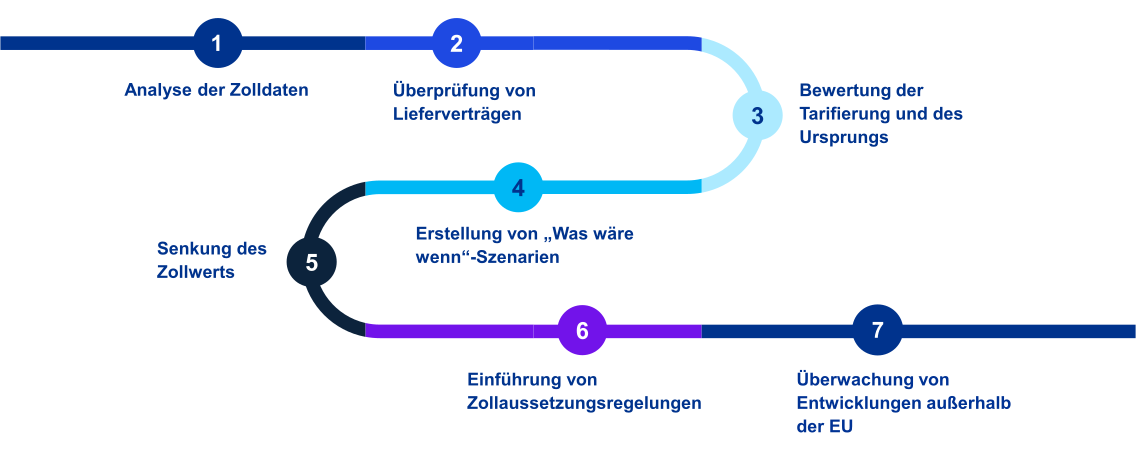
Als ersten Schritt empfehlen wir Unternehmen, sich ein umfassendes und detailliertes Bild ihrer Lieferkette zu verschaffen. Sie sollten wissen, von welchen Lieferanten sie welche Art von Produkten beziehen, aus welchem Land diese Produkte stammen und wie sich mögliche Maßnahmen auf Einkäufe und Verkäufe auswirken könnten.
Mit dem KPMG Trade Data Check haben wir ein Tool entwickelt, das Ihnen auf Basis Ihrer Zolldaten einen detaillierten Einblick in Ihren Warenfluss verschafft.

Empfohlene Schritte zur Risikobewertung und -minimierung:
US-Zölle: Impact & Strategy Assessment
Auswirkungen von Handelszöllen auf die Finanzberichterstattung
Auszug aus den Accounting News – Ausgabe Mai 2025
Wie kann KPMG helfen?
Mit einem Team von über 800 Zollberatern weltweit hilft KPMG Unternehmen, die Unsicherheiten, die durch die neuen US-Zölle und EU-Gegenmaßnahmen entstehen, effektiv zu bewältigen. Dabei wird ein ganzheitlicher Ansatz verfolgt, der darauf abzielt, Risiken zu minimieren und gleichzeitig Chancen innerhalb globaler Lieferketten zu erkennen und zu nutzen. Unterstützung wird unter anderem durch die folgenden Maßnahmen geboten:
- Analyse von Handels-/Zolldaten, um Transparenz über die Lieferkette sowie über Risiken und Chancen zu gewinnen.
- Nutzung unserer Zoll-Tools zur Modellierung der Auswirkungen von Zollmaßnahmen auf Unternehmen.
- Quantifizierung von Zollszenarien und Kosten unter verschiedenen "Was-wäre-wenn"-Bedingungen.
- Ermittlung von Möglichkeiten zur Nutzung von Zolllagern, aktiver Veredelung, Freihandelszonen und Zollrückvergütung, um Einsparungen zu erzielen.
- Überprüfung der zolltariflichen Einstufung und des Ursprungs, um mögliche Zollerhöhungen zu vermeiden oder zu minimieren.
- Überprüfung der Bewertungsmethoden zur Verringerung der Zollbewertungsgrundlagen.
- Kontinuierliche Überwachung der Entwicklungen, um über die aktuelle Situation informiert zu bleiben.
Für weitere Informationen zu den Auswirkungen aktueller Zollmassnahmen auf Ihr Unternehmen und den sich daraus ergebenden strategischen Handlungsoptionen stehen Ihnen Mario Urso und das Trade & Customs Team von KPMG mit fundiertem Fachwissen, bewährten Instrumenten und massgeschneiderten Lösungen gerne für ein persönliches Gespräch zur Verfügung.
Mehr KPMG Insights


Ihre Ansprechpersonen


- 1
- 2
- 3